Today, in our English class, we enjoyed a fun session to work on fruit vocabulary and the structure “I like…”.
Through play, movement and hands-on activities, the children learned English in a natural, active and meaningful way.
Hoxe fixemos unha sesión de inglés para aprender o vocabulario das froitas e a estrutura “I like…” dun xeito divertido, activo e significativo.
Learning through play
We started with a dynamic warm-up. Different real fruits were placed on tables around the classroom. The children listened to instructions such as Jump to the watermelon, Stamp for the pineapple or Run to the apple. They had to listen carefully, identify the fruit and move to the correct one.
This first activity turned the classroom into a space for exploration, movement and play.
Comezamos cun xogo de movemento con froitas reais colocadas por distintas mesas da aula. O alumnado tiña que escoitar as instrucións, identificar a froita e ir cara á correcta.
Next, in whole group, we did Recognise the fruit and label. Together, we named the fruits and matched each picture with its written word. This helped the children revise vocabulary and become familiar with the written form of the words.
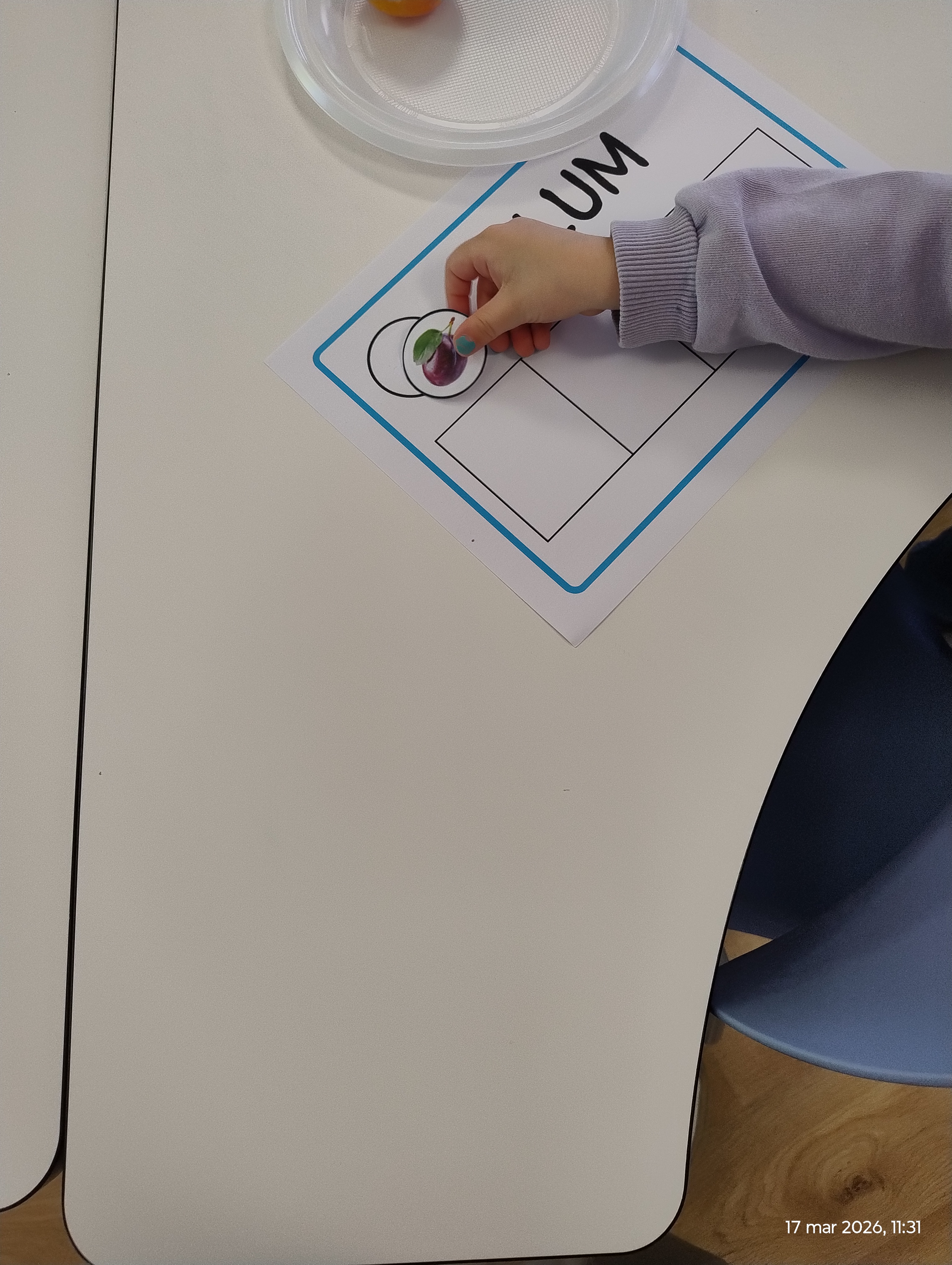
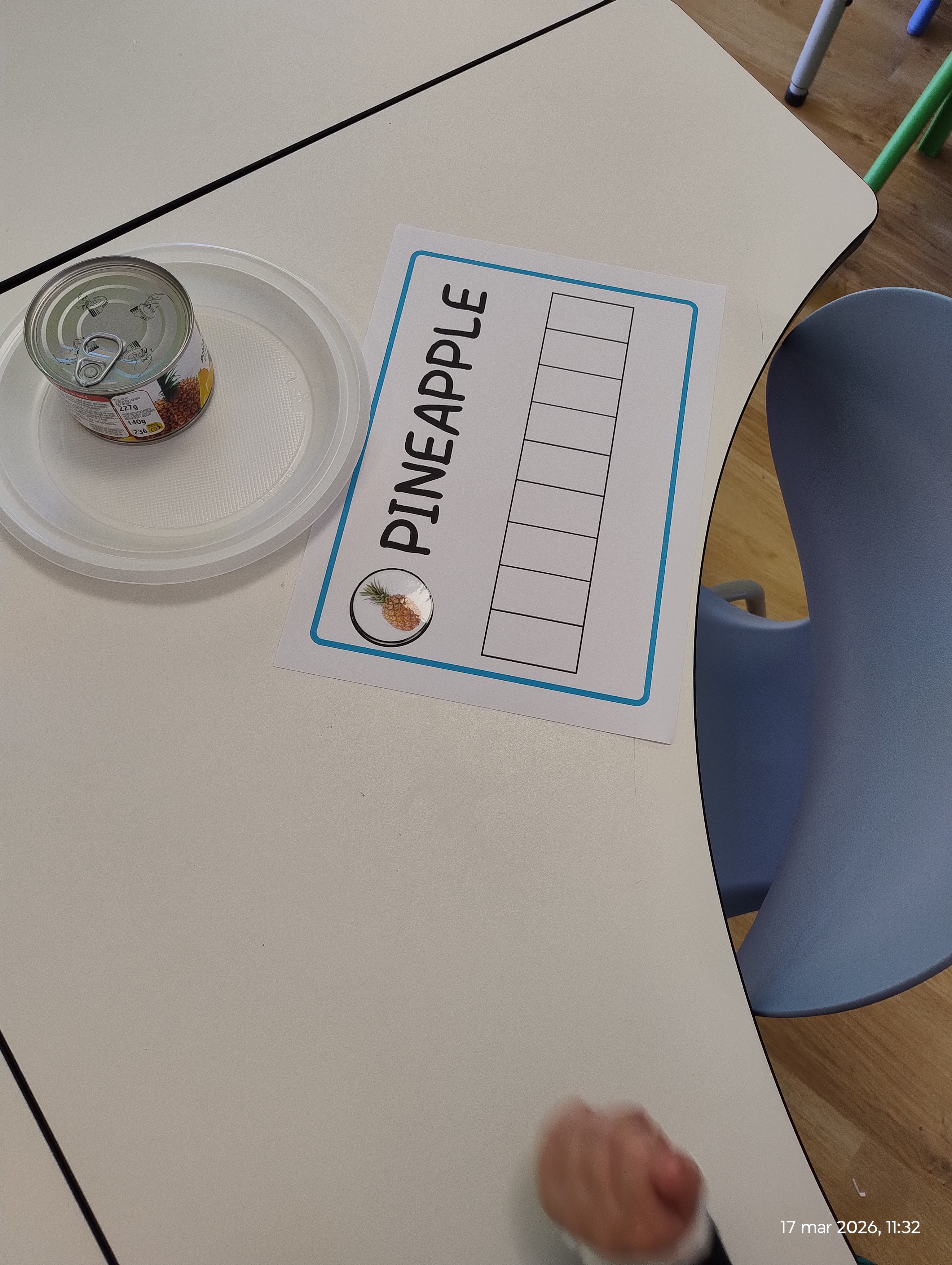
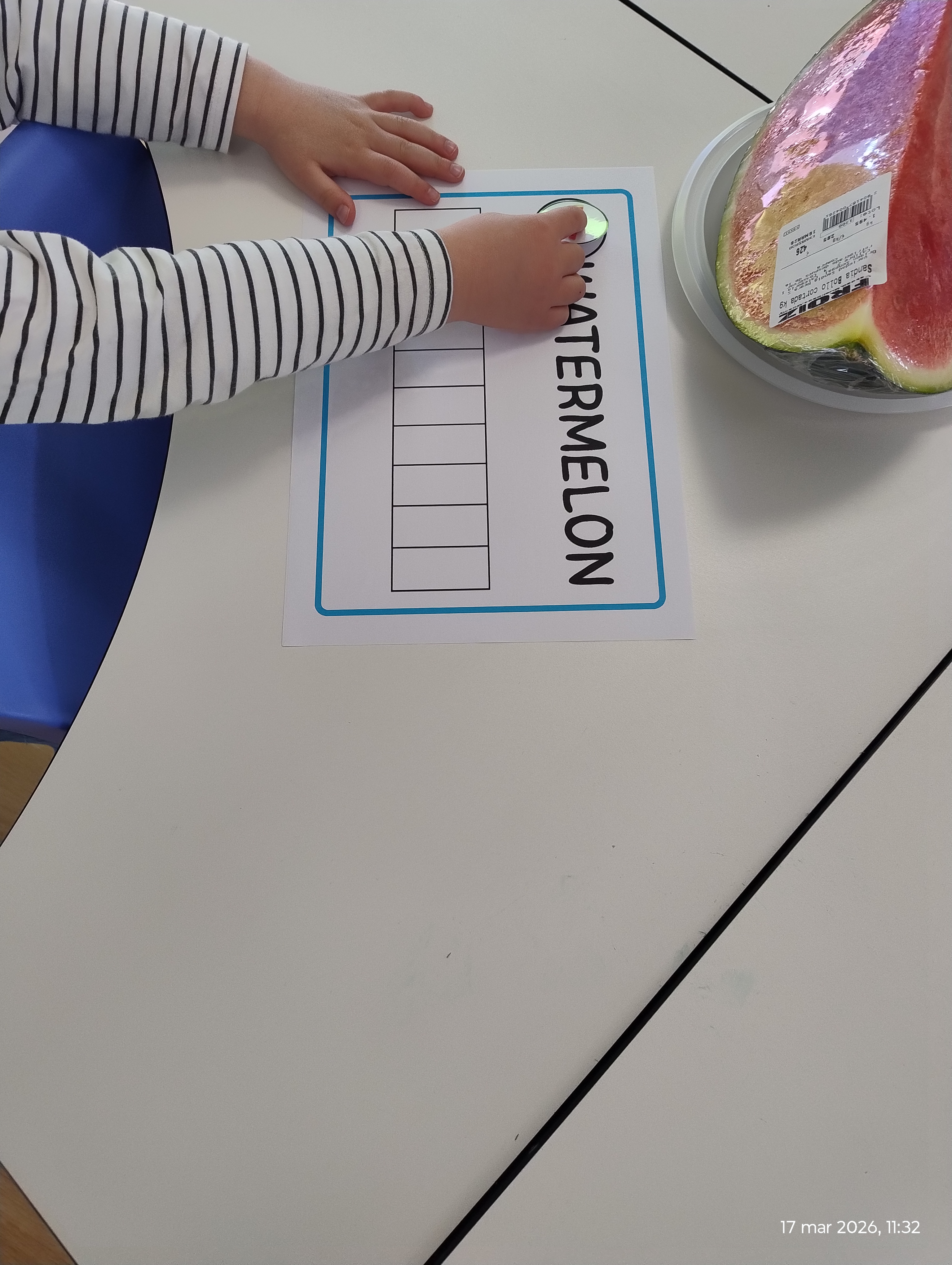
Despois, en gran grupo, recoñecemos as froitas e relacionamos cada imaxe coa súa palabra escrita.
Different activities for different ages
Then, we adapted the next task to the age of the children.
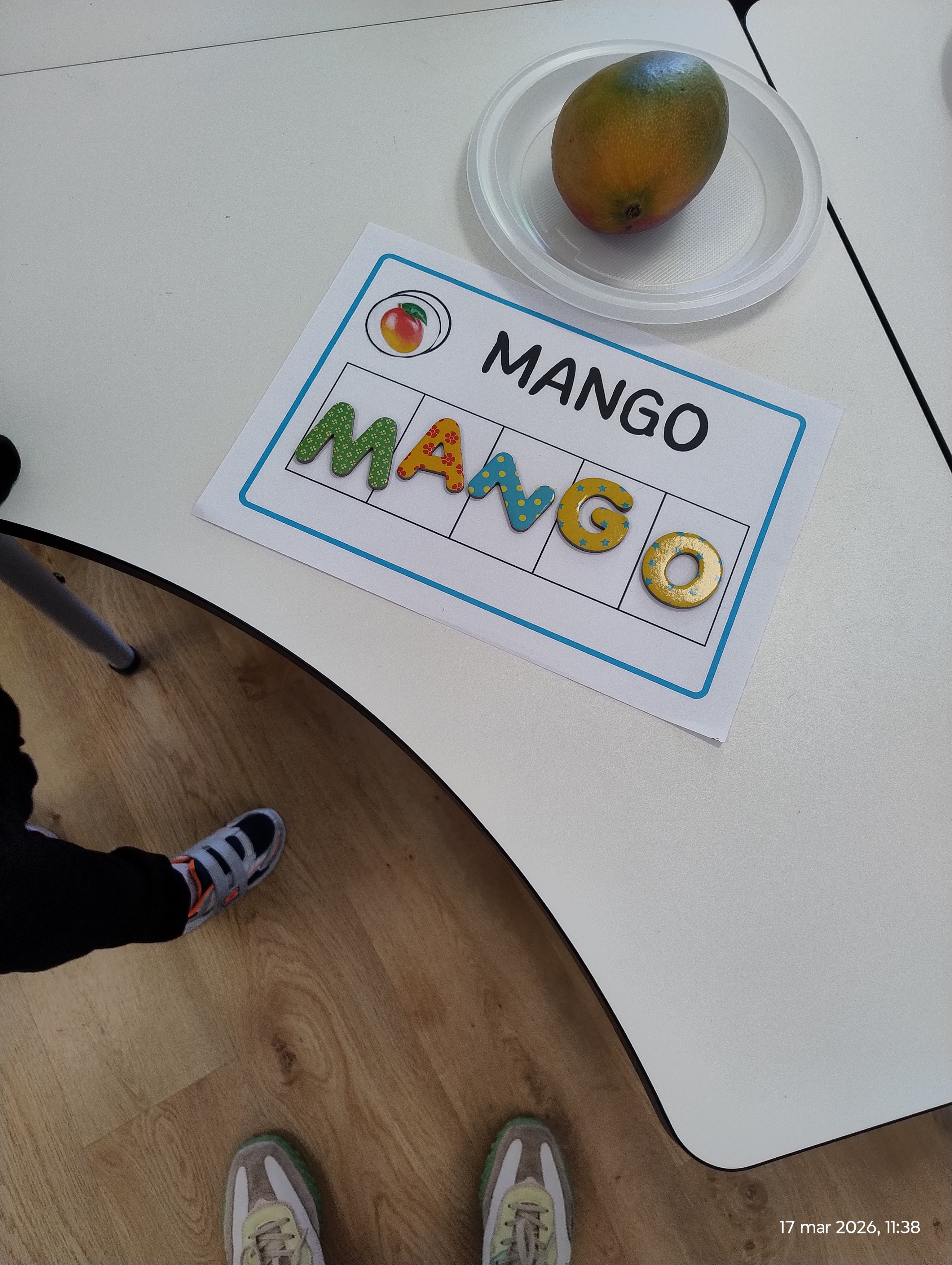
The older pupils, aged 4 and 5, completed Build the word. Using movable letters, they built the names of different fruits. This activity helped them work on pre-reading skills, word recognition and cooperation.
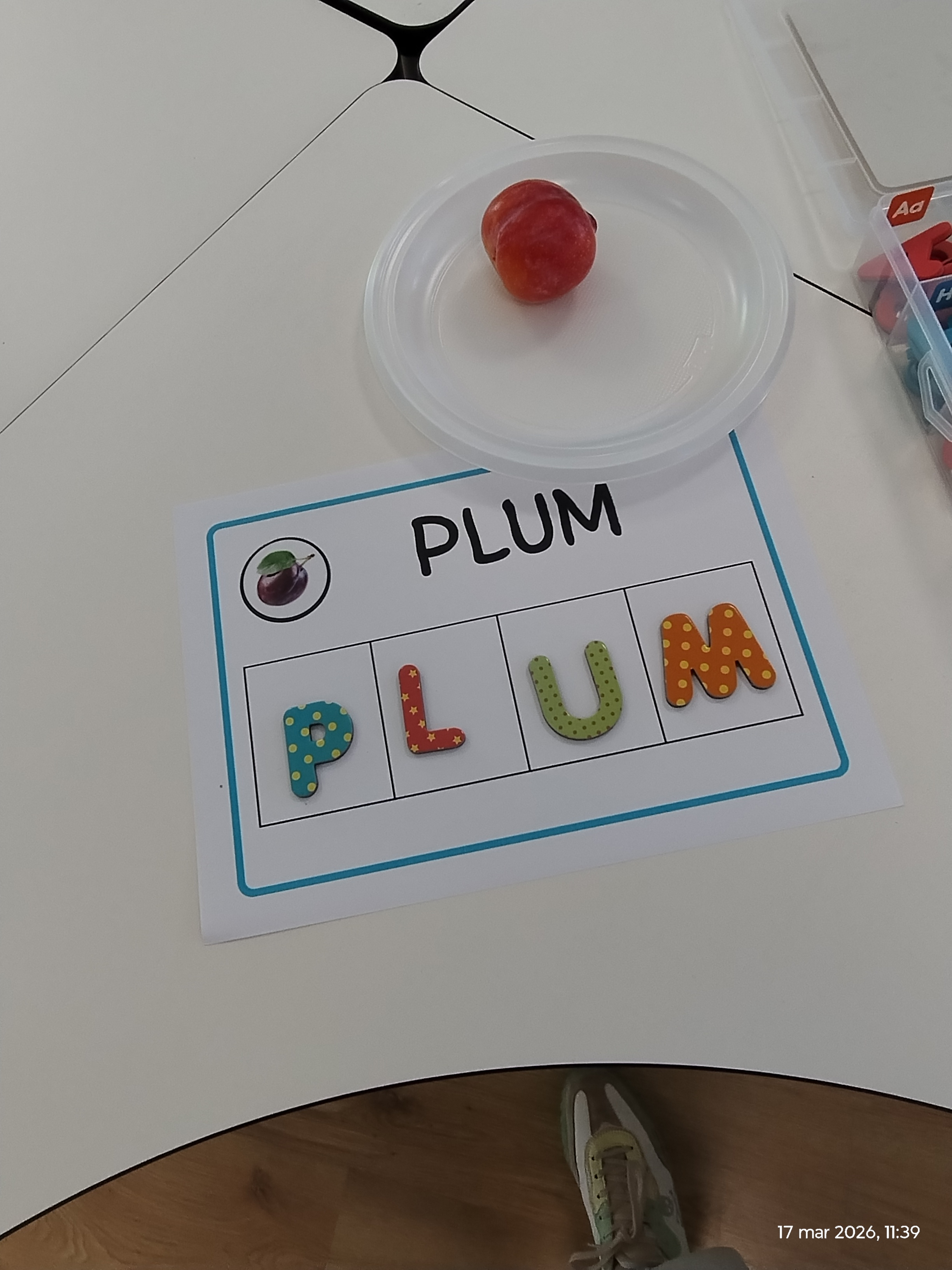
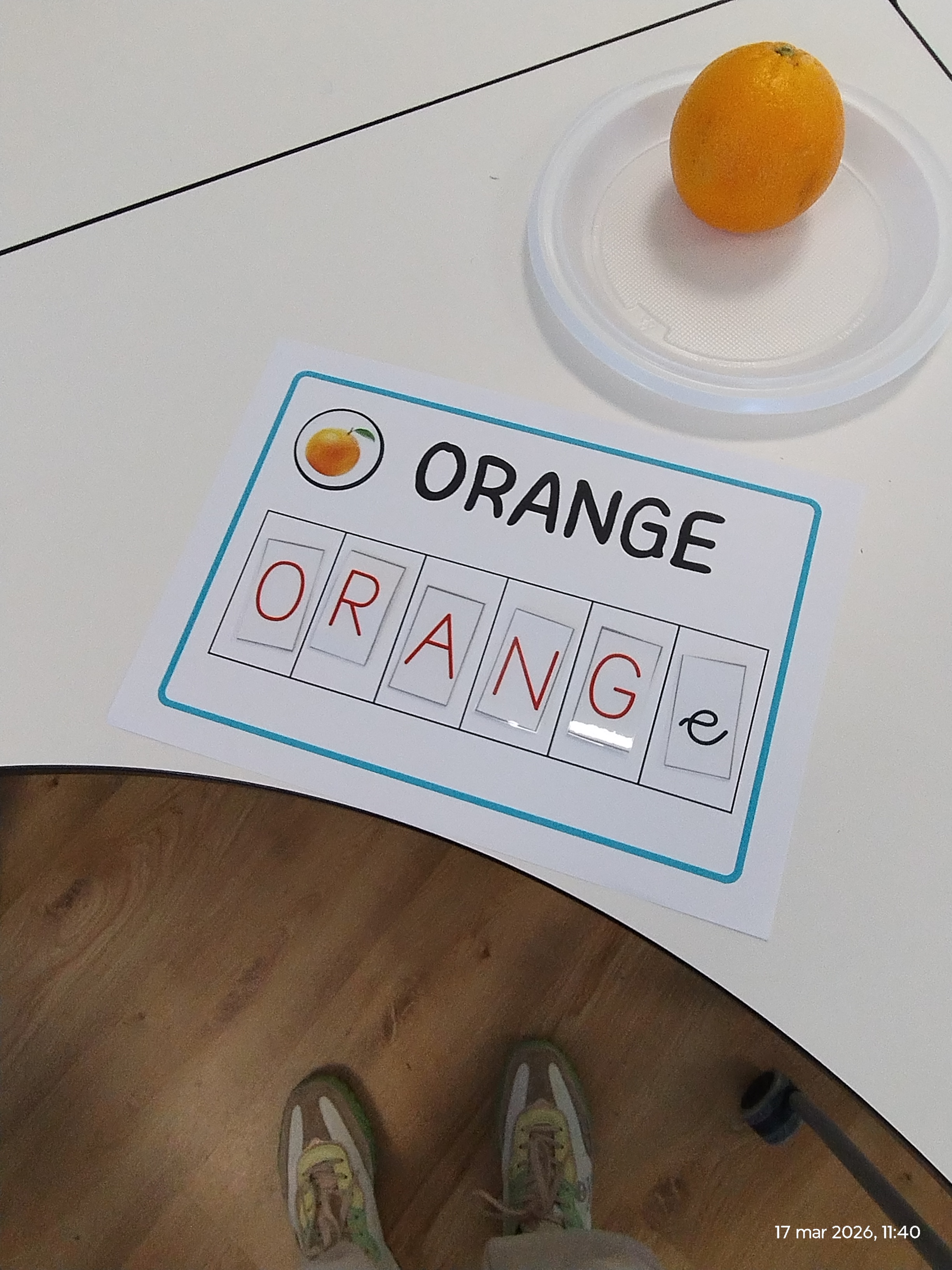
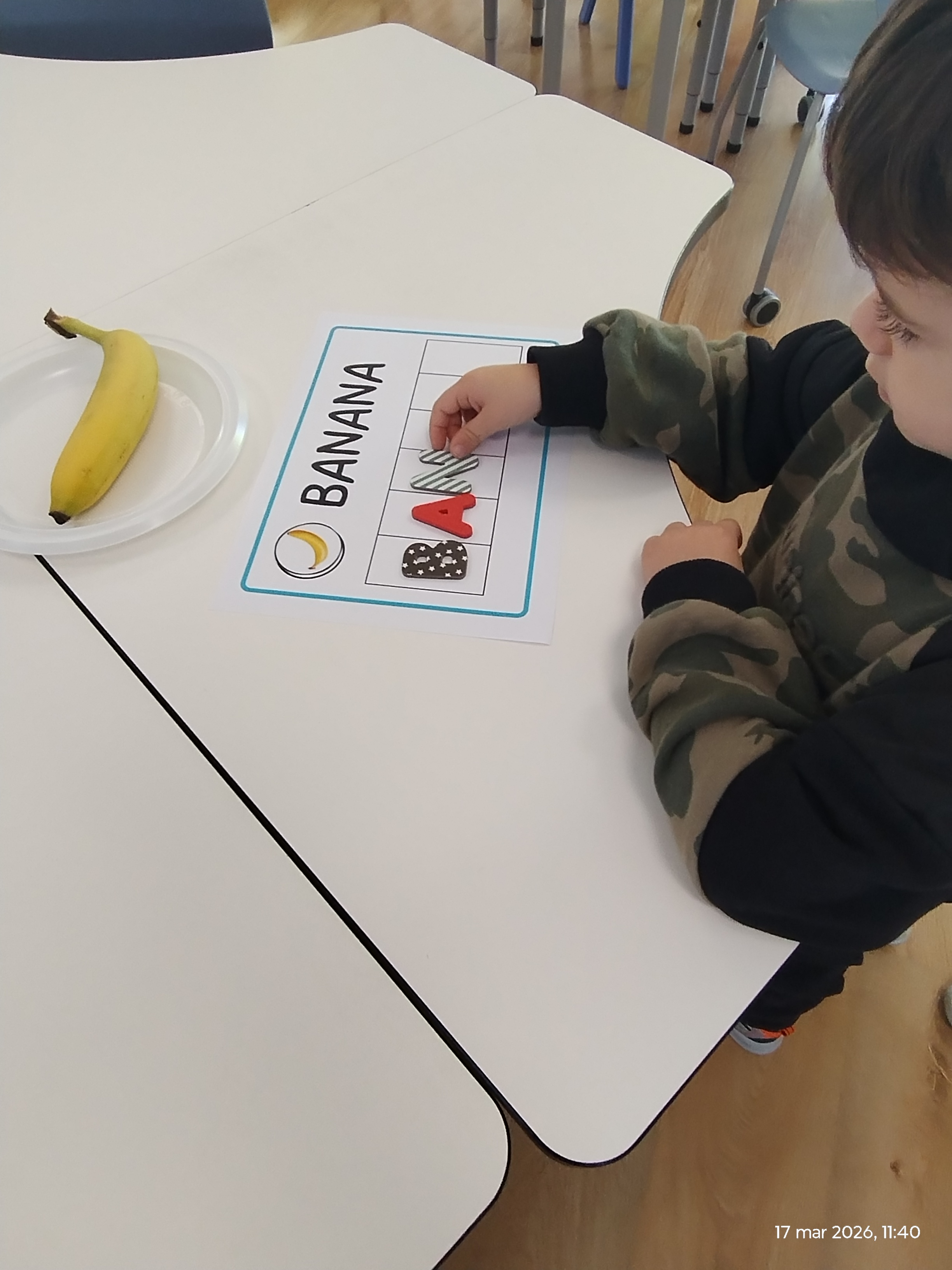
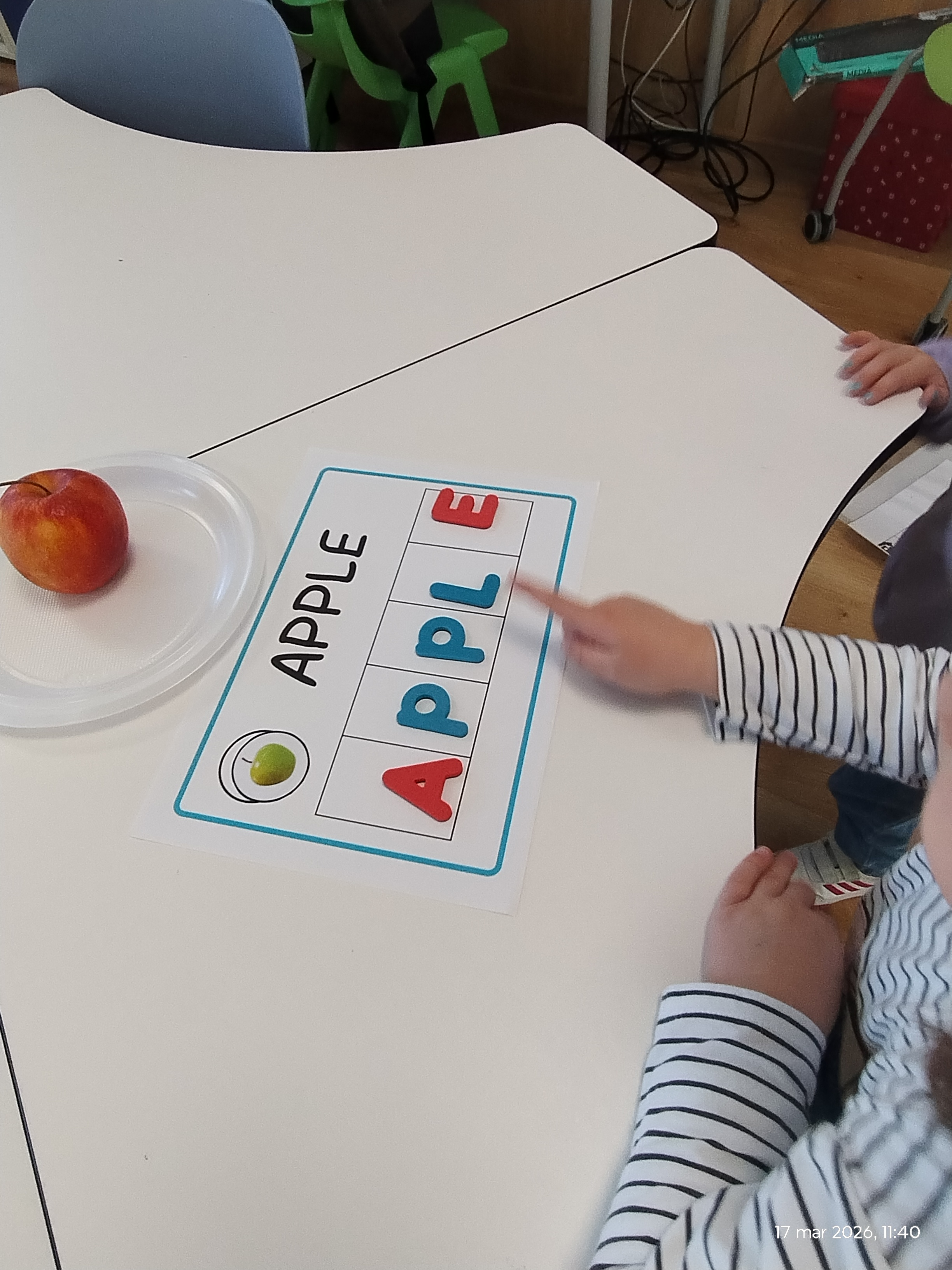
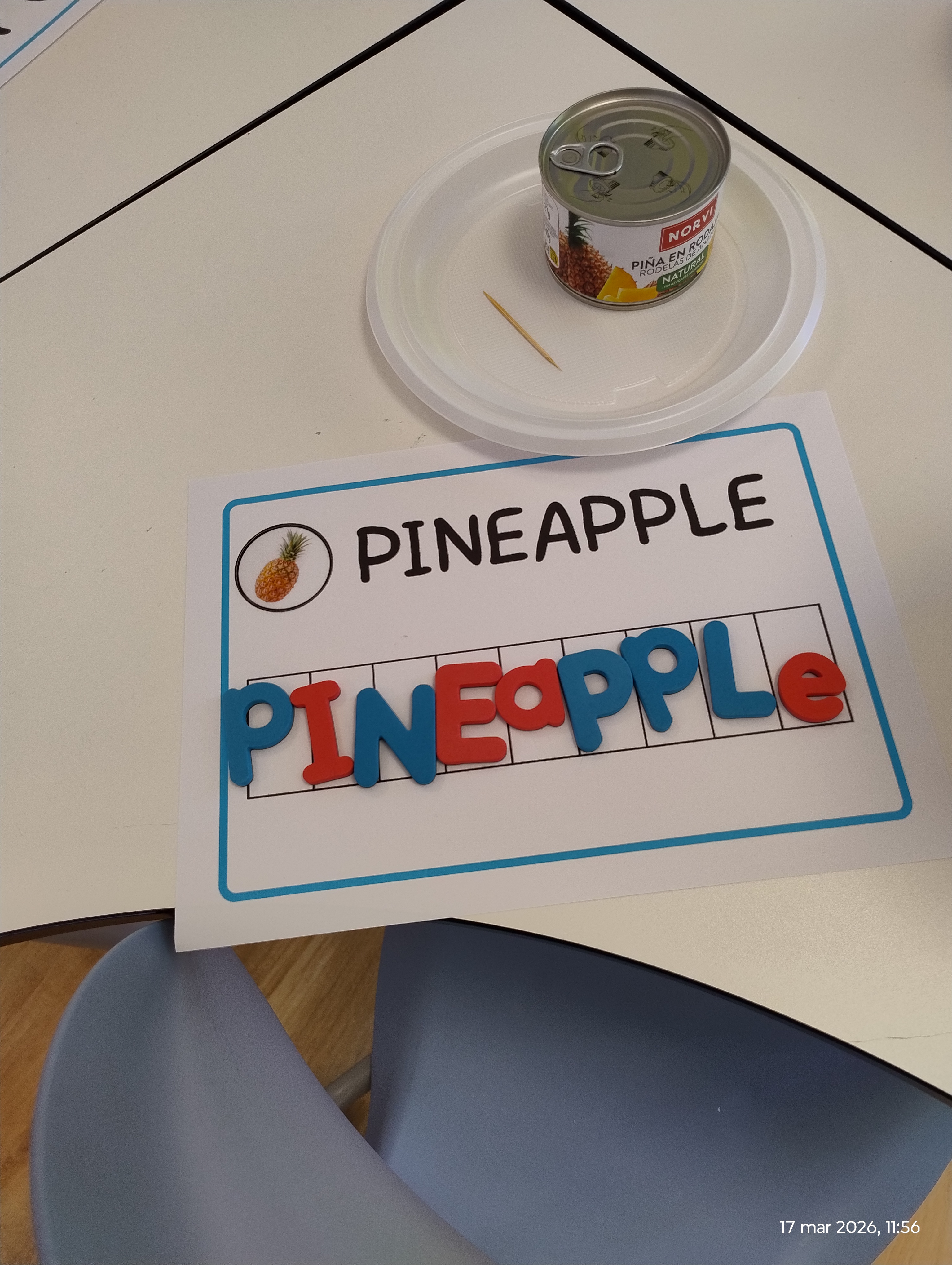
The 3-year-old children did a different task to create our final product. They coloured the fruits following simple instructions such as Colour the banana yellow. In this way, they also worked on vocabulary, listening and colour recognition in English.
Adaptamos a actividade á idade do alumnado.Os nenos e nenas de 4 e 5 anos fixeron Build the word, formando os nomes das froitas con letras móbiles. Os de 3 anos colorearon as froitas seguindo instrucións en inglés, como Colour the banana yellow, para elaborar o noso produto final.
Speaking in English
To finish the lesson, we came back together for a simple oral activity. Using real fruits, each child chose one and said:“I like…”
This final moment helped them use English in a simple, real and meaningful way.
Para rematar, volvemos ao gran grupo e cada neno ou nena escolleu unha froita e dixo “I like…”. Así practicaron unha expresión oral moi sinxela nun contexto real e significativo.
Playful and didactic value
One of the most valuable parts of this experience was its clear playful dimension. Movement instructions, real fruits, letter manipulation and colouring activities made the lesson feel like a game.
The playful element boosted motivation and encouraged all the children to participate, respecting their different learning styles and fostering a positive atmosphere. At this age, play is a way to explore, practice, and learn without fear.
A sesión tivo unha dimensión lúdica, porque aprenderon a través do xogo, o movemento, a manipulación e a interacción.
From a didactic point of view, this activity helped children work on several key aspects of foreign language learning in an integrated way:
- recognising and learning basic fruit vocabulary,
- improving listening comprehension through simple instructions,
- matching pictures and written words,
- beginning pre-reading through word building,
- following colour instructions in English,
- and expressing likes with a simple and useful structure such as “I like…”.
Tamén tivo un claro valor didáctico, xa que traballaron vocabulario, comprensión oral, recoñecemento de palabras, cores e expresión oral en inglés.
The sequence was organized step by step. First, children learned through play and movement. Then, they practiced recognizing visuals. After that, they did various tasks suitable for their age. Finally, they used spoken language in a meaningful way.
Meaningful learning
With activities like this, we want children to see English not as something abstract, but as a language to use, hear, move and enjoy. When children take part with enthusiasm, manipulate materials, cooperate and speak in familiar contexts, learning becomes much more meaningful.
Con actividades coma esta, buscamos que o inglés sexa unha lingua para usar, escoitar, mover e gozar.






 Our English Corner's Blog
Deixar un comentario