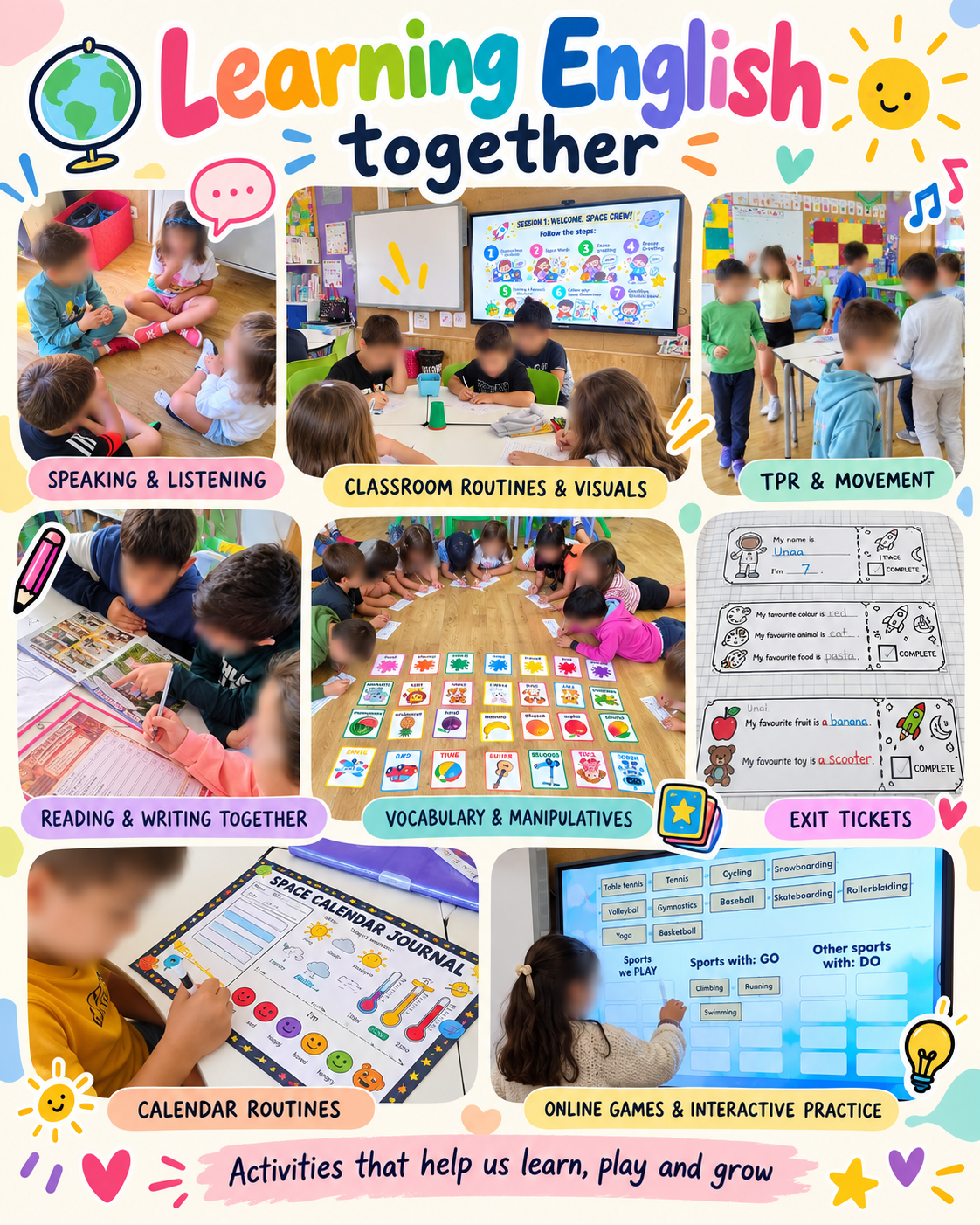
Move, play, cooperate and learn!
A new school year has started, and we are ready to learn English! During these first weeks, our classroom has been full of games, movement, teamwork and fun routines.
Our main goal is to help children feel happy, confident and ready to use English.
Learning English is not just about remembering words. It is also about playing, trying new things, helping each other and learning from our mistakes.
Here are some of our favourite classroom activities!
Comezamos un novo curso con moita ilusión, enerxía e ganas de aprender! Durante estas primeiras semanas, a nosa aula de inglés encheuse de xogos, movemento, retos cooperativos e pequenas rutinas que nos axudan a sentirnos seguros e seguras, participar e gañar confianza.
Porque aprender inglés non é só memorizar palabras. É tamén experimentar, comunicarnos, colaborar, equivocarnos sen medo e aprender xuntos.
Compartimos algunhas das actividades que mellor nos están funcionando neste comezo de curso.
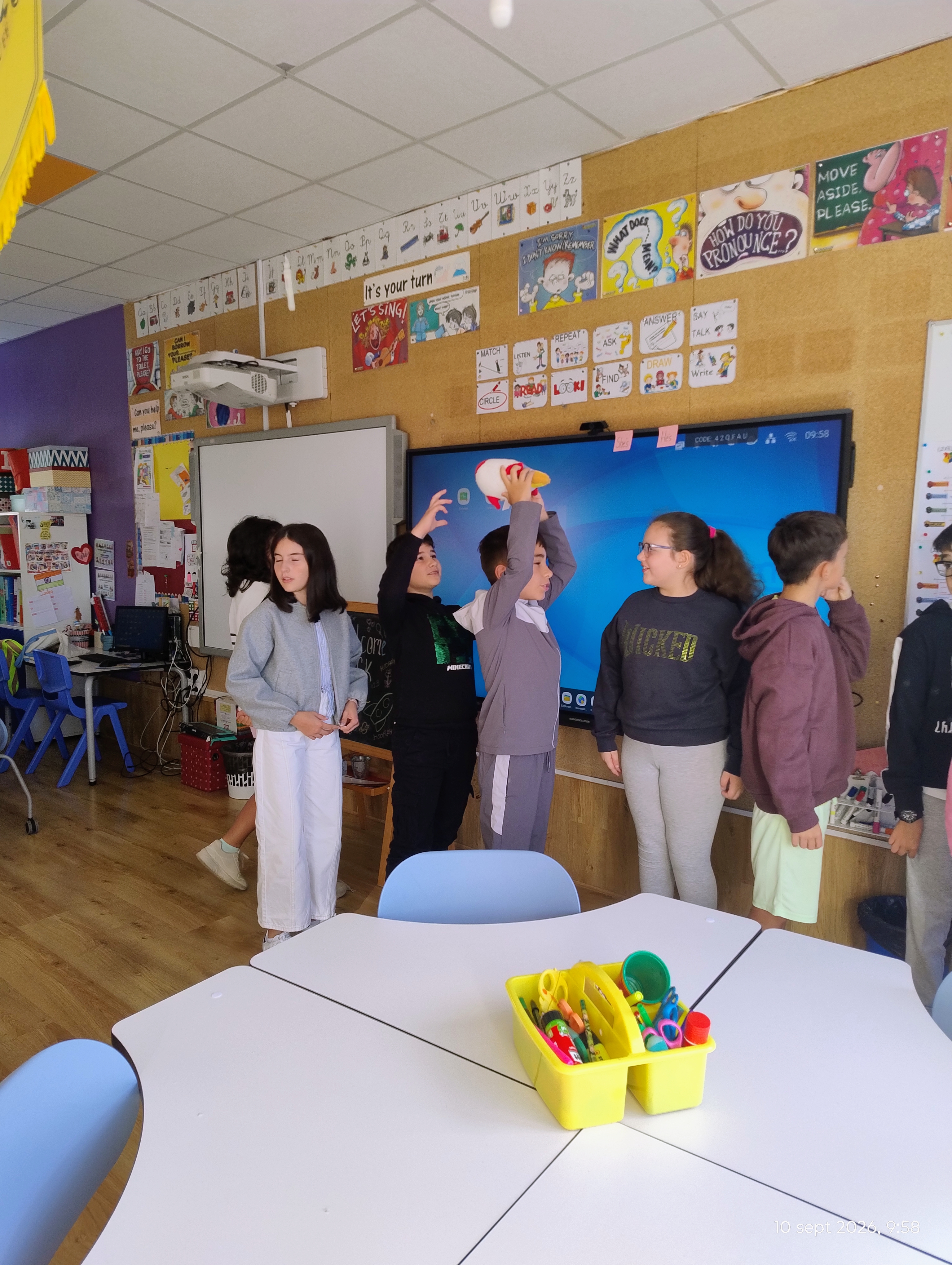
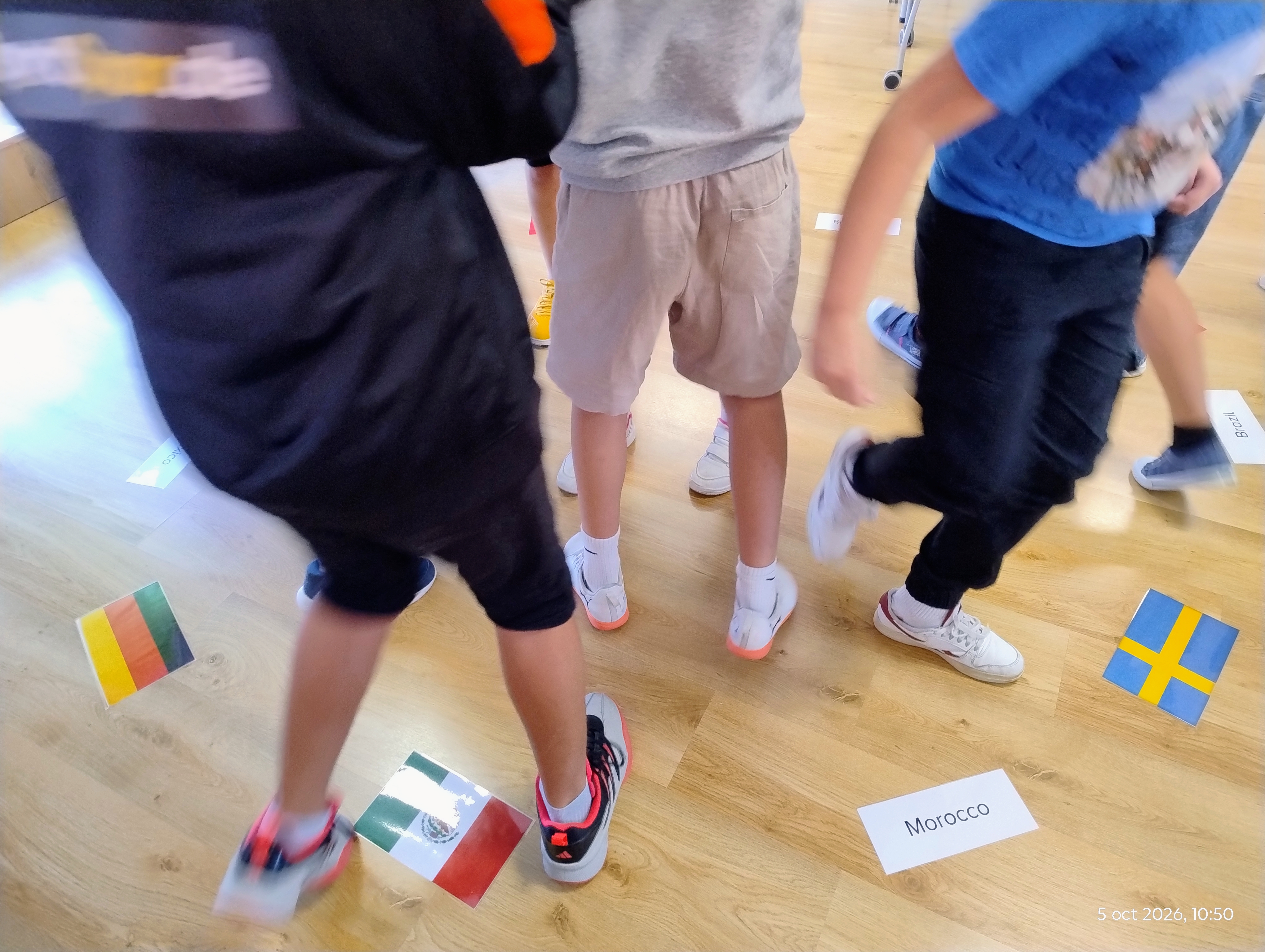
Let’s move! Learning with our bodies
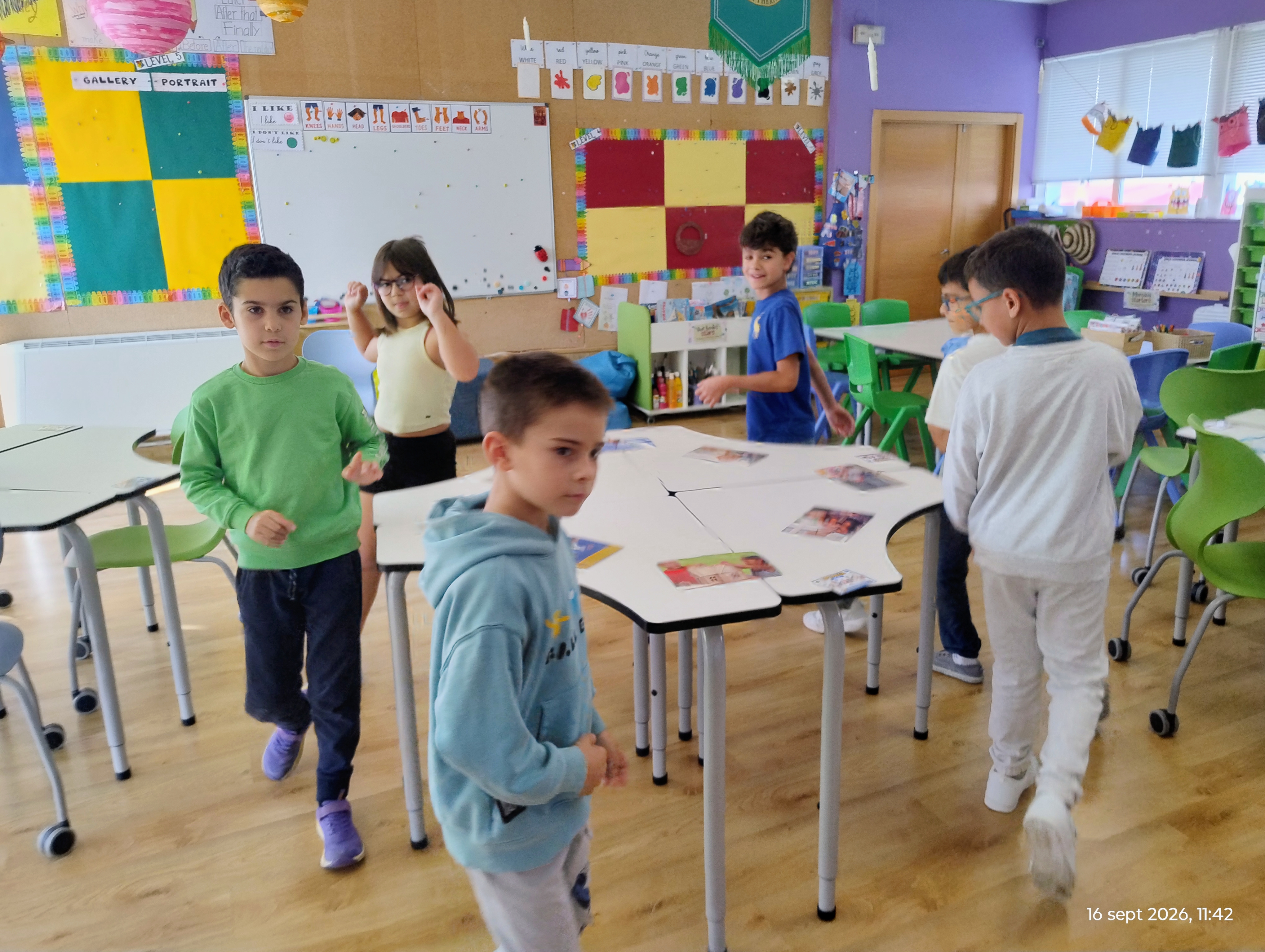
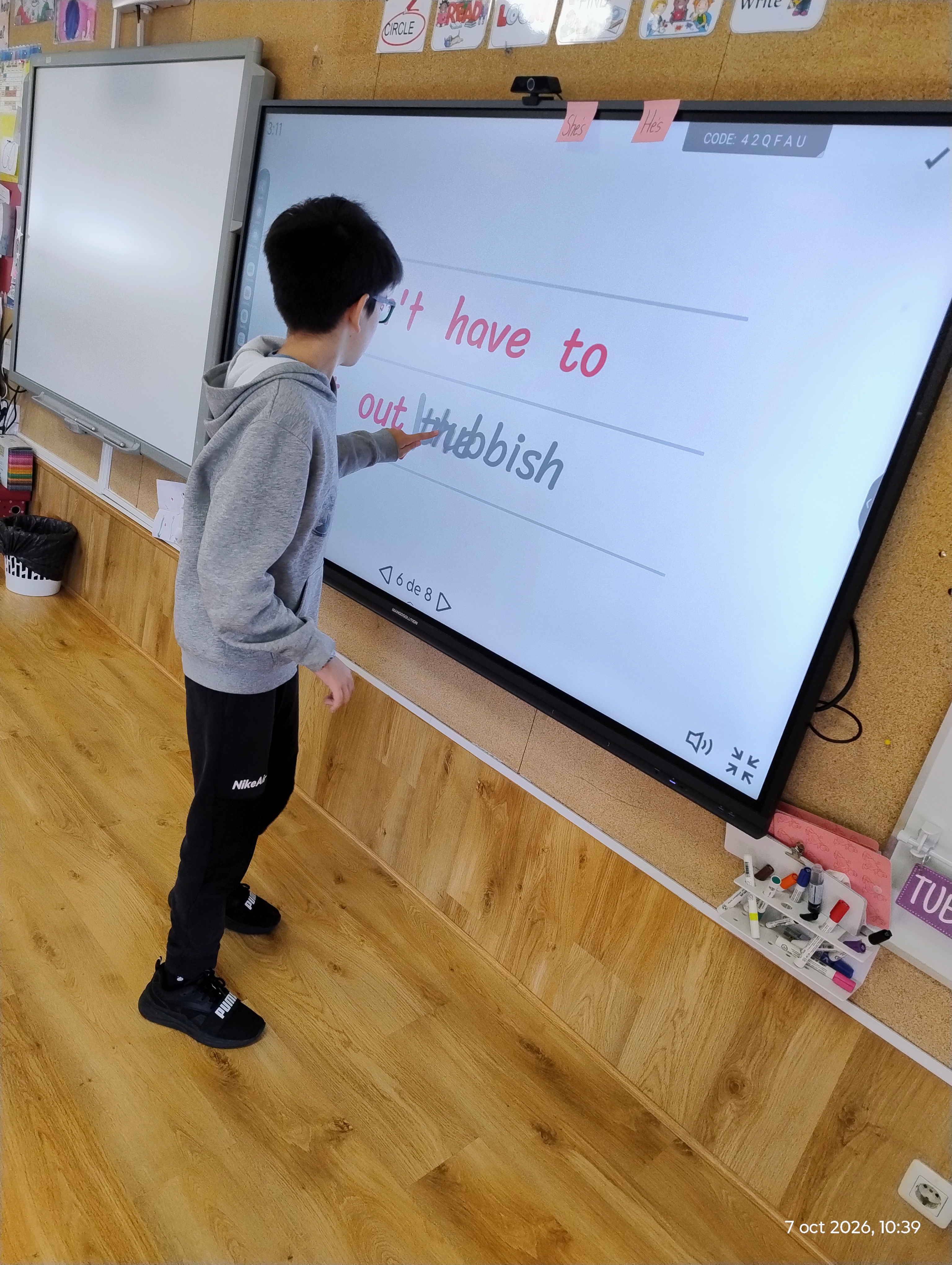
We love TPR (Total Physical Response) activities!
We listen to English instructions and use our bodies to show what they mean.
Stand up! Jump! Clap your hands! Touch your head! Run to…., Jump to….
These activities help us understand and remember new words. Children can take part even if they are not ready to speak English yet.
Learning through movement is fun!
As actividades TPR (Total Physical Response) permítennos aprender inglés a través do movemento. Escoitamos instrucións, realizamos accións e asociamos palabras con xestos.
Stand up! Jump! Clap your hands! Touch your head! Run to … Jump to….
Deste xeito, comprendemos o inglés de maneira natural e divertida, sen necesidade de falar desde o primeiro momento. O movemento axúdanos a lembrar o vocabulario e favorece a participación de todo o alumnado.
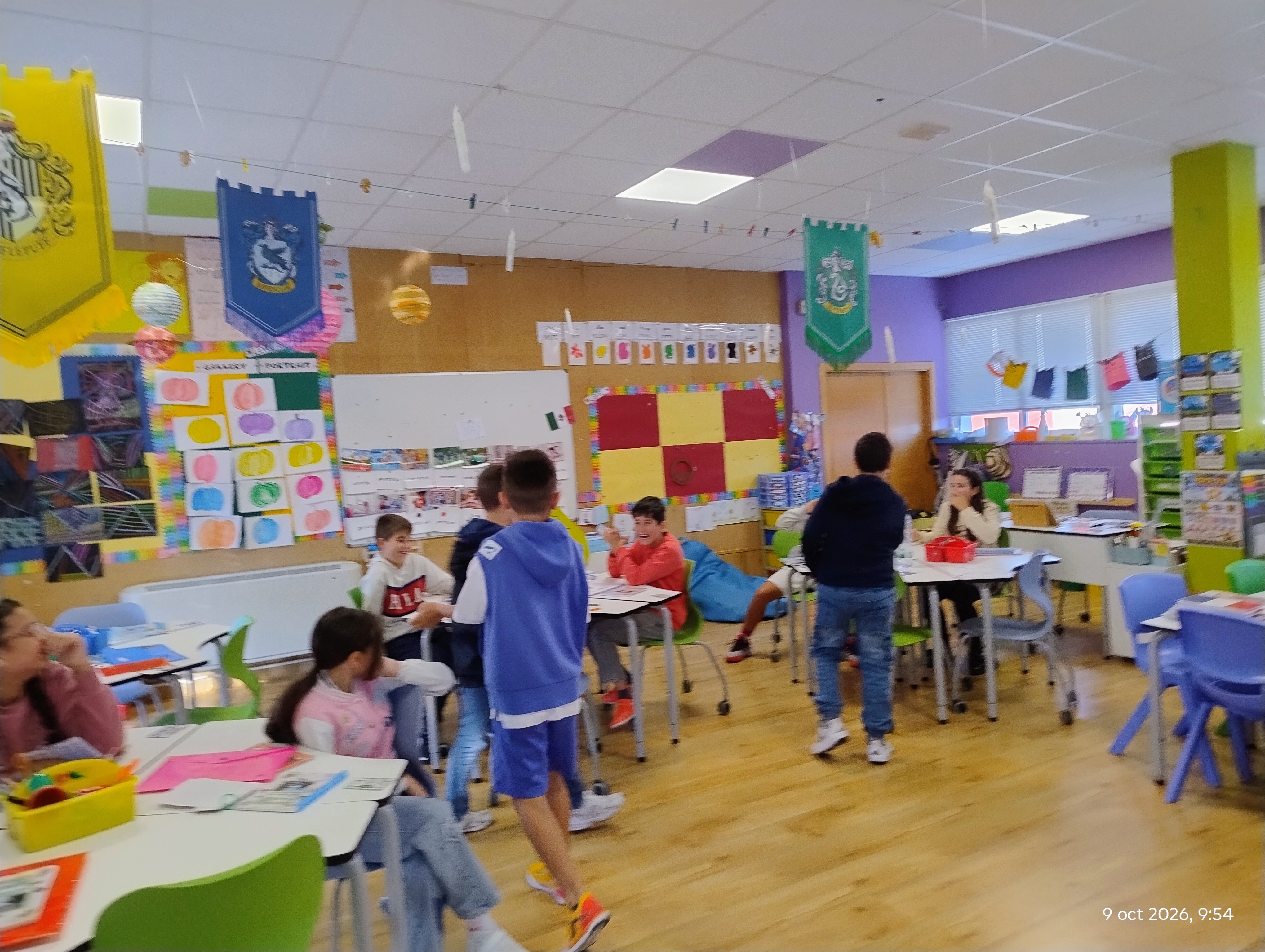
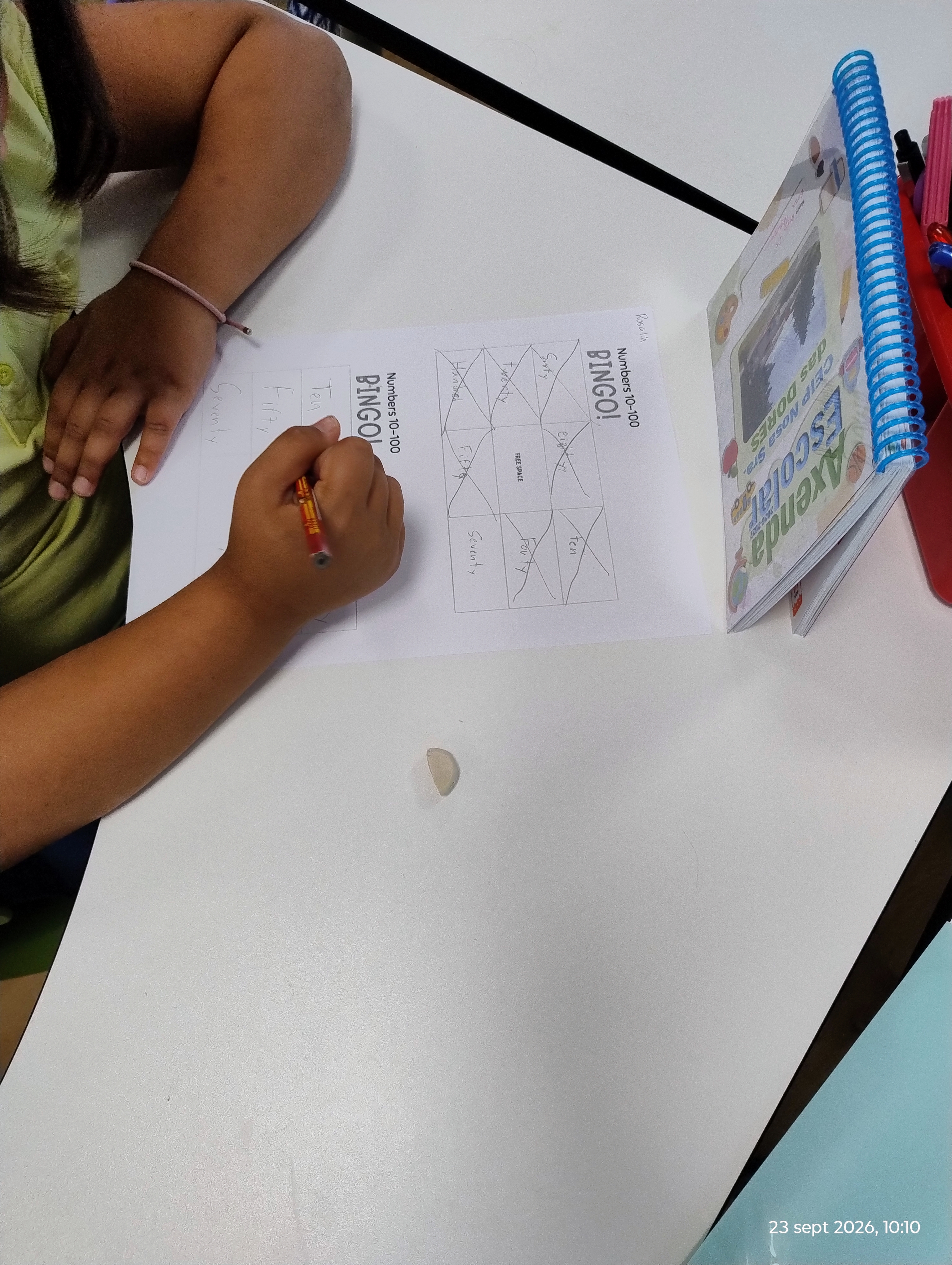
Bingo time! Learning is fun!
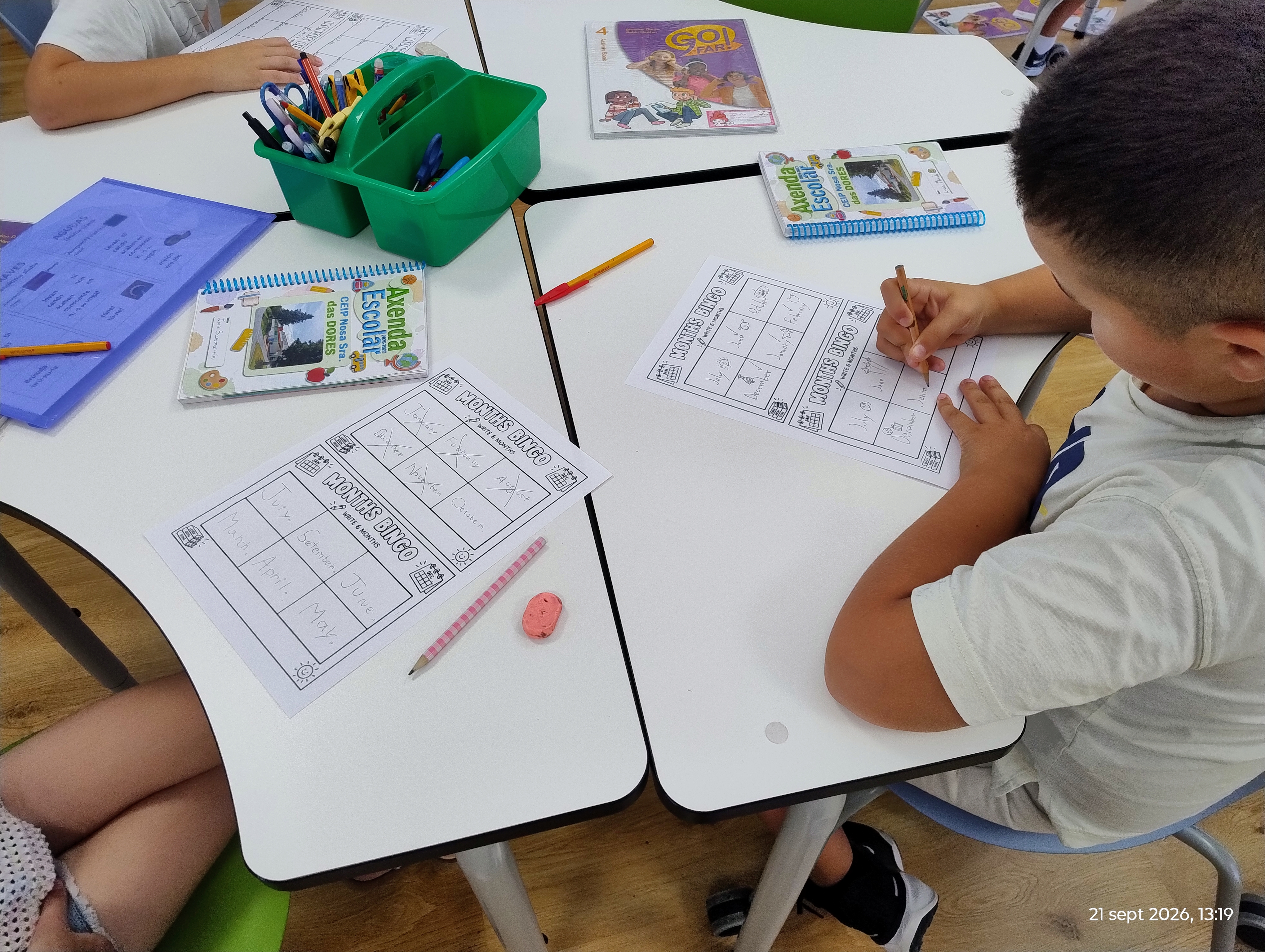
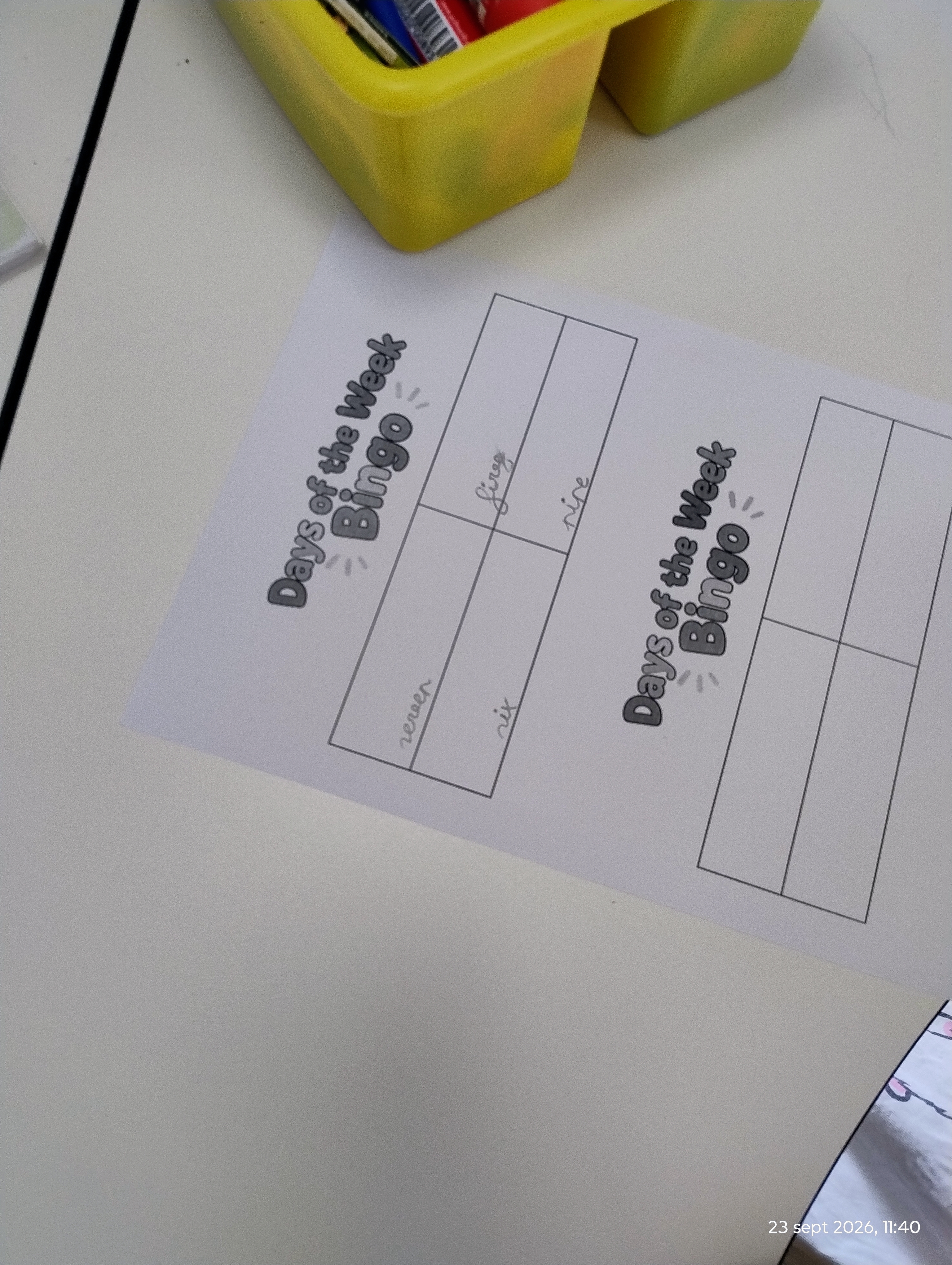
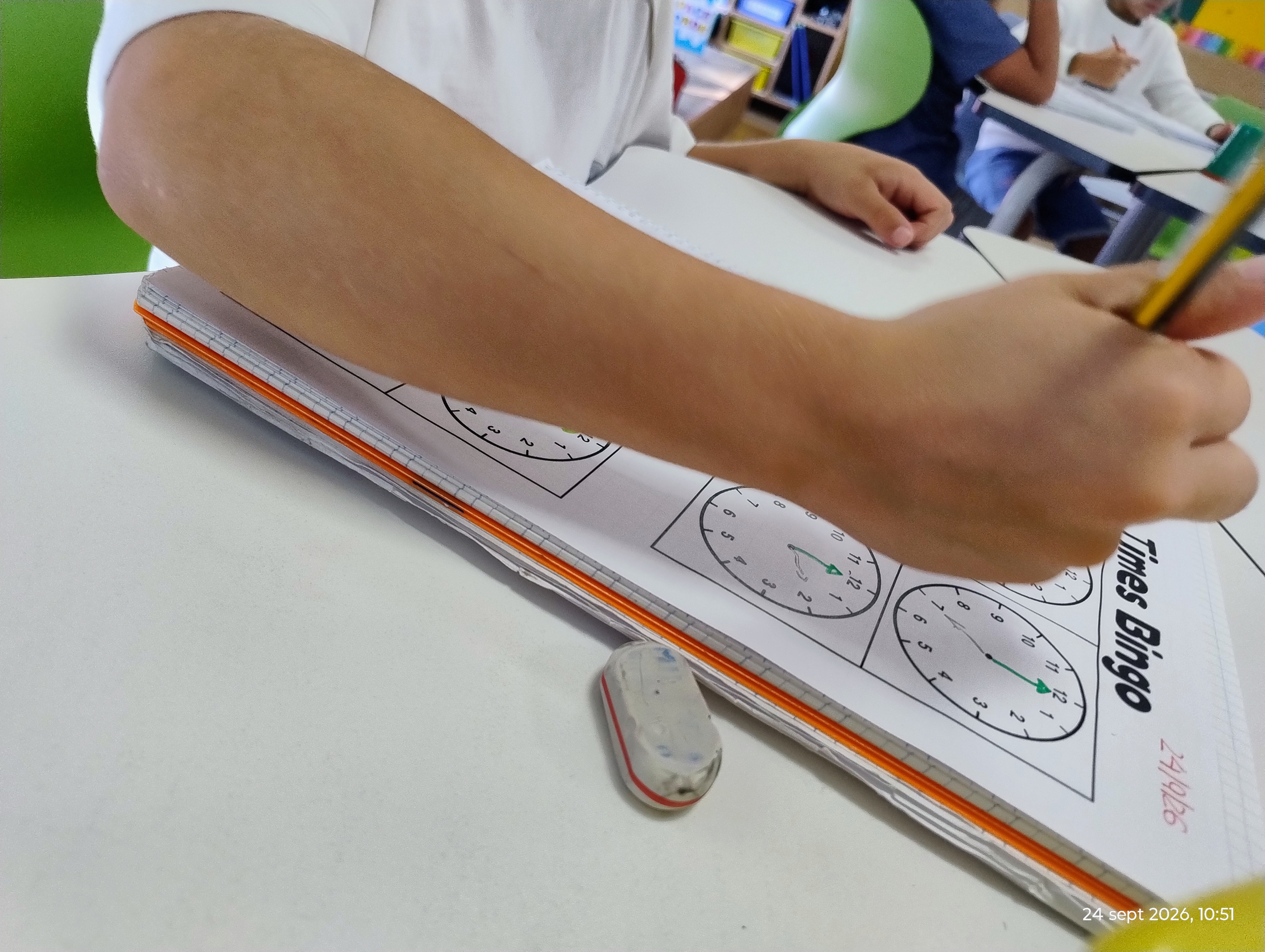
Bingo is one of our favourite games!
We play bingo to practise numbers, time and daily routines.
We listen carefully, find the correct pictures or words and have fun together.
Bingo helps us improve our listening skills and remember vocabulary.
Listen, find and shout BINGO!
Os bingos son un dos nosos xogos favoritos! Utilizámolos para practicar os números (numbers), as horas (time) e as rutinas diarias (daily routines).
Mentres xogamos, desenvolvemos a comprensión oral, reforzamos o vocabulario e practicamos a atención.
Better together! Reading and writing as a team
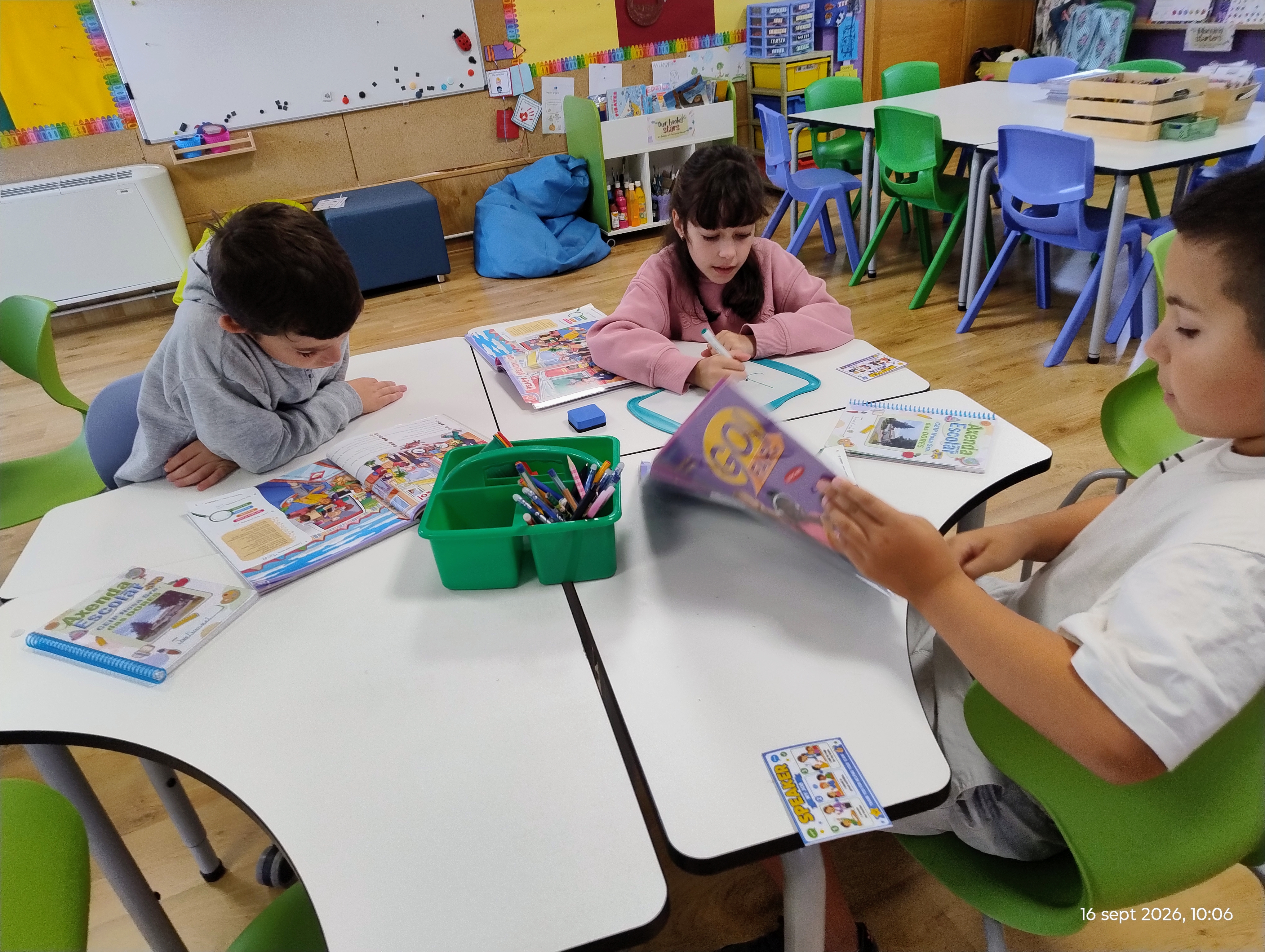
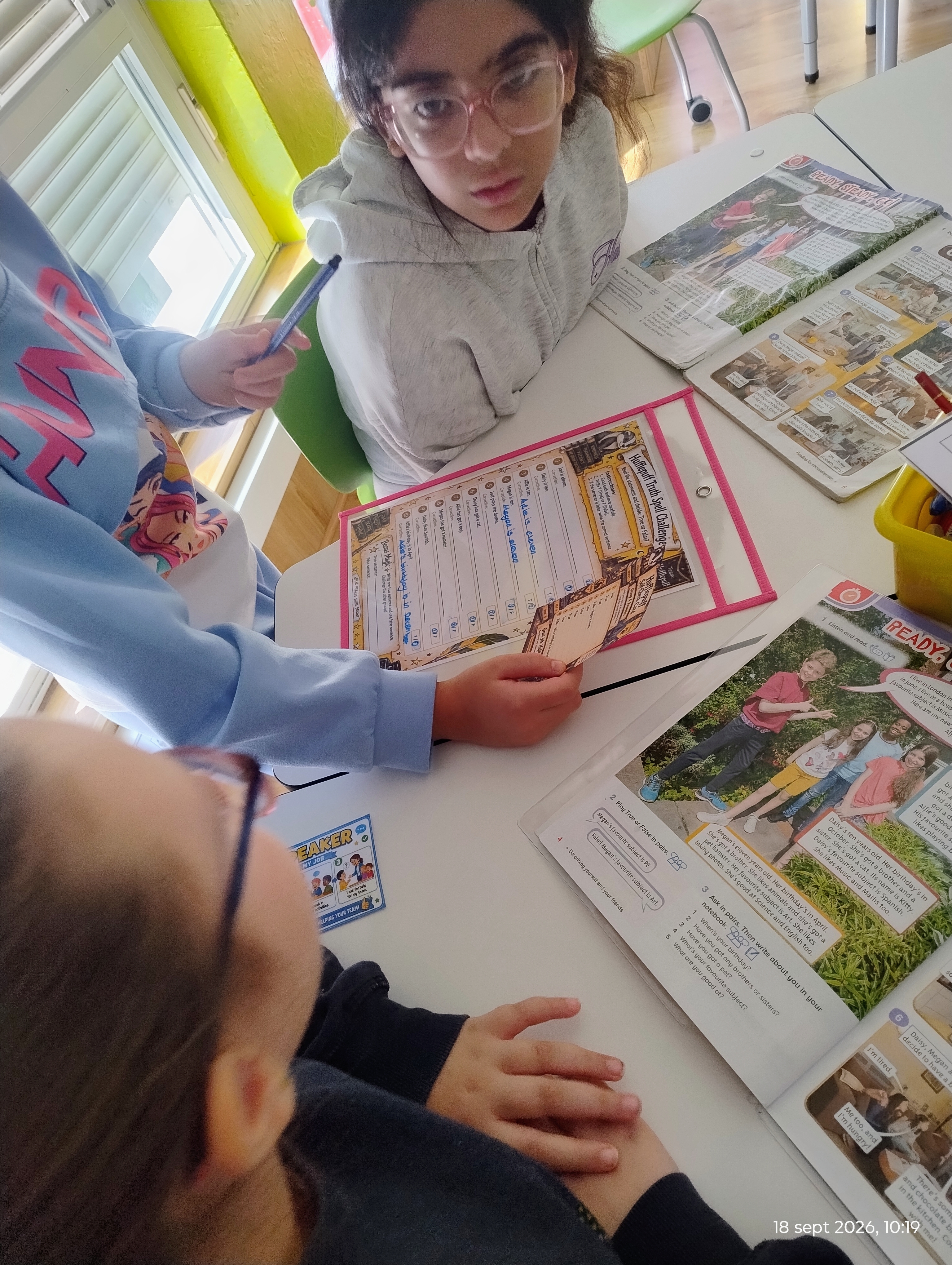
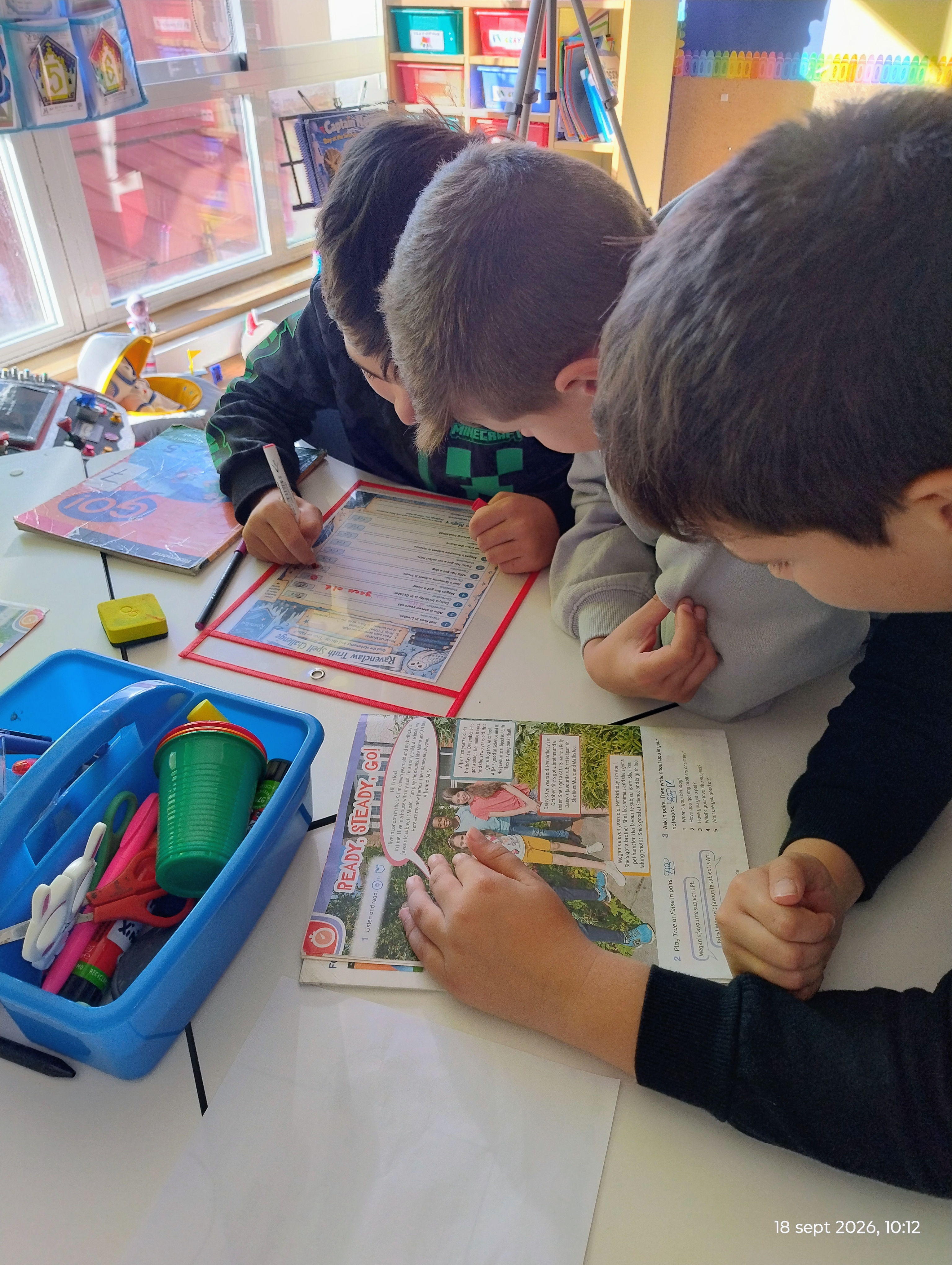
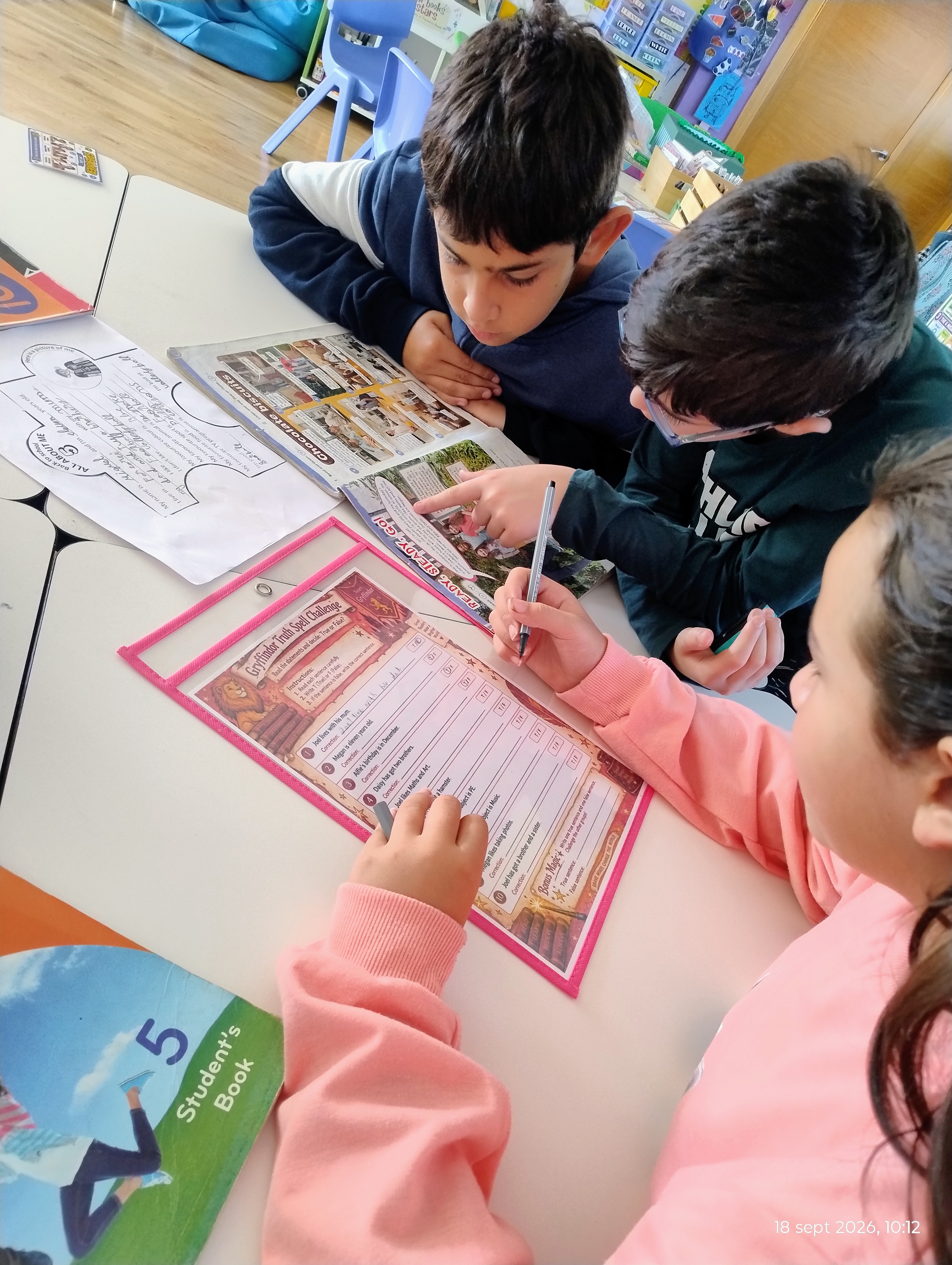
We also enjoy cooperative reading and writing activities.
We read short texts, look for information, put sentences in order and write simple answers together.
Working in pairs or small groups is especially important at the beginning of the school year.
We share ideas, help our friends and learn from each other.
Most importantly, teamwork helps us feel more confident and less afraid of making mistakes.
As actividades cooperativas de comprensión lectora (reading) e expresión escrita (writing) están a axudarnos moito neste comezo de curso.
Lemos pequenas mensaxes, buscamos información, ordenamos frases e elaboramos respostas en parellas ou pequenos equipos.
Traballar xuntos permítenos compartir ideas, axudarnos, aprender dos demais e, sobre todo, gañar confianza para utilizar o inglés sen medo a equivocarnos.
Our Calendar Routine! Little routines, big learning
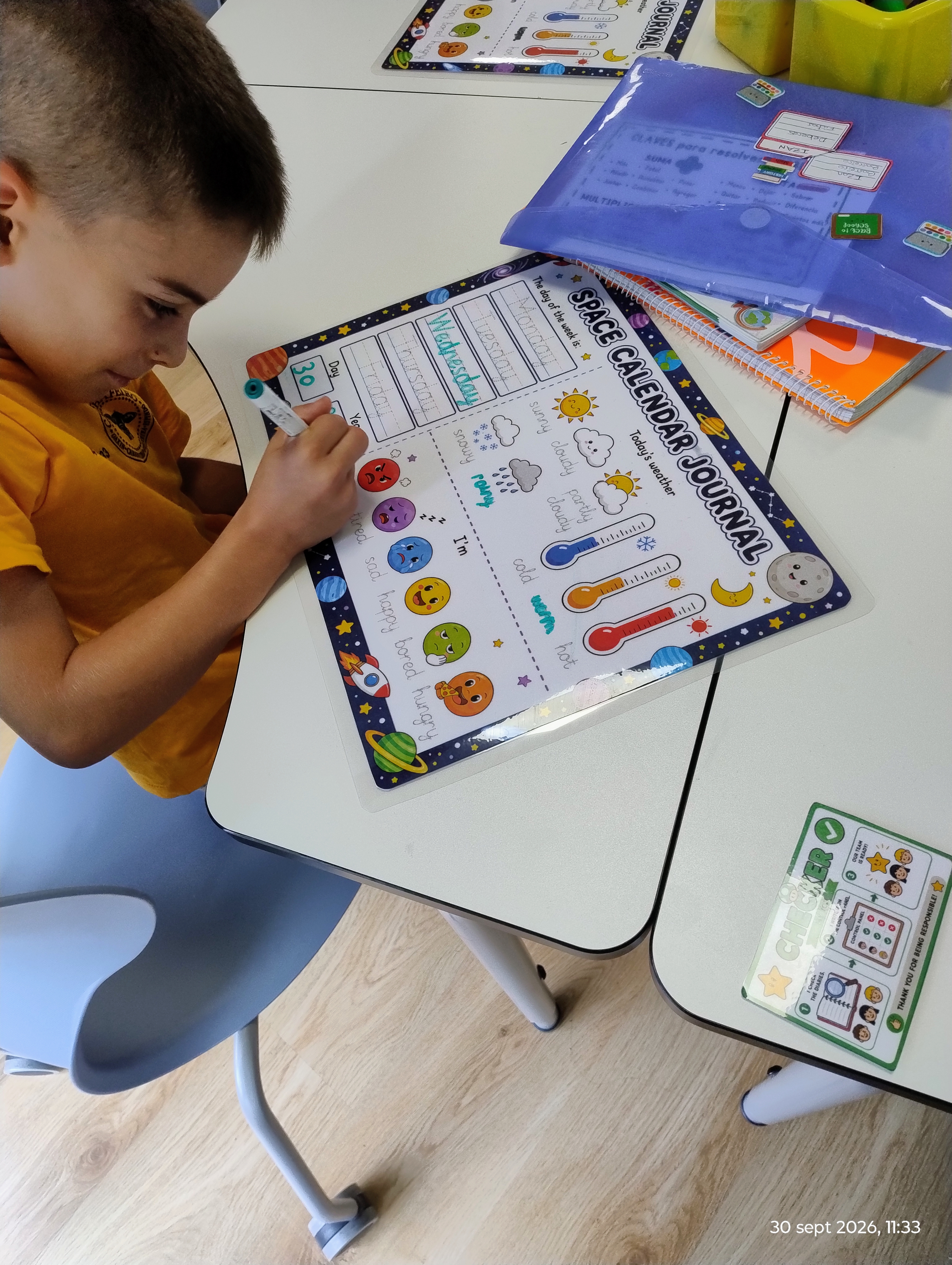
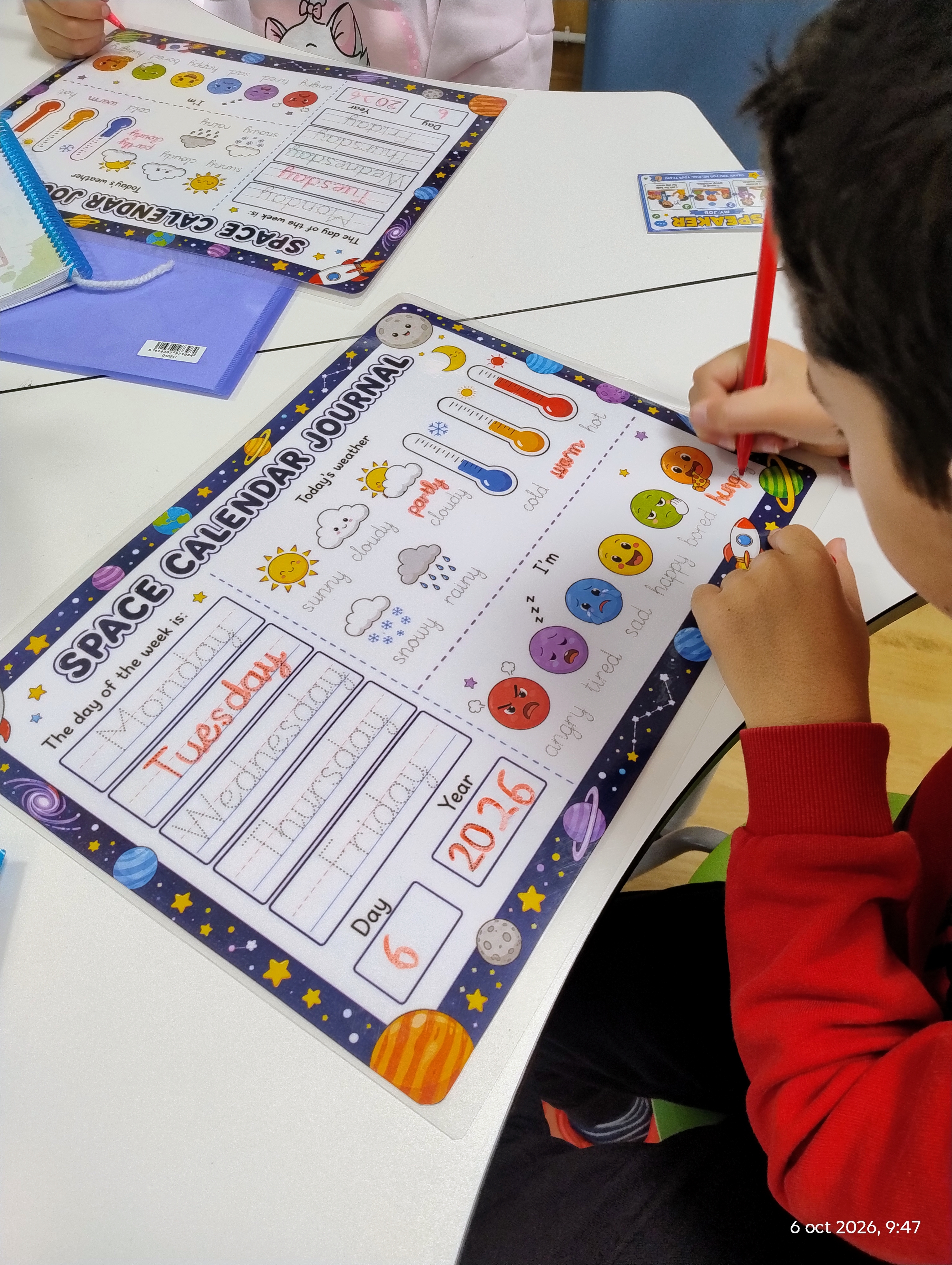
In the first years of Primary School, we start our lessons with our calendar routine.
Each child has an individual worksheet to practise:
- Days: What day is it today?
- Weather: What’s the weather like today?
- Feelings: How are you today?
These simple routines help us learn everyday English, answer questions and become more independent.
Everyone has a chance to participate!
No primeiro ciclo de Primaria, comezamos as sesións coas nosas rutinas do calendario. Cada neno e nena utiliza unha folla individual para practicar:
- Days: What day is it today?
- Weather: What’s the weather like today?
- Feelings: How are you today?
Estas pequenas actividades axúdannos a adquirir vocabulario, comprender preguntas cotiás e desenvolver autonomía. Ademais, todos e todas temos a oportunidade de participar activamente.
What’s next? Our visual classroom
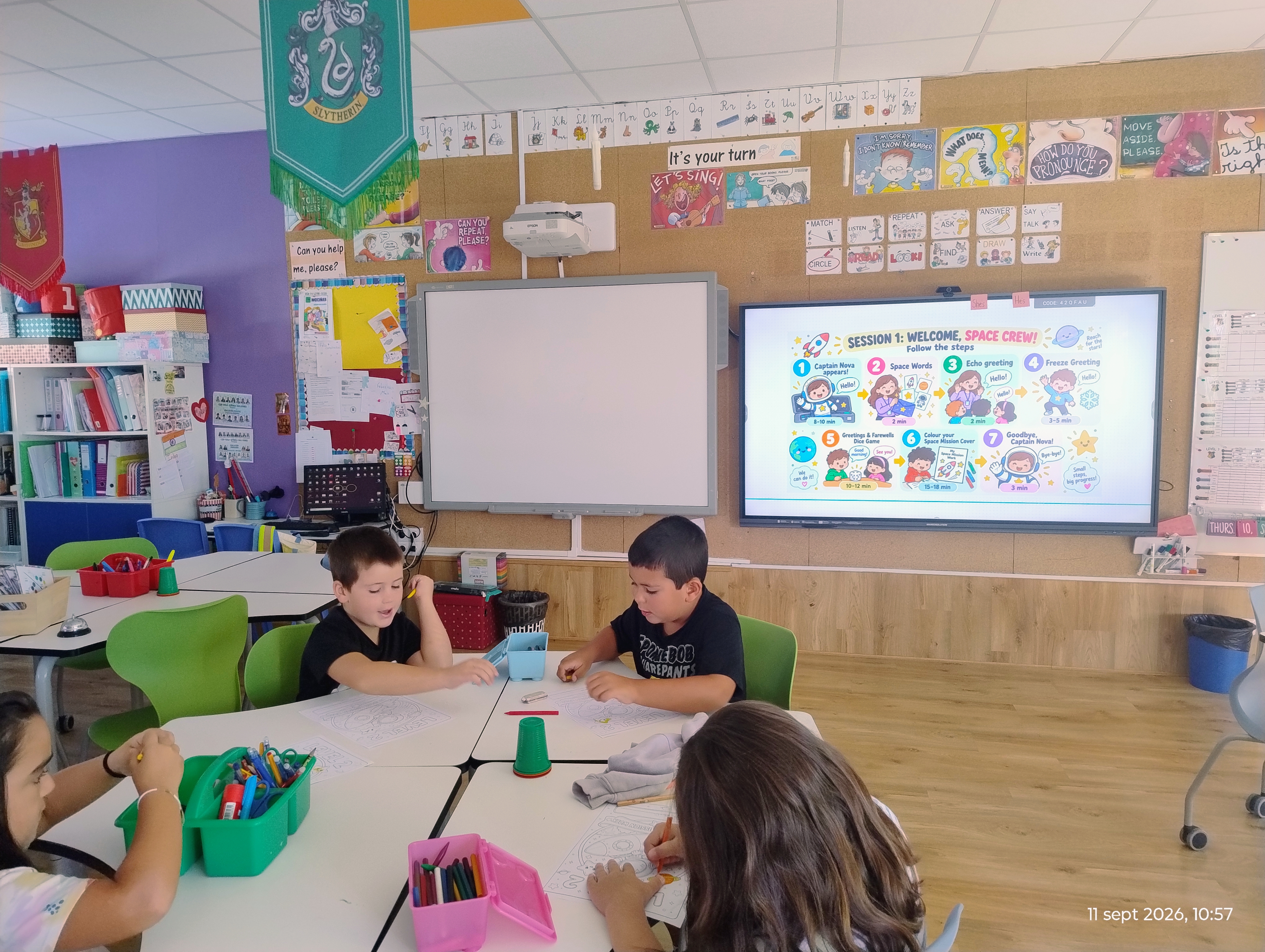
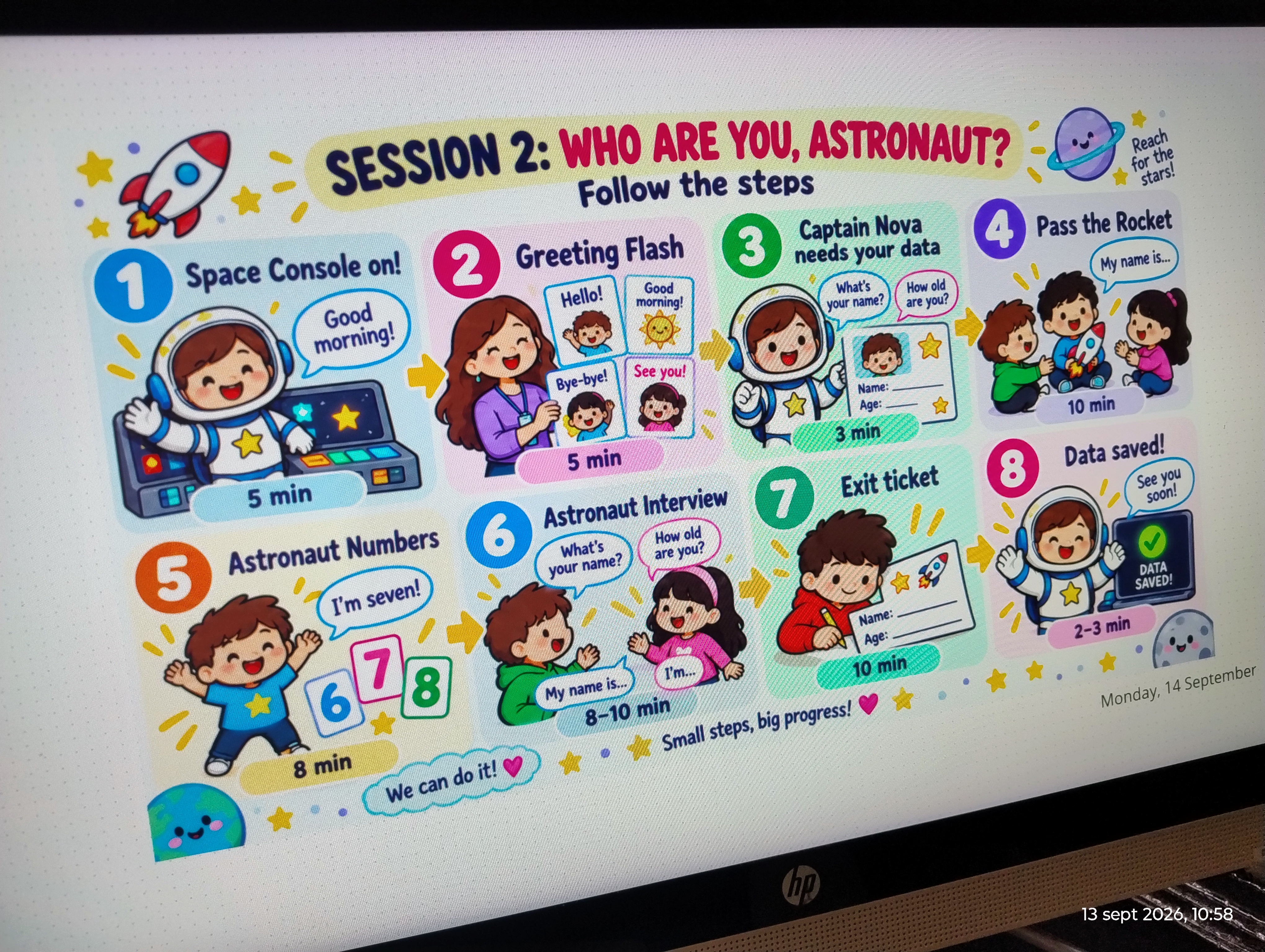
We use pictures and visual symbols to show the activities we are going to do during the lesson.
Hello → Calendar → Game → Activity → Goodbye!
These pictures help children understand what comes next.
They also help us feel more confident, organised and independent.
Empregamos imaxes e pictogramas para mostrar a secuencia de actividades de cada sesión.
Hello → Calendar → Game → Activity → Goodbye!
Deste xeito, podemos anticipar o que imos facer, comprender mellor a organización da clase e avanzar con maior seguridade e autonomía.
Ready, steady, play! Let’s remember!
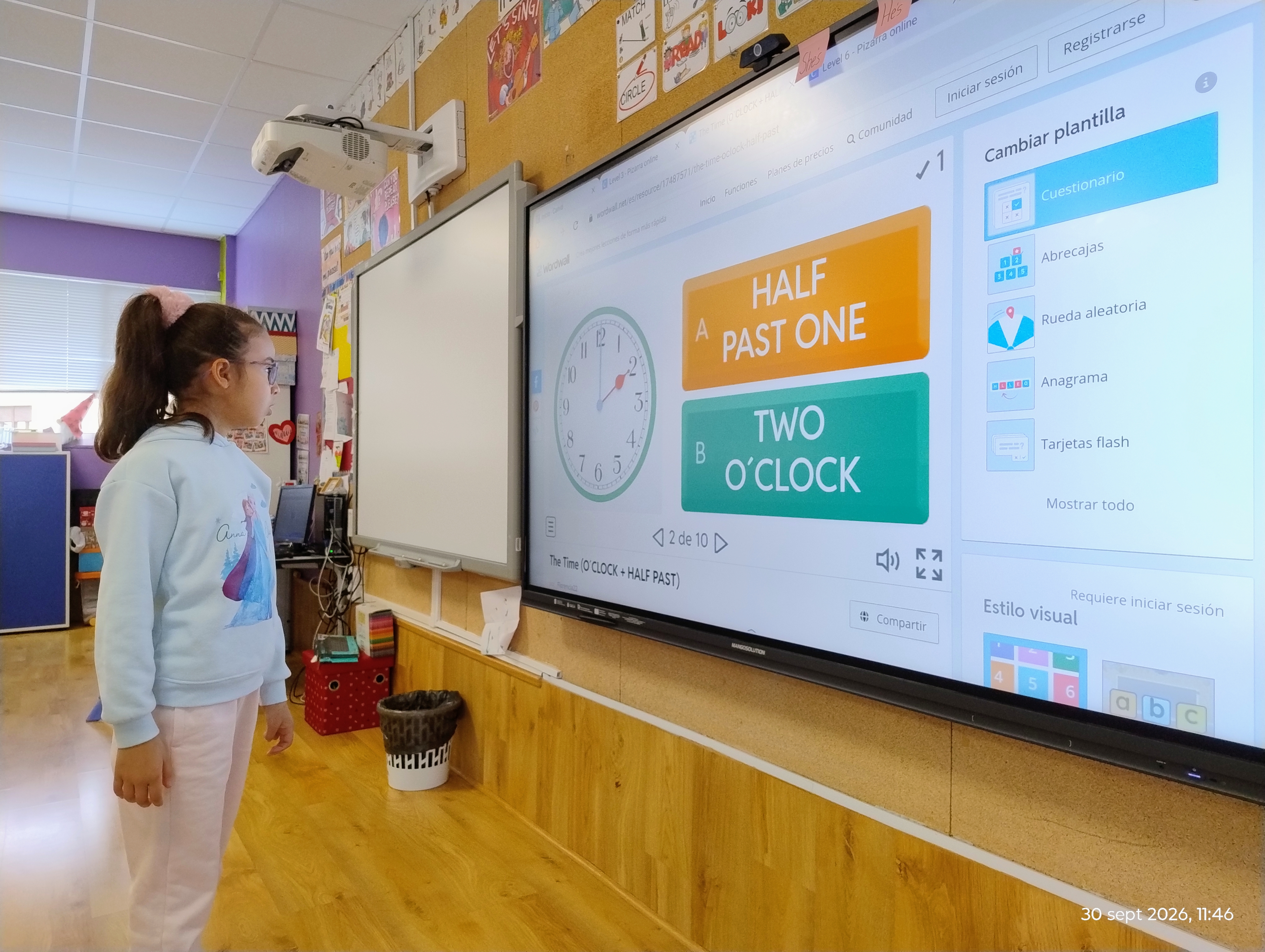
We often start our English lessons with a short online game.
Do you remember? Let’s play!
These games help us remember words and ideas from previous lessons.
They are a fun way to review vocabulary and get ready to learn something new.
Ao comezo de moitas sesións, utilizamos pequenos xogos dixitais para recordar o aprendido anteriormente.
Do you remember? Let’s play!
Estes retos permítennos activar coñecementos previos, repasar vocabulario e conectar as novas aprendizaxes coas anteriores dunha maneira dinámica e motivadora.
Hands-on English! Learning by doing
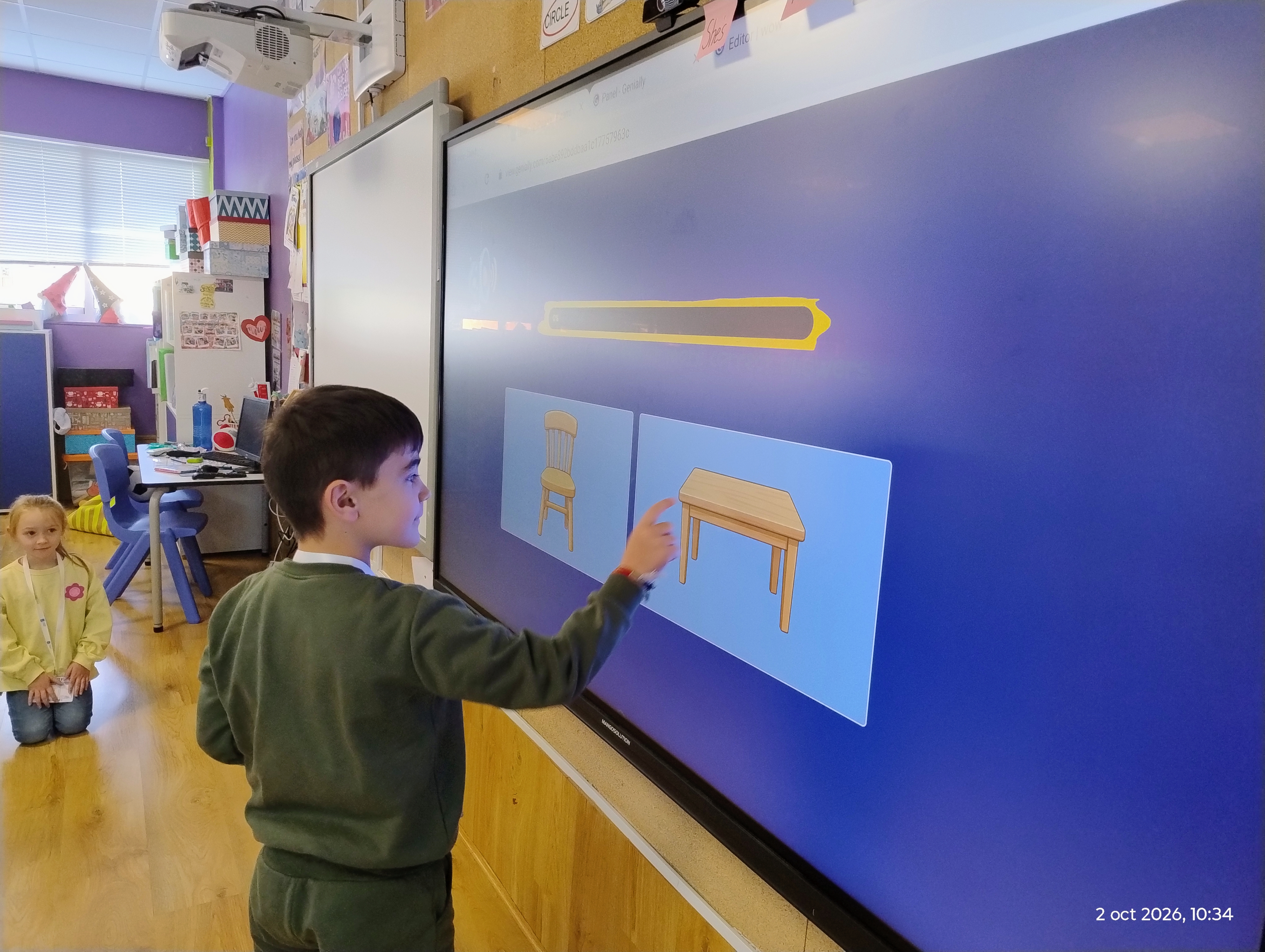
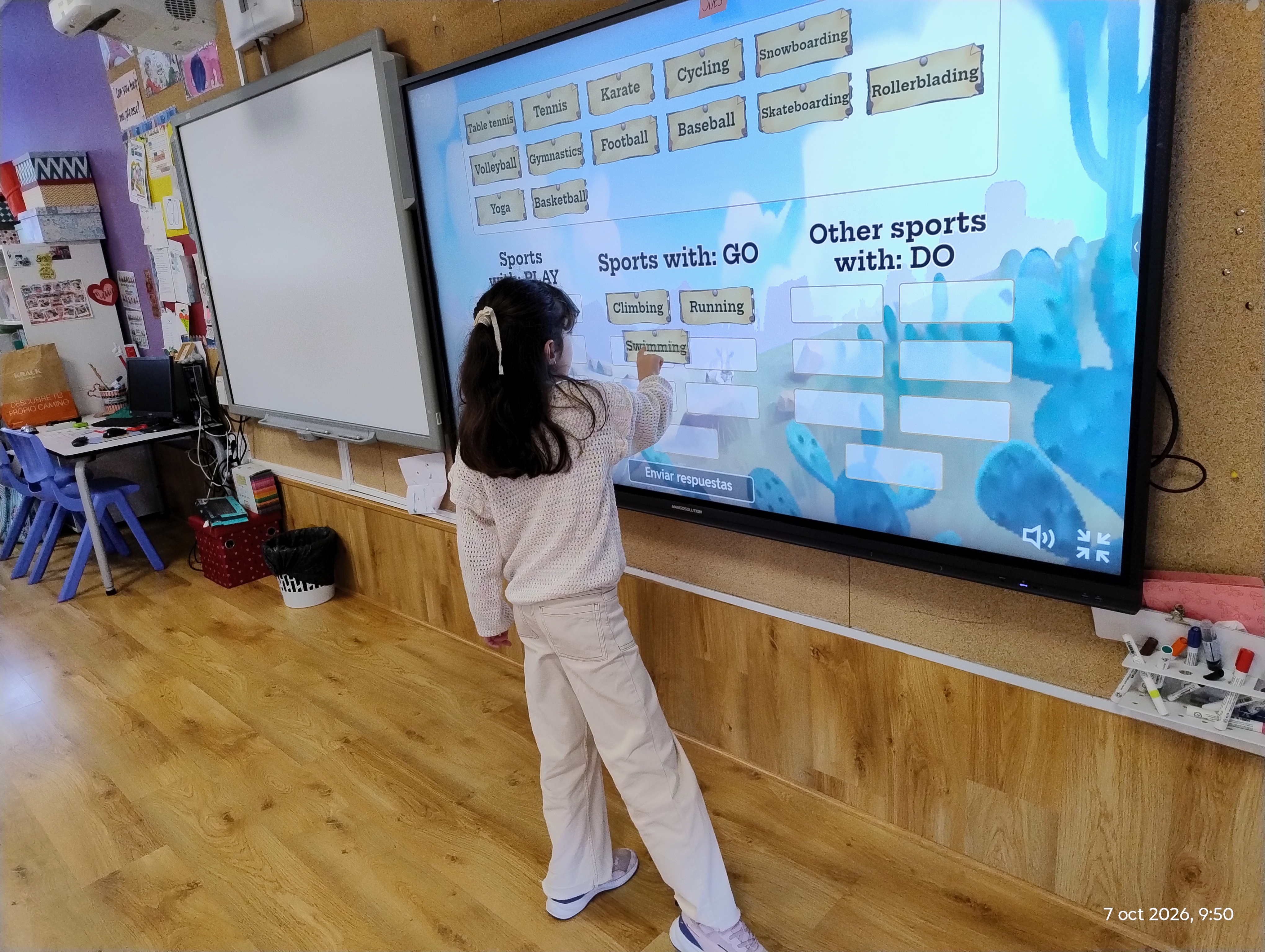
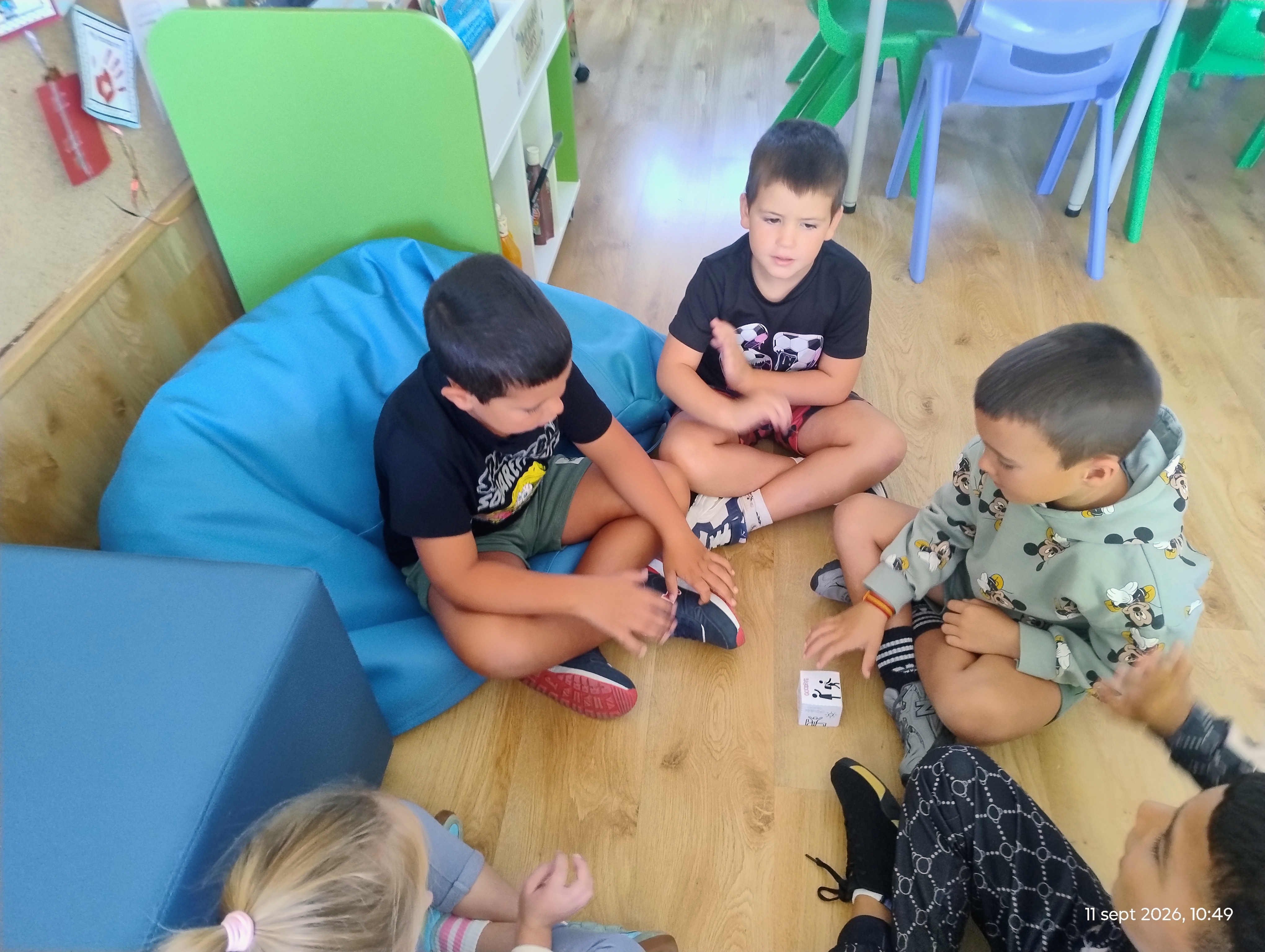
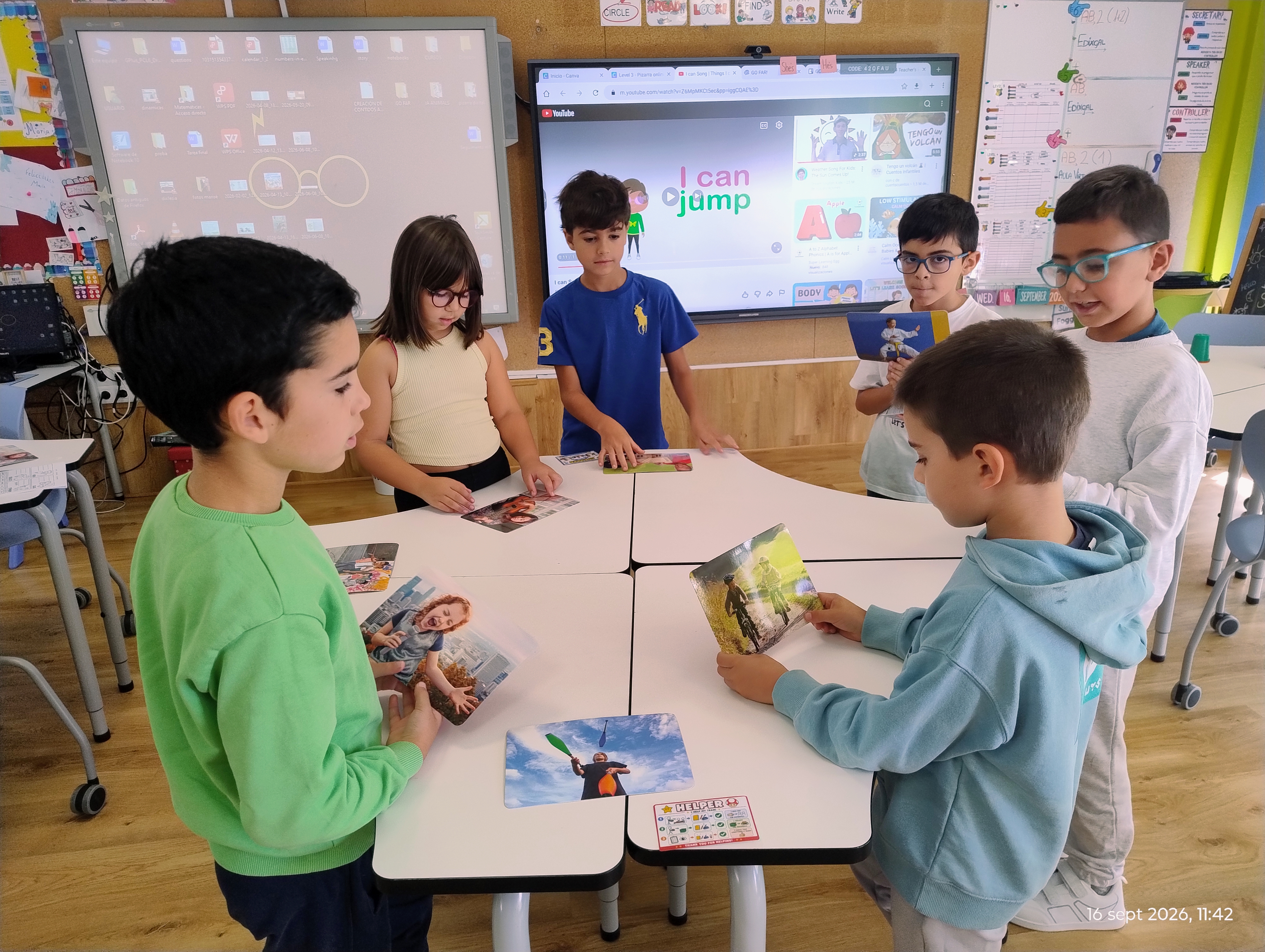
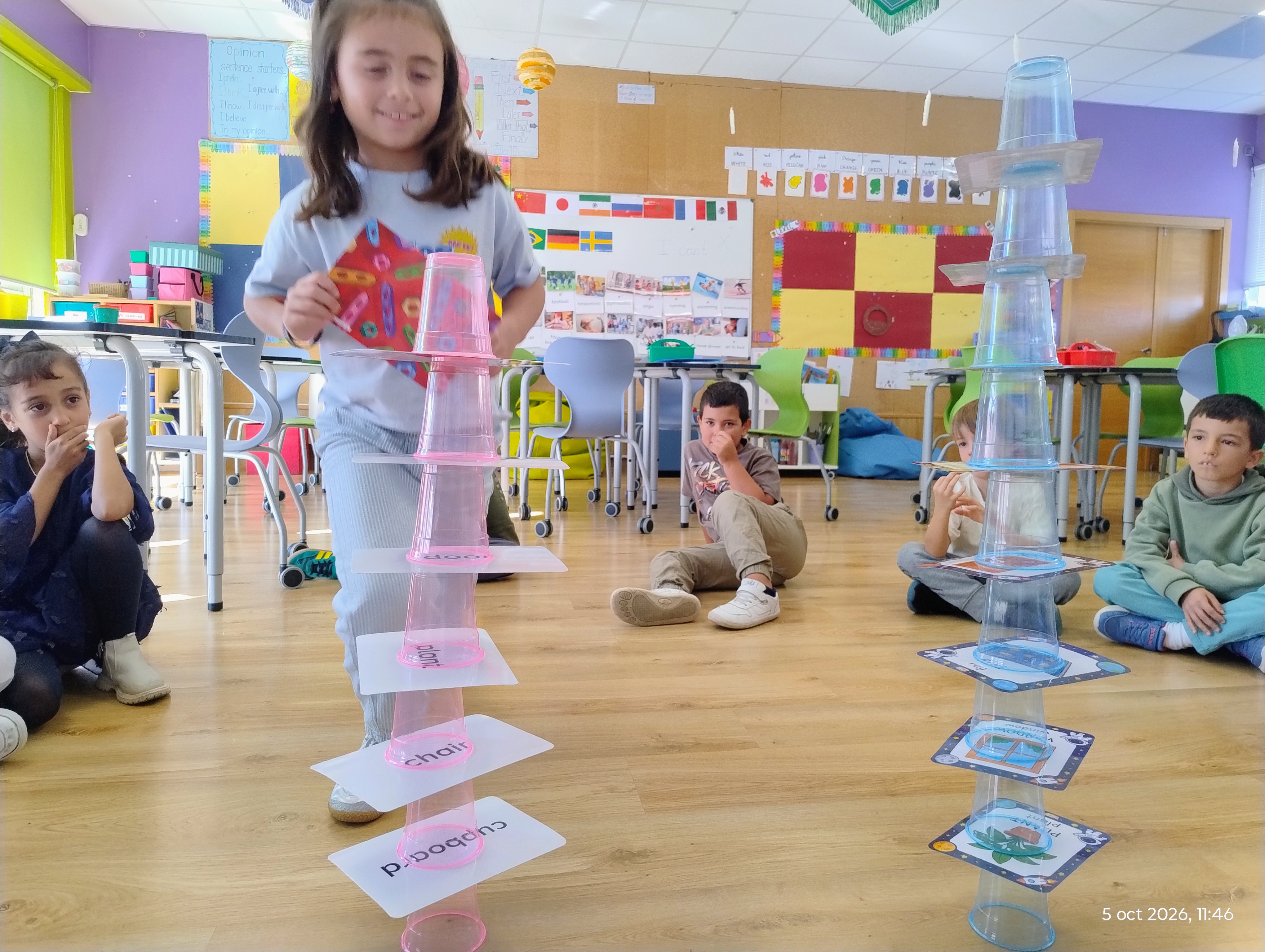
We love playing with flashcards, memory games, dominoes and matching games.
These hands-on activities help us practise vocabulary in a fun and active way.
We play individually, in pairs or in small groups.
We also learn to take turns, listen to our friends and help each other.
Find it! Match it! Your turn! Well done!
As tarxetas ilustradas (flashcards), os xogos de memoria (memory games), os dominós e os xogos de asociación tamén forman parte das nosas sesións.
A través destes materiais practicamos o vocabulario de forma activa, desenvolvemos a atención e aprendemos a colaborar, respectar as quendas e comunicarnos en inglés.
Find it! Match it! Your turn!
Exit tickets! What did we learn today?
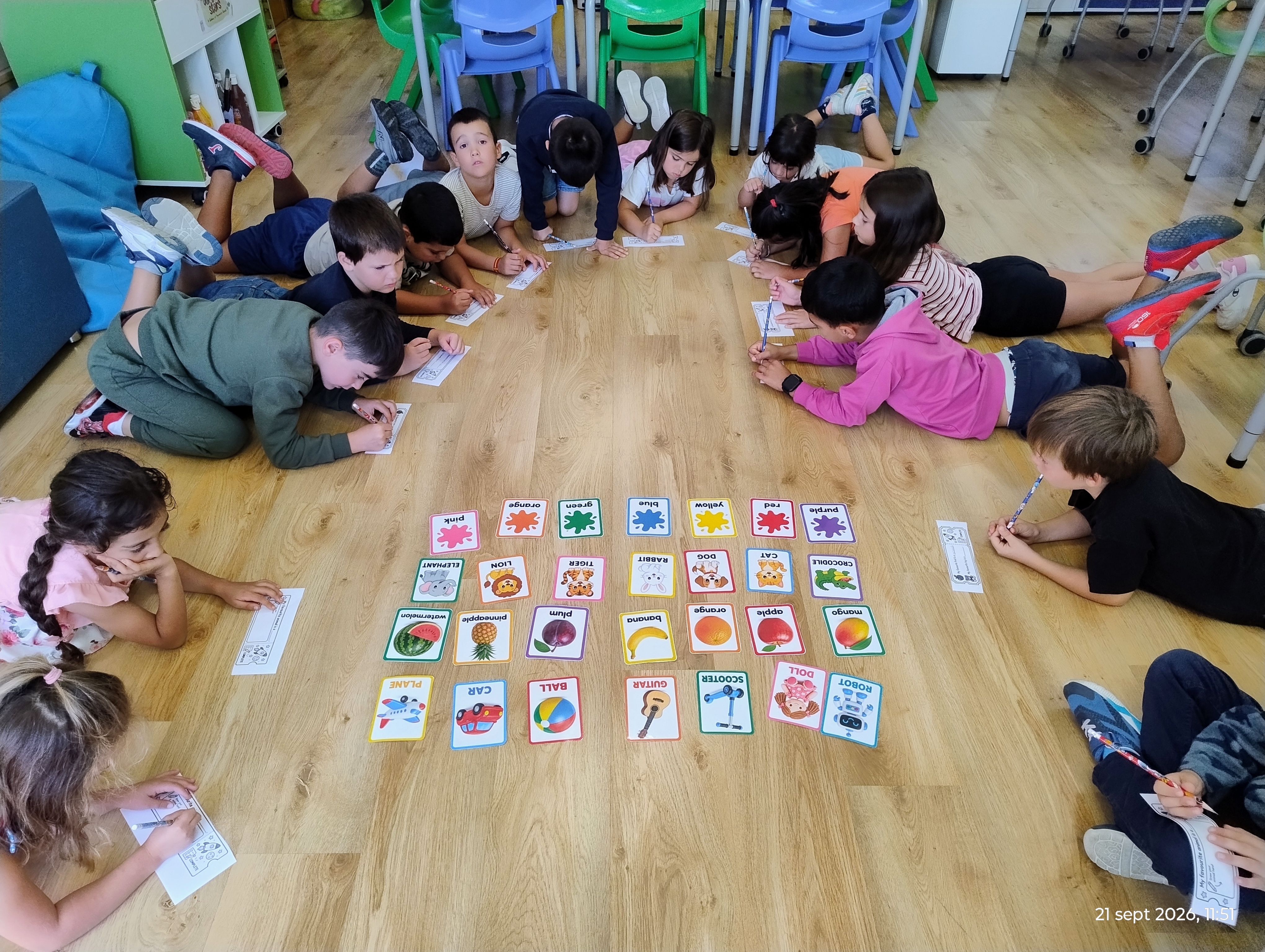
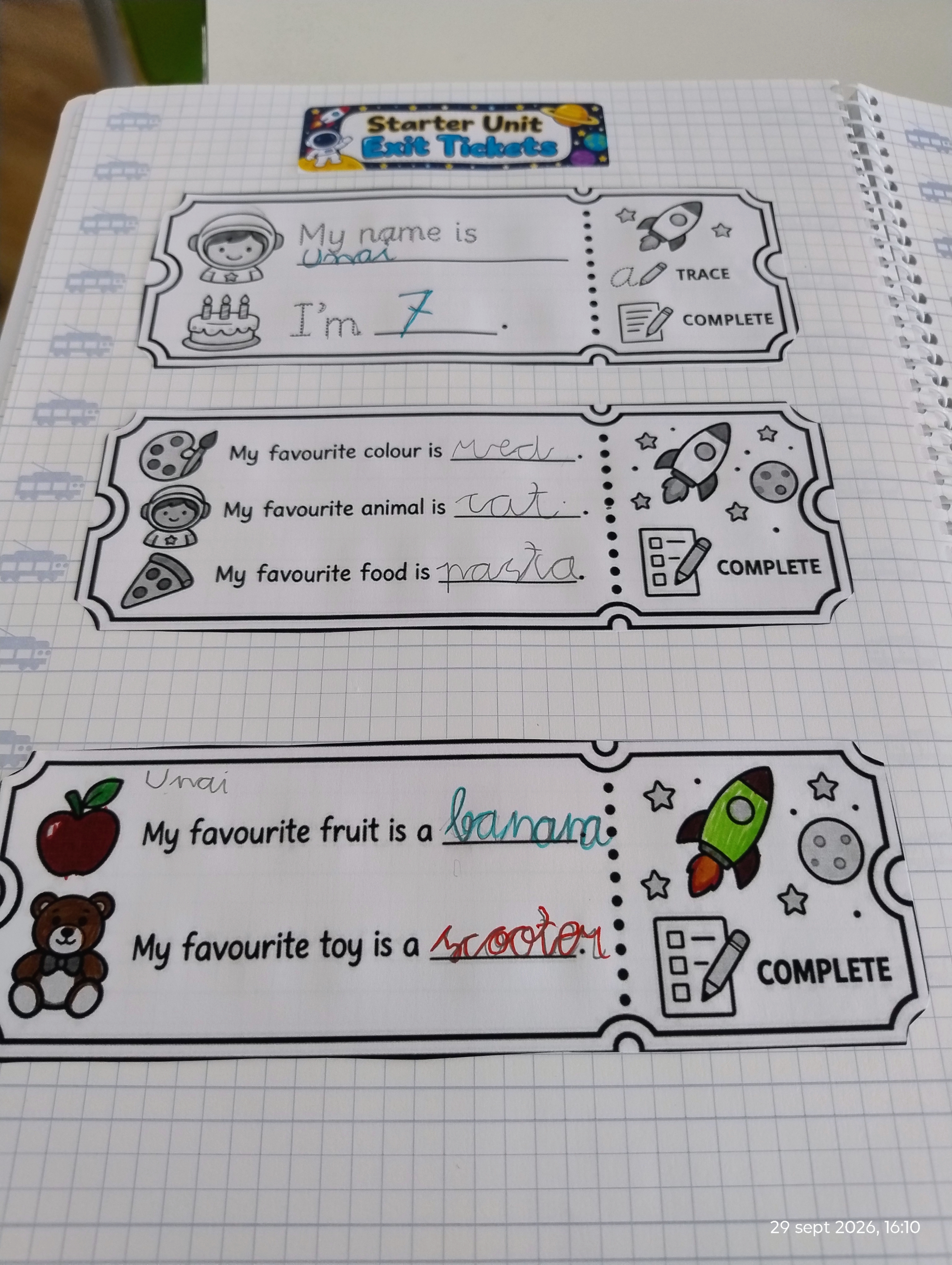
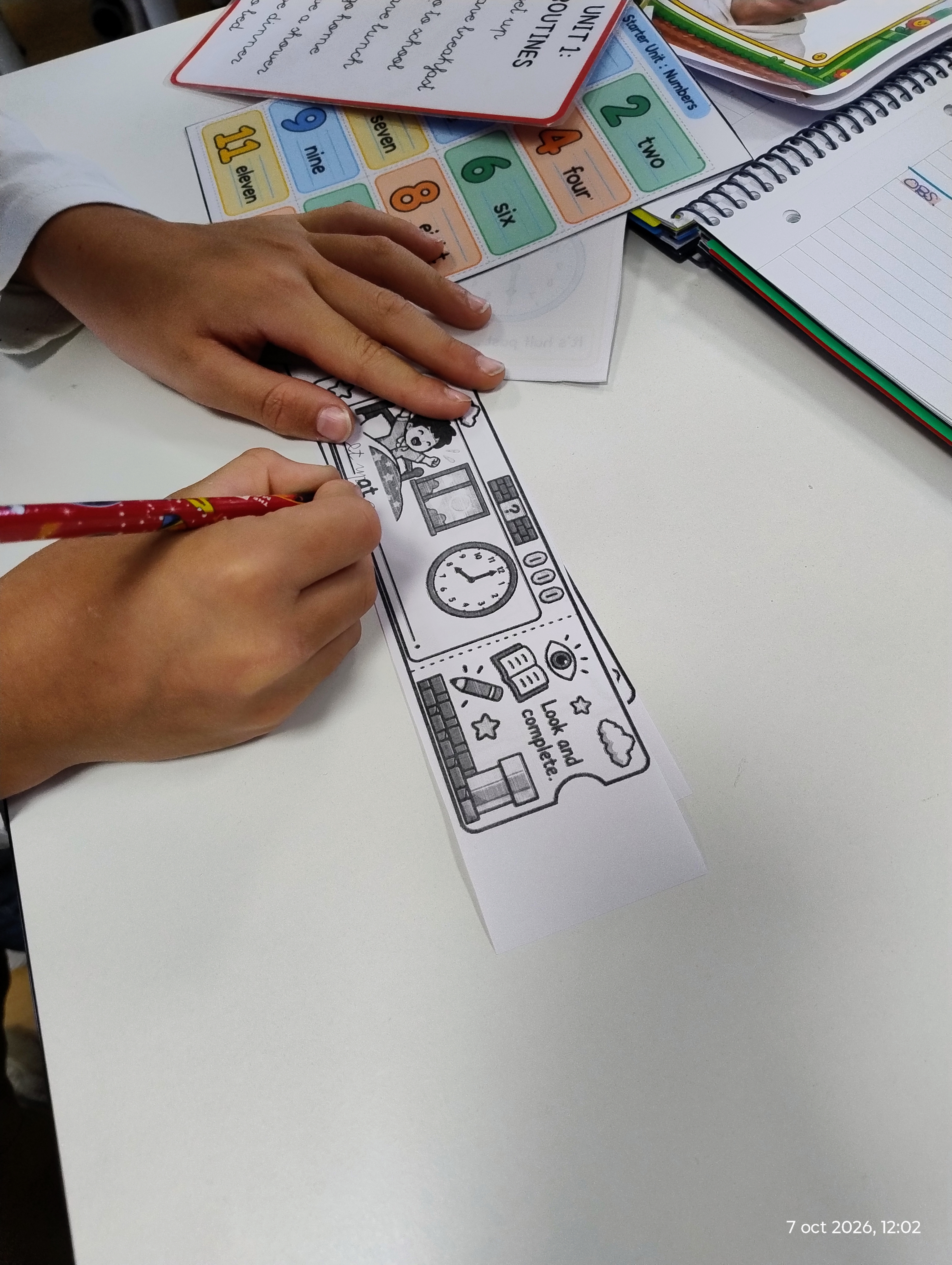
At the end of some lessons, we use small activities called exit tickets.
We may say a new word, answer a question, finish a sentence or share something we have learned.
These activities help children see their progress. They also help the teacher understand what children know and what they need to practise again.
Para rematar algunhas sesións, utilizamos pequenas actividades de saída, coñecidas como exit tickets.
Podemos dicir unha palabra nova, responder unha pregunta, completar unha frase ou compartir algo que aprendemos.
Estas pequenas reflexións axúdannos a ser conscientes dos nosos progresos e permítennos identificar os contidos que necesitamos seguir practicando.






Deixar unha resposta