In our 4th grade classroom, we carried out a fun and very active activity to reinforce jobs vocabulary and the English structures He’s a/an… and She’s a/an…. The lesson was full of movement, cooperation and oral language practice.
The whole class worked together as one team. Students stood in a line at one side of the classroom. On the opposite side, there was a panel with word cards showing the structures needed to build the sentences: He’s, She’s, a, an and different jobs.
Na aula de 4º de Educación Primaria realizamos unha actividade lúdica e moi dinámica para reforzar o vocabulario das profesións e as estruturas en lingua inglesa He’s a/an… e She’s a/an…. Foi unha sesión chea de movemento, cooperación e moita lingua oral.
A actividade desenvolveuse co grupo completo, traballando todos xuntos como un gran equipo. O alumnado colocouse en fila nun extremo da aula. No extremo contrario había un panel con tarxetas que recollían as palabras necesarias para construír as frases: He’s, She’s, a, an e os nomes das distintas profesións.
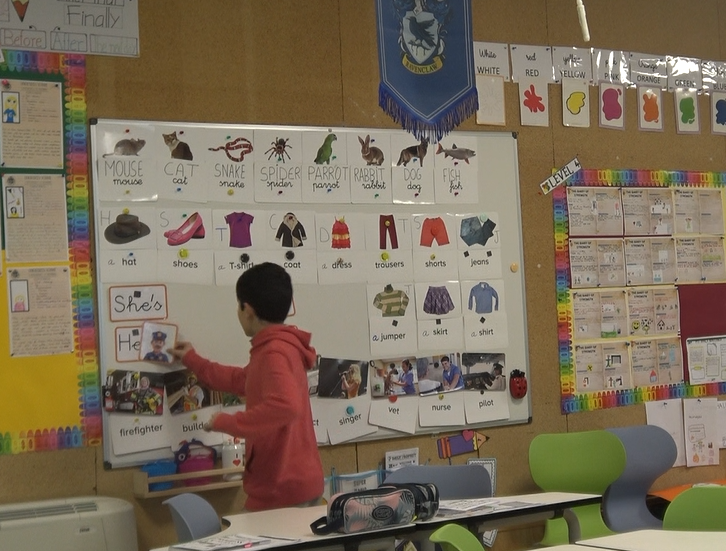
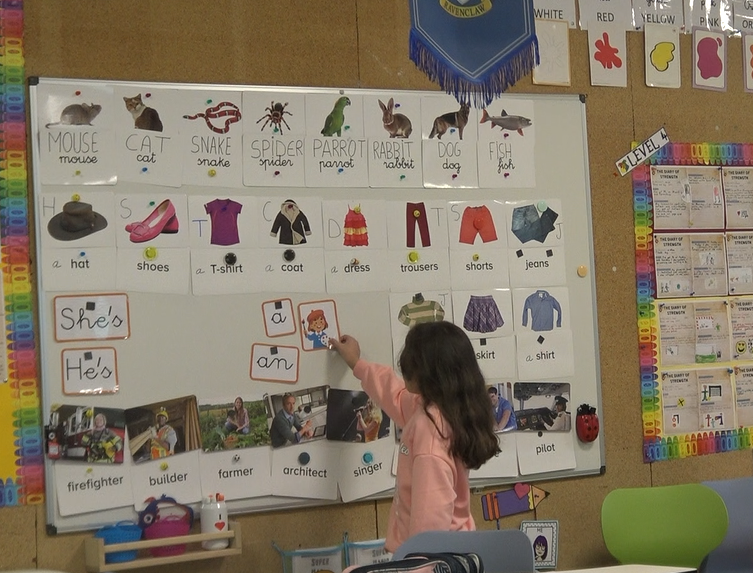
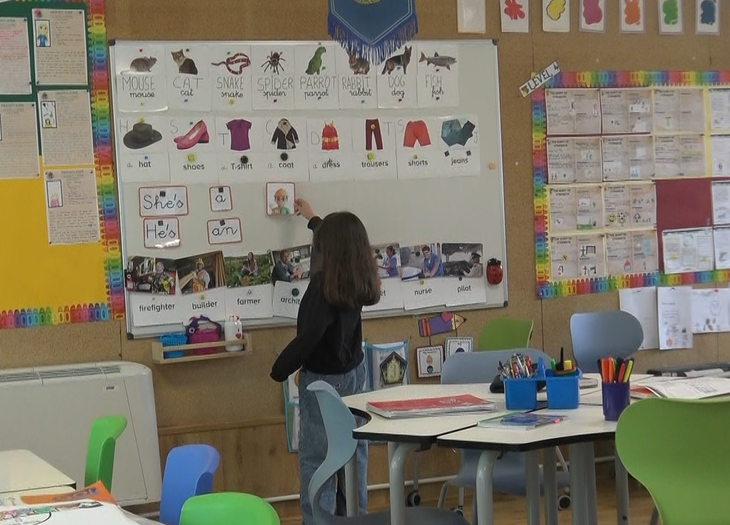
On their side of the classroom, students had a pile of picture cards with people doing different jobs. Each student took a card, looked carefully at the picture and then ran to the panel. When they arrived, they said the sentence out loud while pointing to the correct words on the panel, building the sentence step by step.
For example, if the picture showed a woman who is a teacher, the student said She’s a teacher, touching She’s, then a and finally placing the picture card at the end of the sentence.
No seu lado da aula, o alumnado tiña un montón de tarxetas con imaxes de persoas exercendo diferentes traballos. Cada neno ou nena collía unha tarxeta, observaba a imaxe e saía correndo cara ao panel. Ao chegar, debía dicir a frase correspondente en voz alta mentres ía sinalando as palabras axeitadas no panel, construíndo a oración paso a paso.
Por exemplo, se a tarxeta mostraba unha muller que é mestra, o alumno ou alumna dicía She’s a teacher, tocando co dedo She’s, logo a e finalmente teacher. Deste xeito, a lingua oral, a lectura e o movemento traballáronse ao mesmo tempo.
A very important part of this activity is that mistakes were not punished. When a student was not sure, they asked for help and the rest of the class supported them. This created a positive, safe and cooperative learning environment.
This activity is based on TPR (Total Physical Response), a methodology that helps students learn language through movement and action. Moving while learning helps students remember vocabulary better, stay motivated and enjoy the learning process.
Un aspecto clave da actividade é que non se penalizaron os erros. Cando alguén tiña dúbidas, pedía axuda ao grupo e entre todos buscaban a resposta correcta. Isto fomentou un clima de confianza, cooperación e aprendizaxe compartida.
Esta proposta baséase na metodoloxía TPR (Total Physical Response), que favorece a aprendizaxe da lingua a través do corpo e da acción. O movemento axuda a fixar o vocabulario, aumenta a motivación e fai que a aprendizaxe sexa máis significativa.
The main benefits of this activity are:
- student engagement
- continuous oral practice in English,
- better attention and memory through movement,
- and the development of teamwork and peer support.
Learning English is not only about books and worksheets.
Learning English is also about moving, speaking, listening and learning together.
Entre os principais beneficios desta actividade destacan:
- unha alta participación de todo o alumnado,
- a práctica oral constante en lingua inglesa,
- a mellora da atención e da memoria grazas ao movemento,
- e o desenvolvemento de habilidades sociais como a axuda entre iguais.
Aprender inglés non é só sentarse e escribir: tamén é moverse, falar, escoitar e compartir.
To carry out this activity, we used job picture cards and sentence structure cards (He’s, She’s, a, an…).
If you would like to try this activity in your classroom, you can download the materials here:







 Our English Corner's Blog
Deixar un comentario