In our English class, we enjoy helping children learn through play and hands-on activities. During Easter time, we did a fun activity for 1st and 2nd grade students, inspired by the story We’re Going on an Easter Egg Hunt.
This activity combined English learning, coding, problem-solving, and Easter fun in a motivating and engaging way for the children.
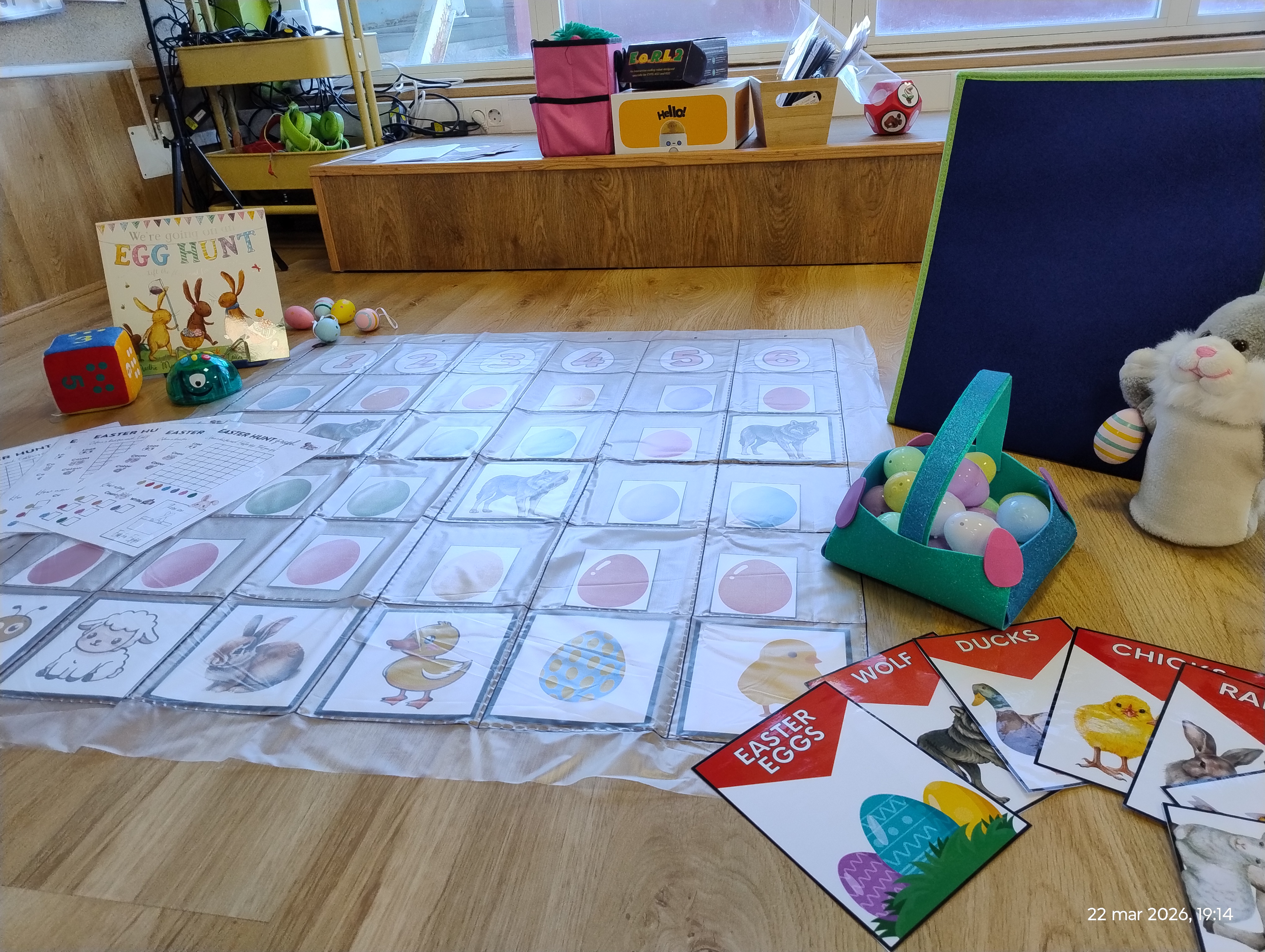
Coa chegada da Pascua, na aula de inglés quixemos crear unha proposta especial para aprender xogando. Inspirándonos no conto We’re Going on an Easter Egg Hunt, deseñamos unha actividade para 1º e 2º de Primaria na que combinamos lingua inglesa, creatividade, xogo e pensamento computacional a través do Bee-Bot.
How did the activity work?
We carried out this activity over two sessions.
Session 1: Storytelling, vocabulary and creativity
In the first session, we read the story We’re Going on an Easter Egg Hunt together. This was a lovely way to introduce the theme and create excitement around the activity.
After listening to the story, the children became familiar with the Easter vocabulary through different games and playful speaking activities. We worked on key words from the story in a dynamic and engaging way so that everyone could feel more confident with the language.
To complete the session, the children created their own illustrations based on the story. This gave them the chance to connect with the characters and events in a more personal and creative way.
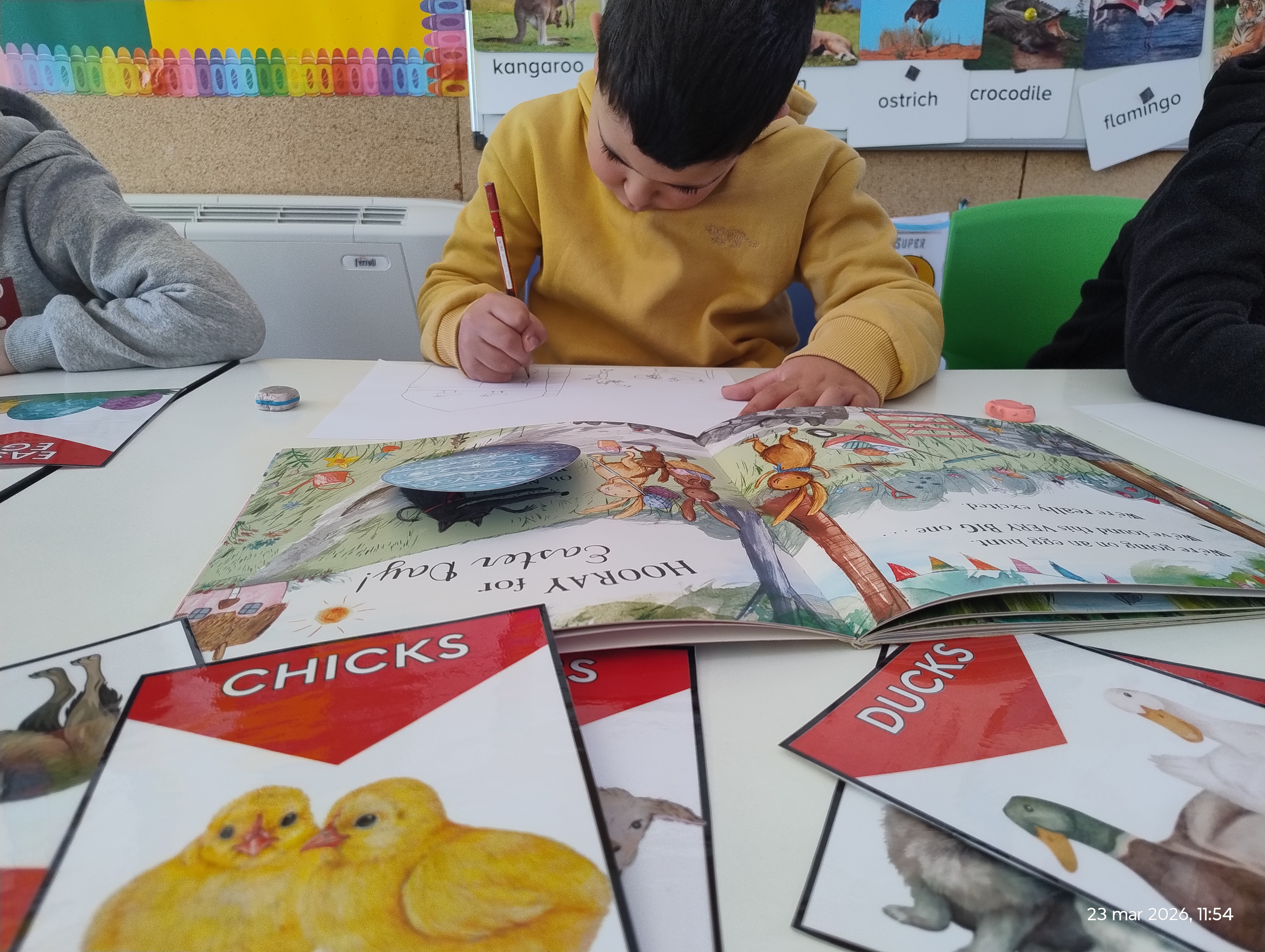
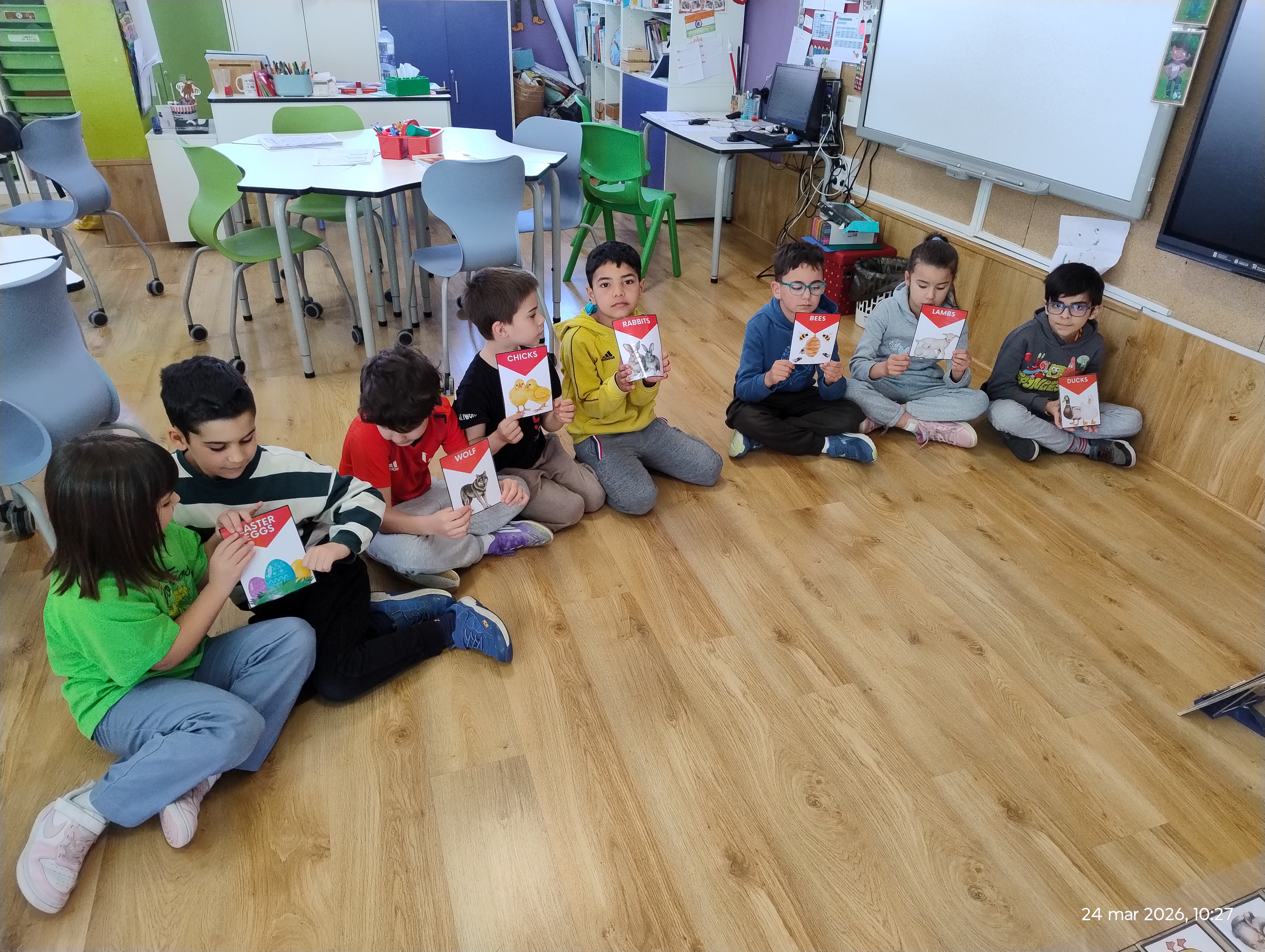
A actividade desenvolveuse en dúas sesións complementarias. Na primeira, o alumnado achegouse á historia e ao vocabulario de Easter a través do conto, xogos e ilustracións. Na segunda, puxeron en práctica o aprendido cun reto de programación con Bee-Bot.
Session 2: Bee-Bot in action
In the second session, we moved on to the Bee-Bot challenge.
First, each child picked an Easter egg from a basket. Inside, they found a picture showing only one small part of an animal. Their first challenge was to look carefully and guess which animal it could be.
Once they had guessed the animal, they rolled a dice and placed the Bee-Bot on the number they got. Then, they had to plan and program a route to move Bee-Bot to the correct animal on the mat.
There was an extra challenge too: they had to avoid the wolf card, so they needed to think carefully about the best path.
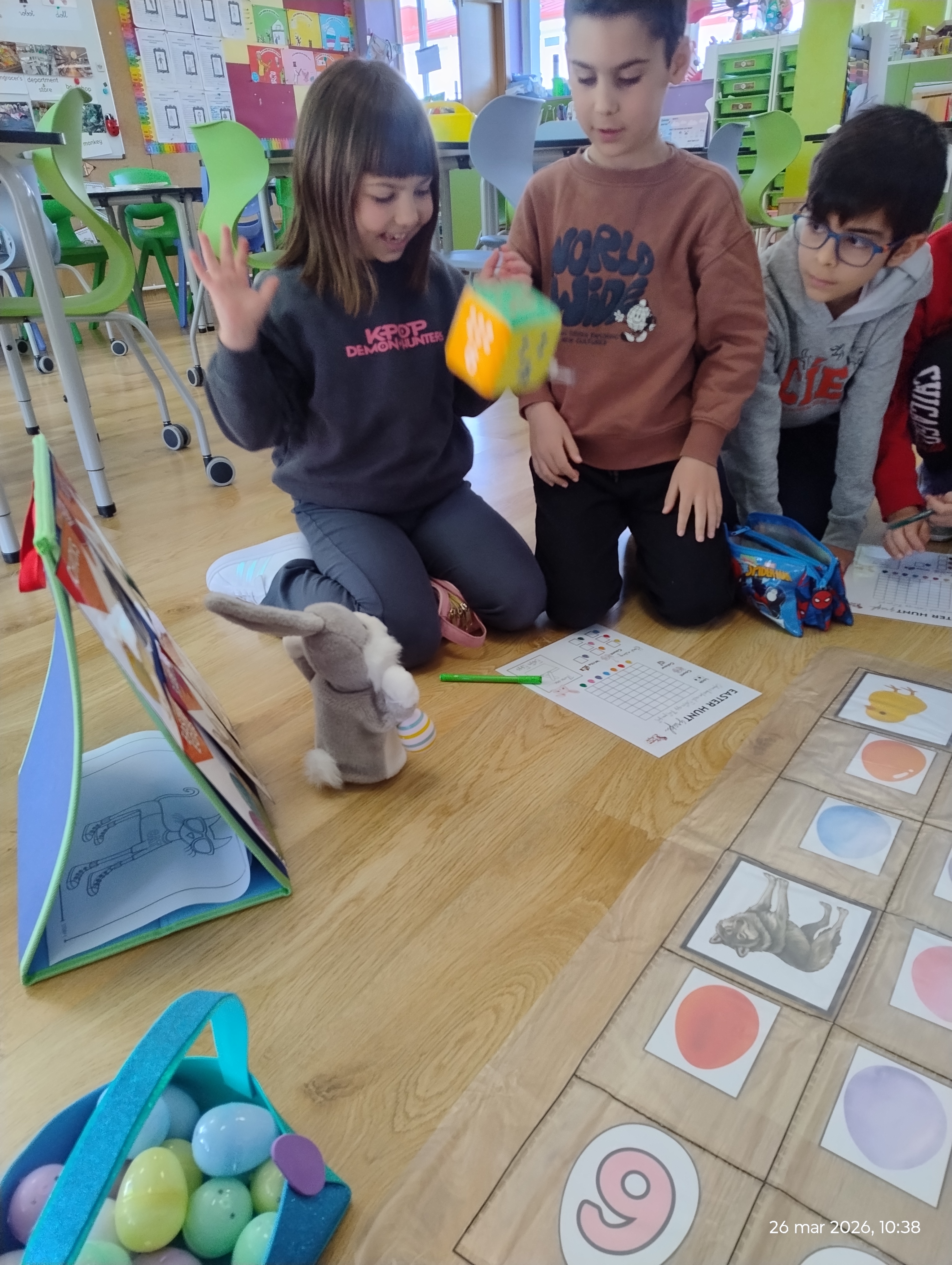
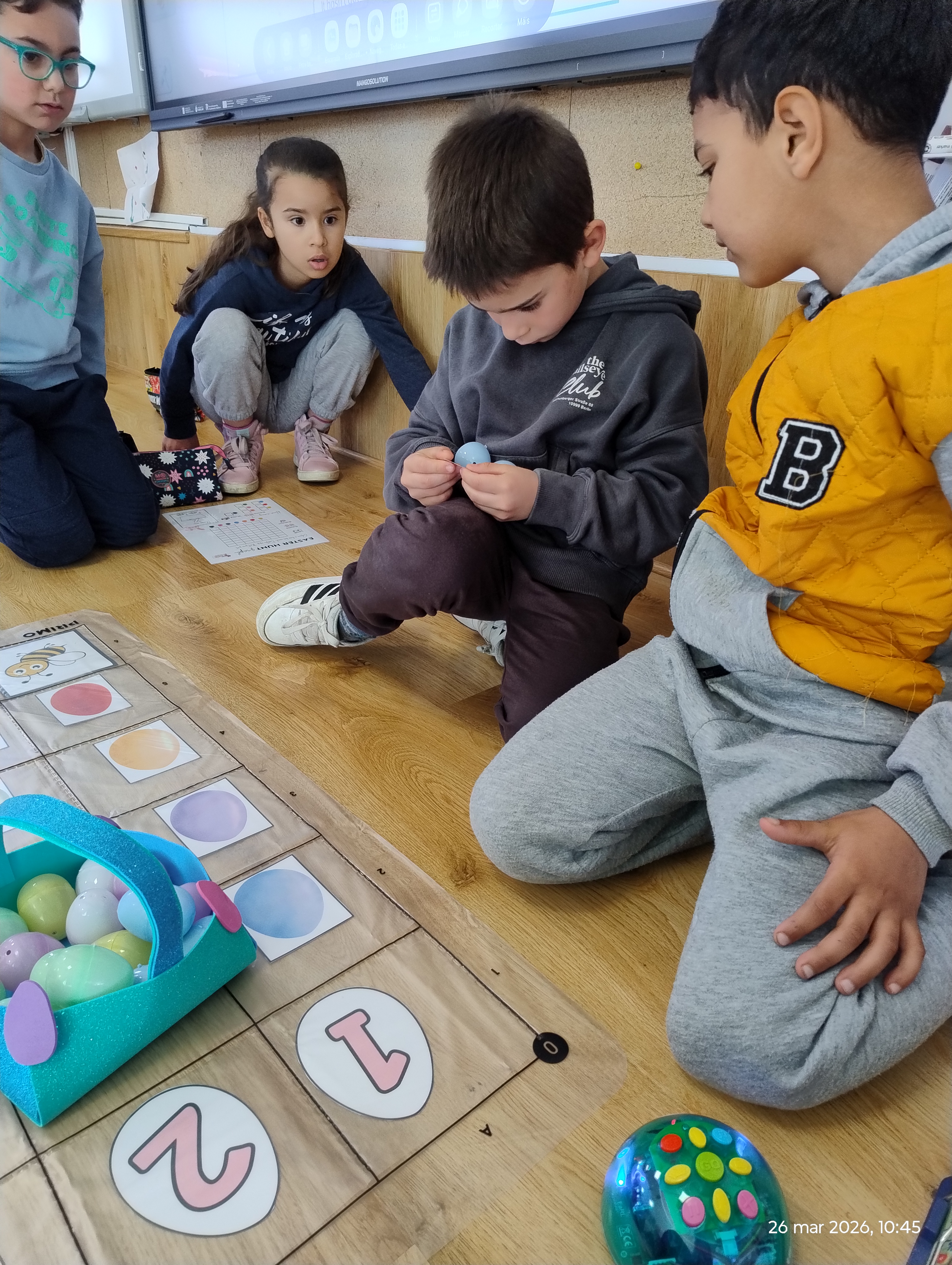
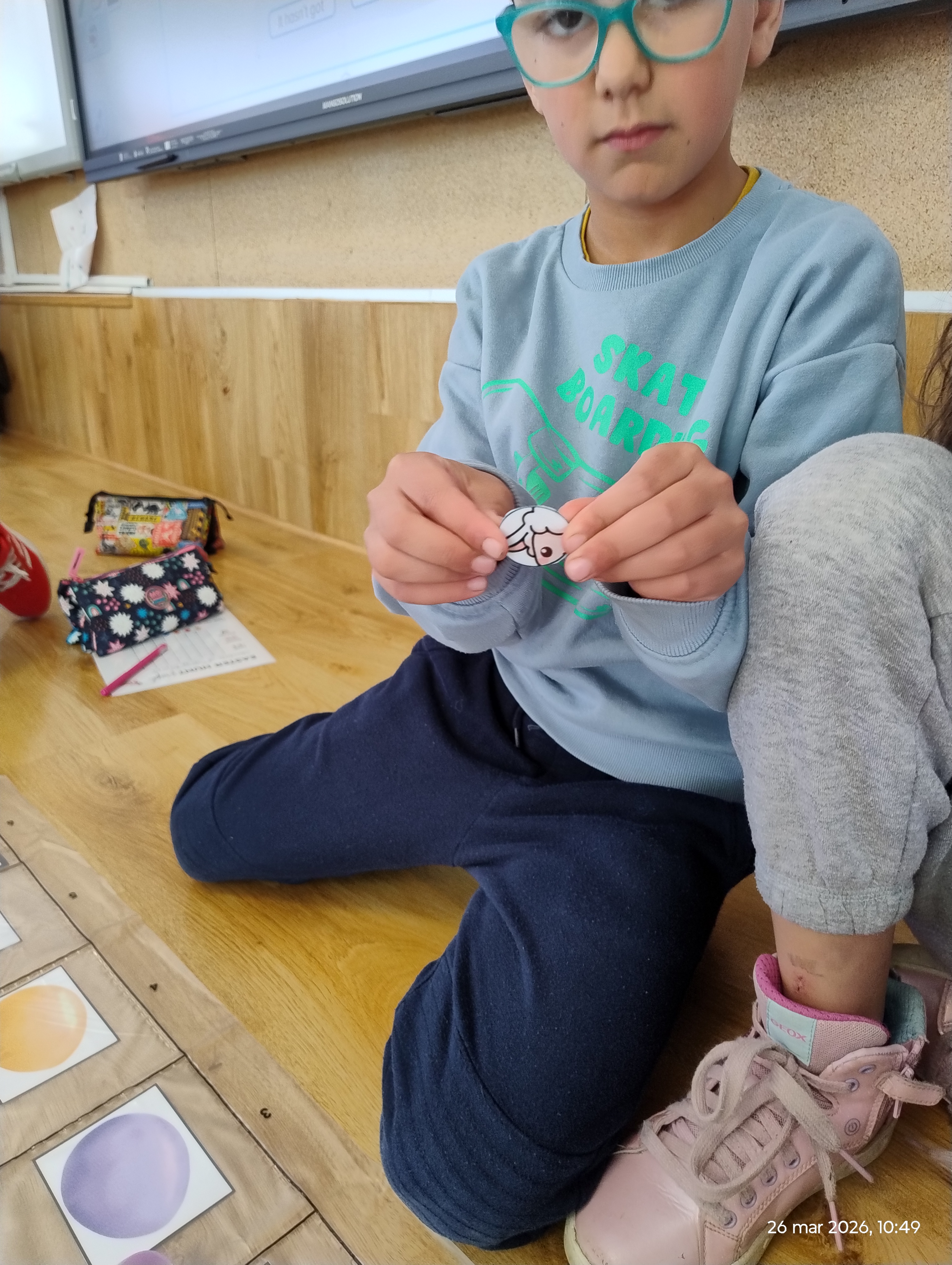
As Bee-Bot moved around the mat, it travelled over different Easter egg cards. The children had to count and record the eggs they found on their worksheet. After that, they completed a simple bar graph to show their results. At the end, we also counted the eggs by colour, which added another learning opportunity to the activity.
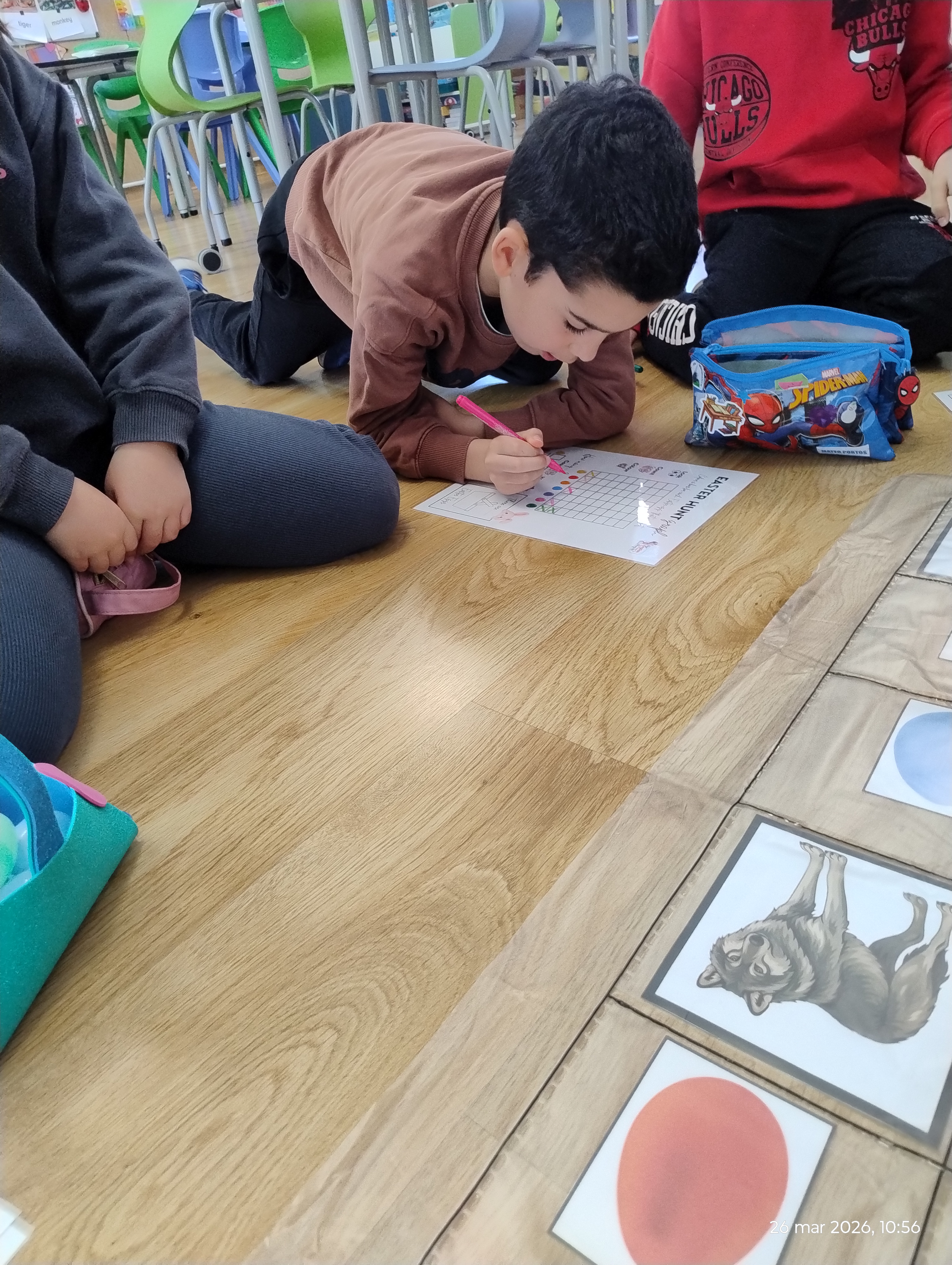
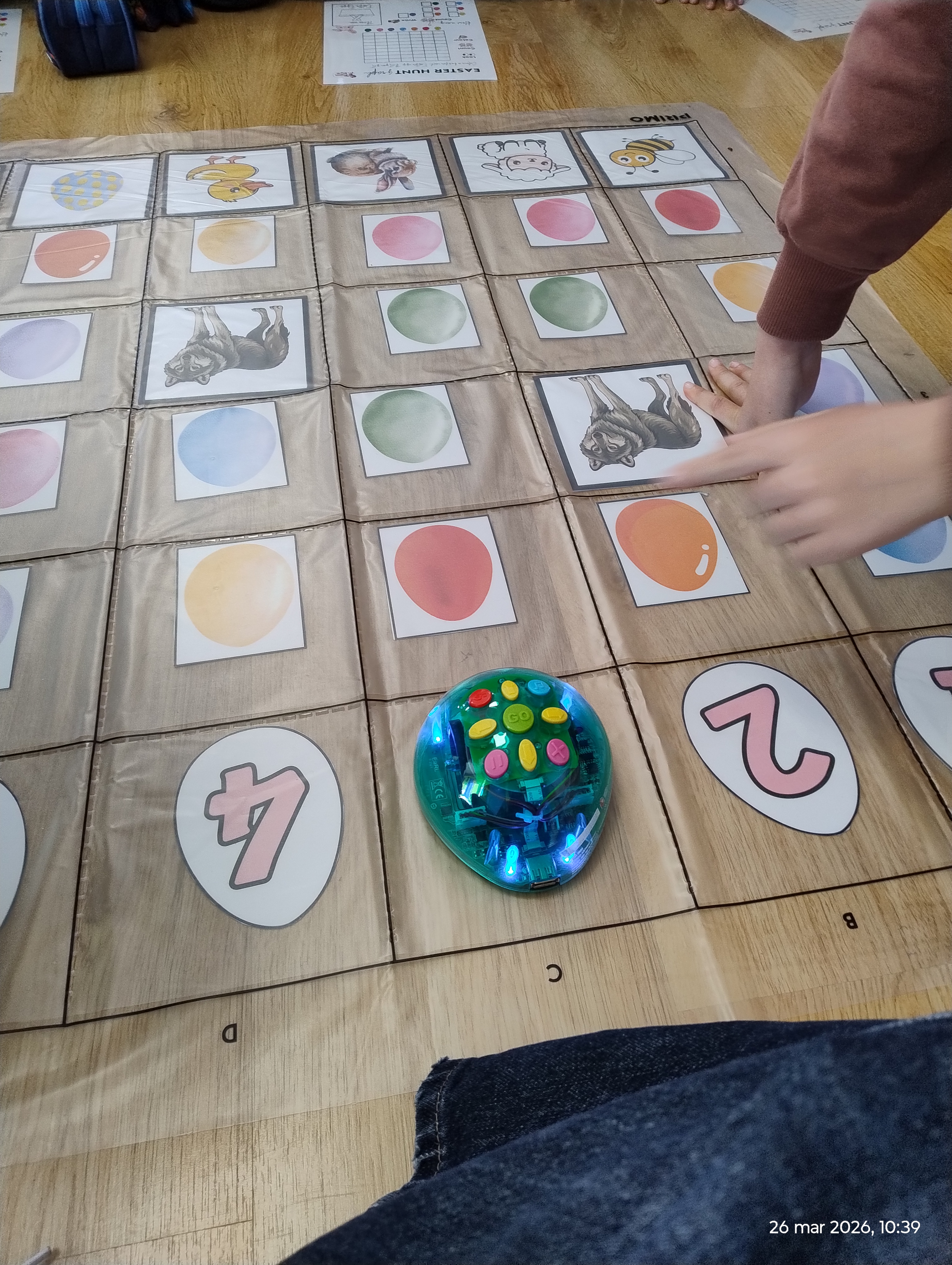
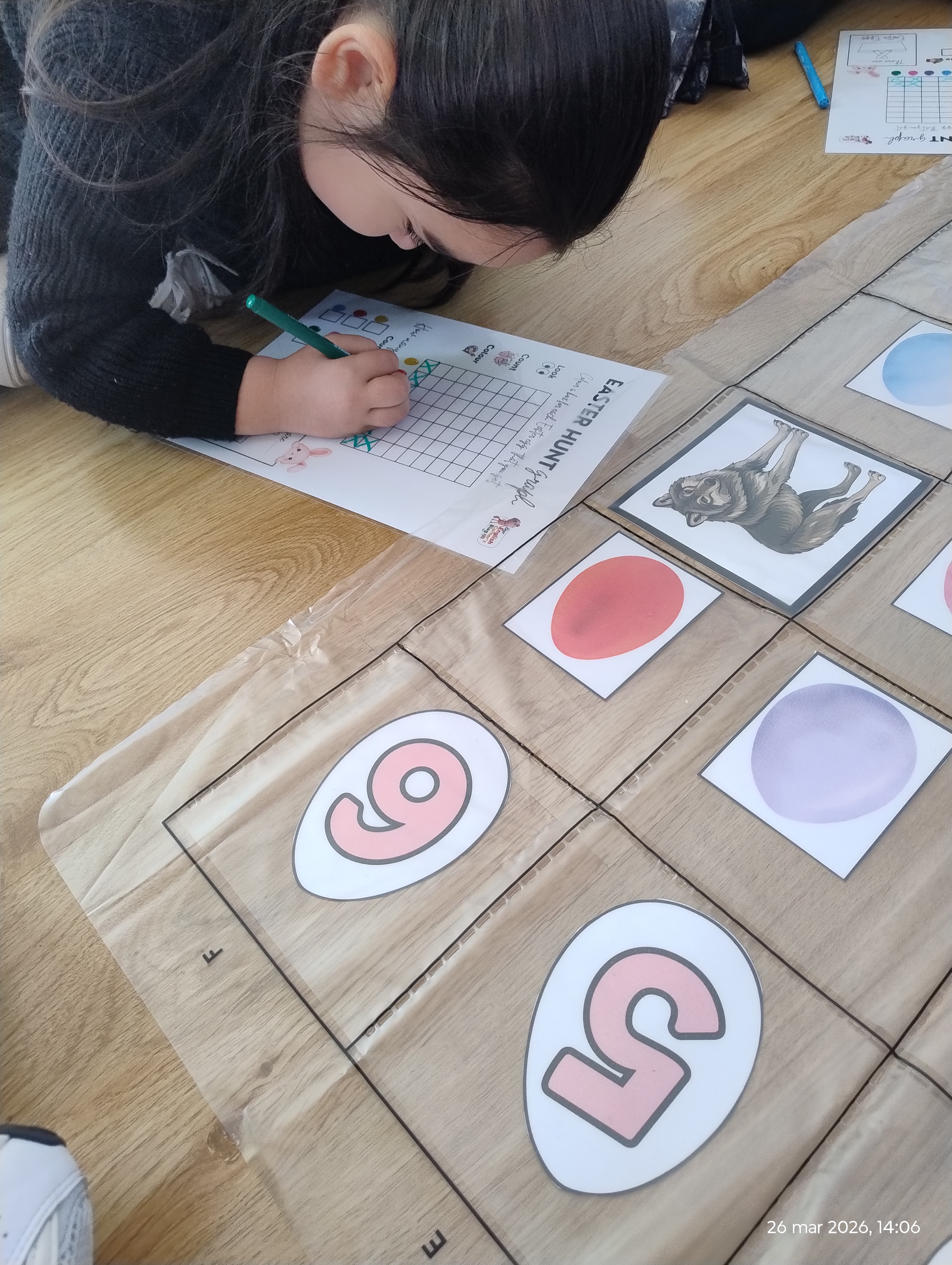
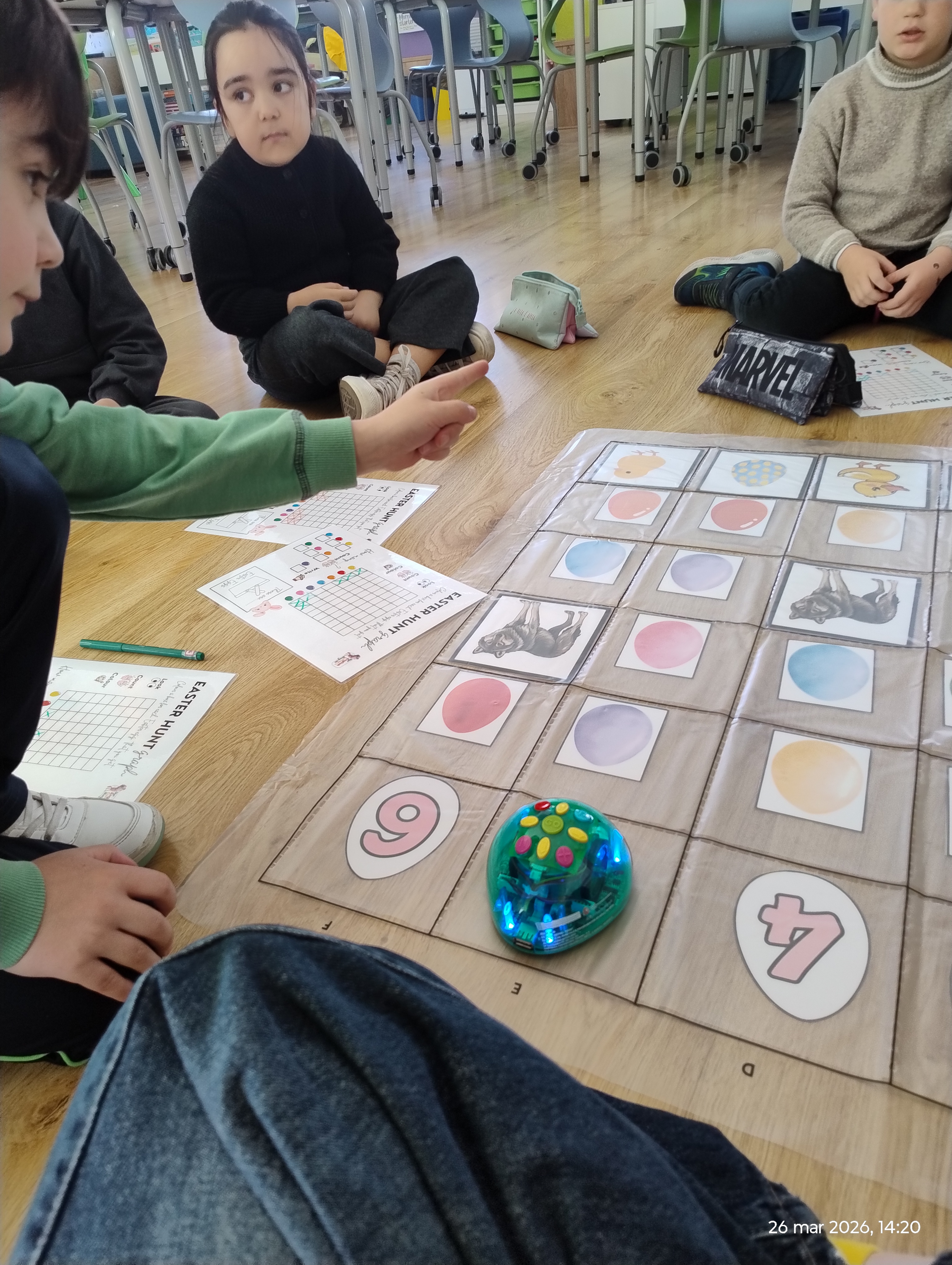
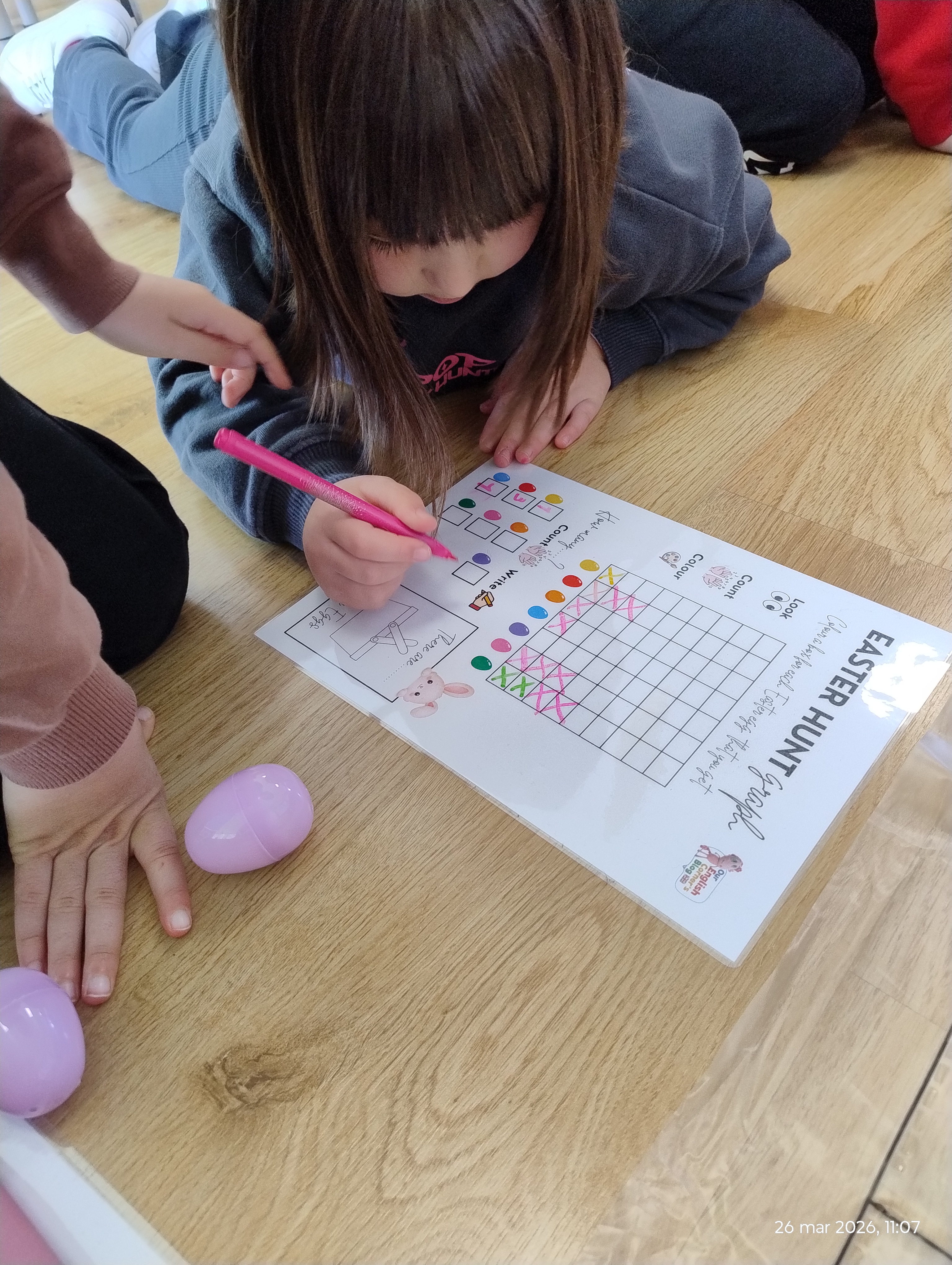
Na segunda sesión, cada neno e nena colleu un ovo, descubriu unha pista visual e tivo que adiviñar o animal correspondente. Despois lanzaron o dado, colocaron o Bee-Bot e programaron o percorrido ata o animal, evitando o lobo e rexistrando os ovos atopados no camiño.
What did the children learn?
Through this Easter game, the children worked on many different skills at the same time. They practised:
- Easter vocabulary
- animal vocabulary
- colours
- numbers
- planning and sequencing
- simple coding skills
- computational thinking
- counting and recording information
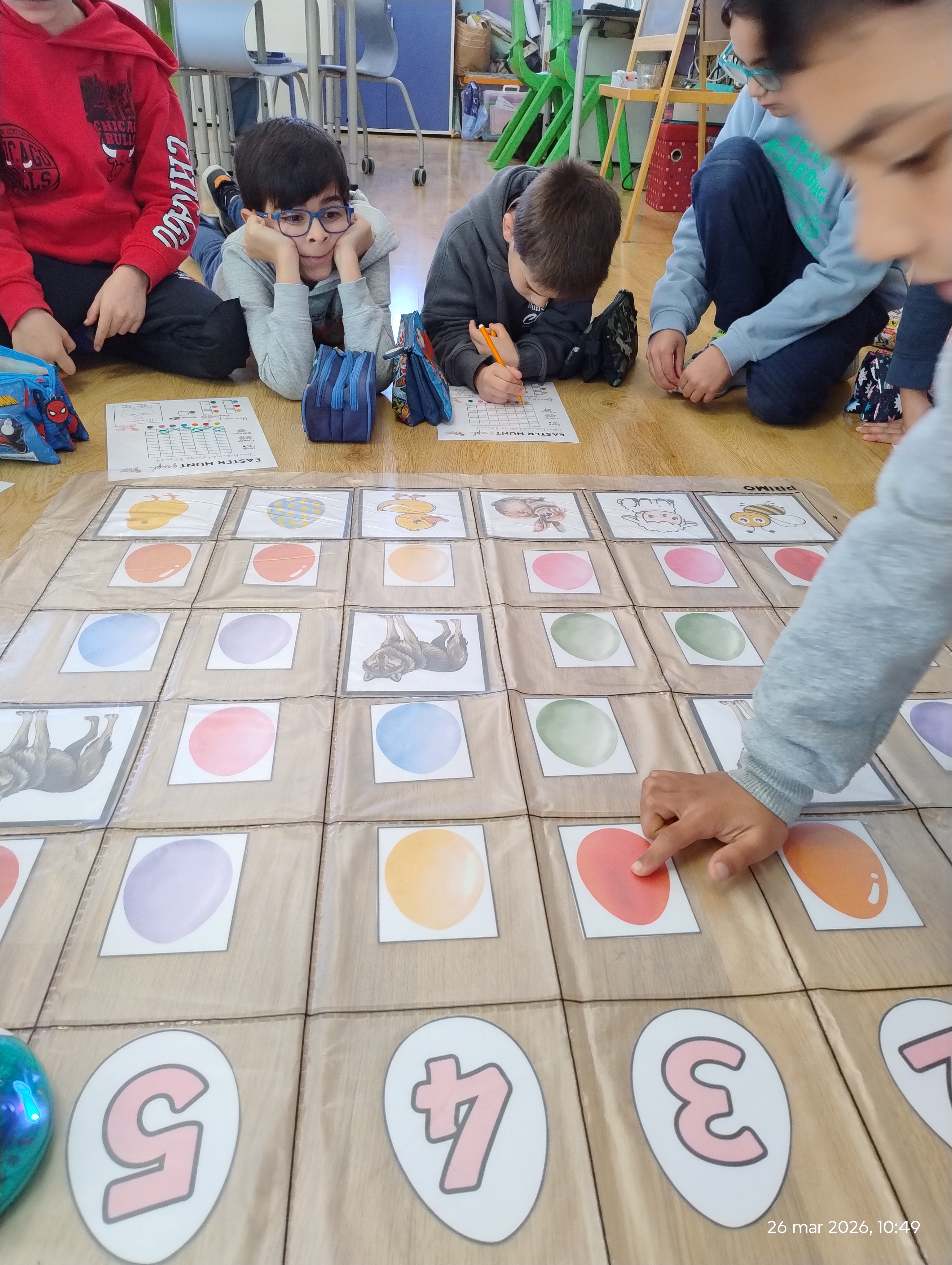
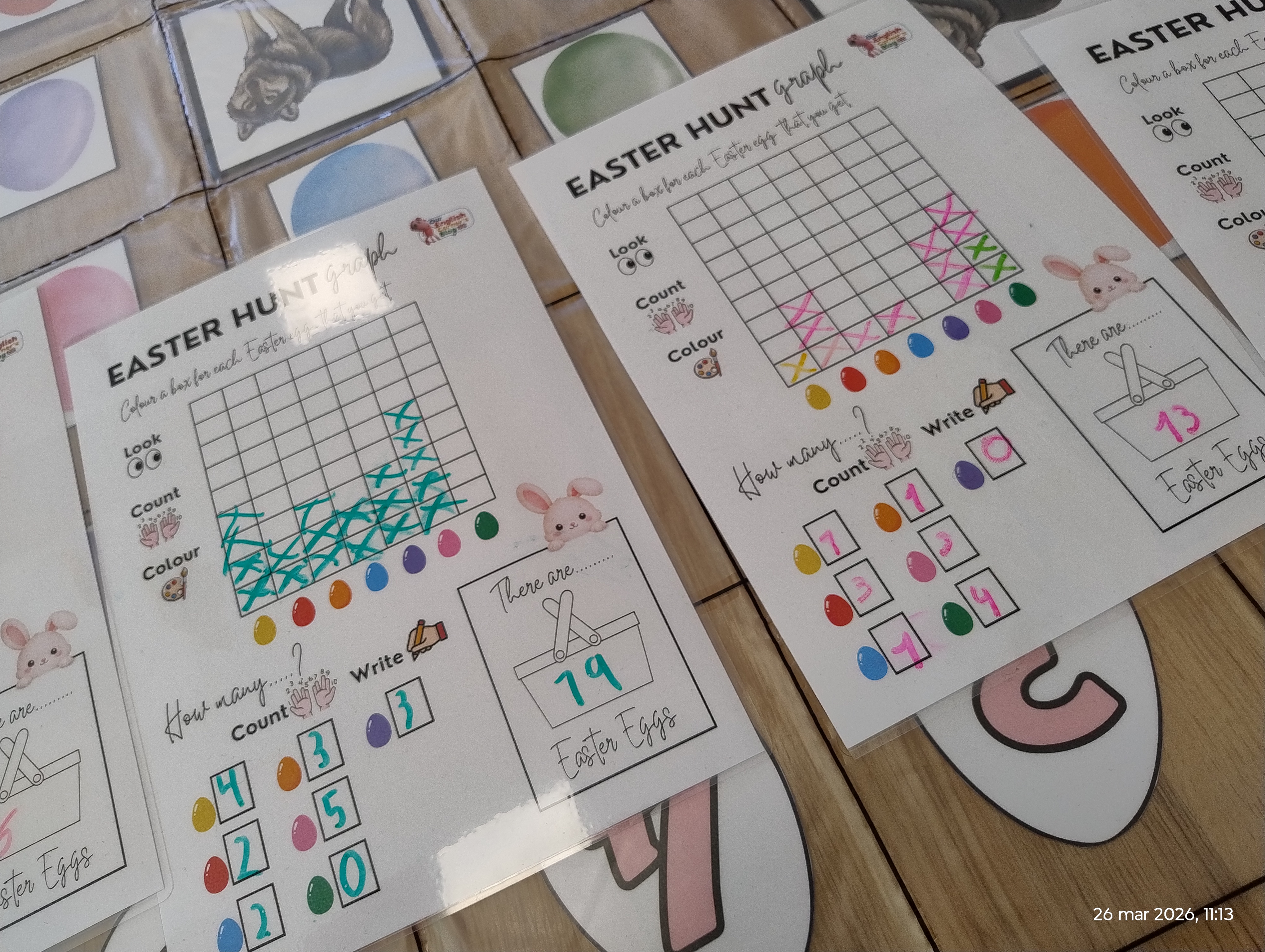
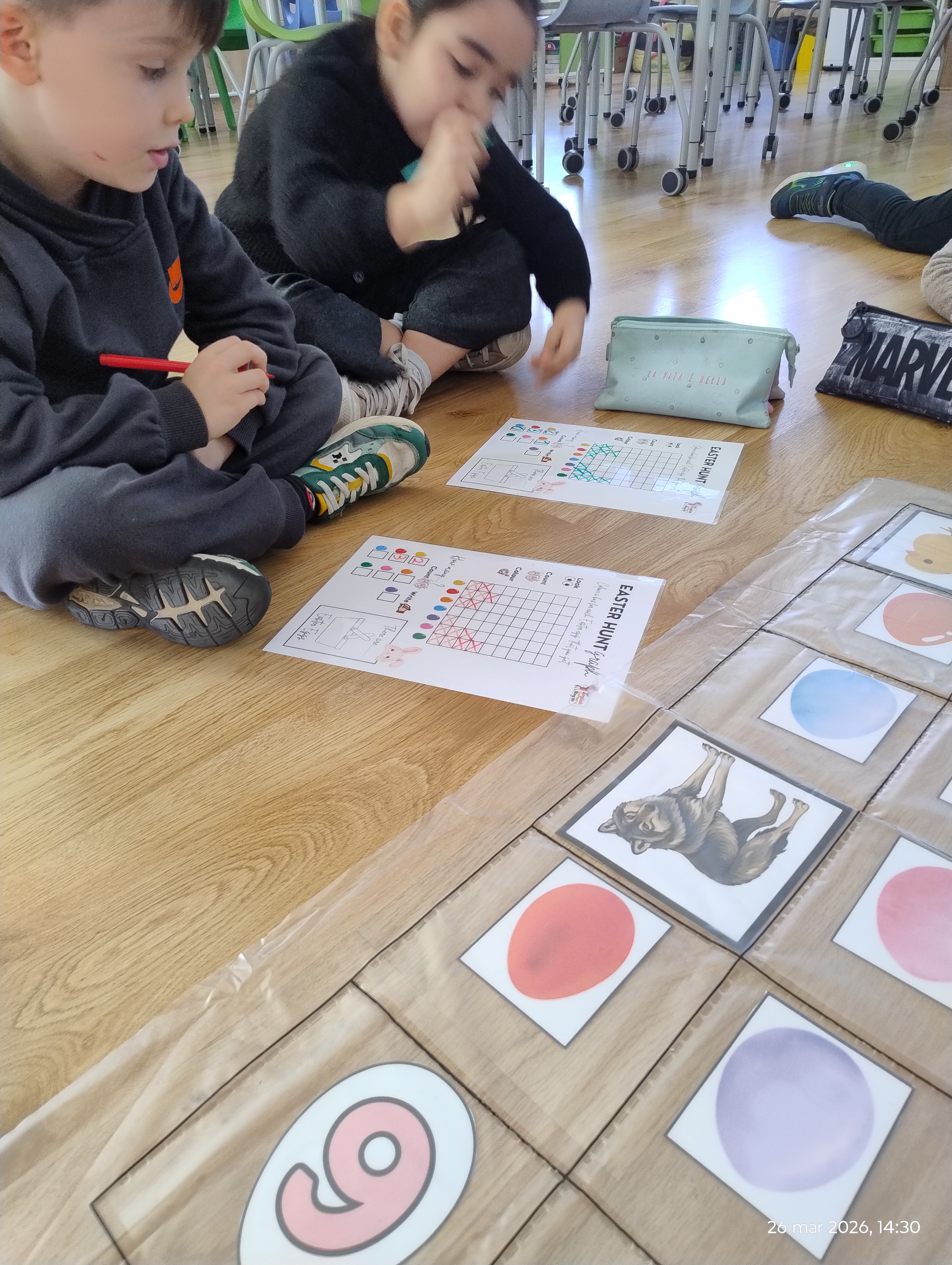
Con esta proposta traballáronse de forma integrada o vocabulario de Easter e dos animais, as cores, os números, a expresión oral, a creatividade, a planificación de secuencias, a programación inicial, o pensamento computacional e o rexistro de datos.
Why was this activity so special?
What made this activity special was the way it brought together different areas of learning in one playful experience. The children were excited to open the eggs, curious to guess the animals and highly motivated to program Bee-Bot correctly.
It was wonderful to see them thinking, making decisions, solving small problems and enjoying the process together. Activities like this help children use English in a natural and meaningful context while also developing key thinking skills.
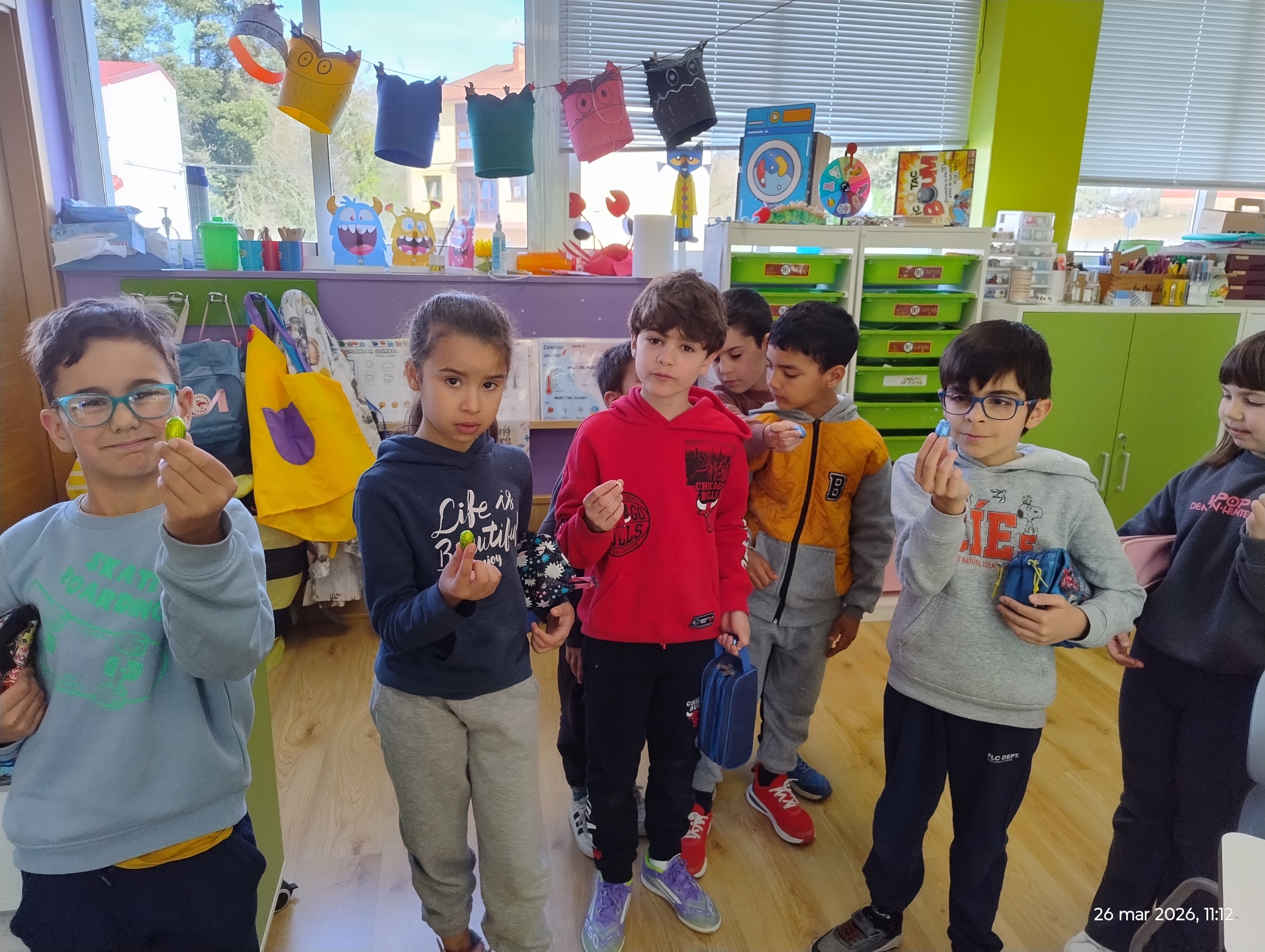
Foi unha experiencia moi motivadora porque combinou conto, xogo, arte e programación nunha mesma proposta. O alumnado participou con entusiasmo, aprendeu dun xeito activo e puido aplicar a lingua inglesa nun contexto manipulativo, significativo e divertido.
About the resource
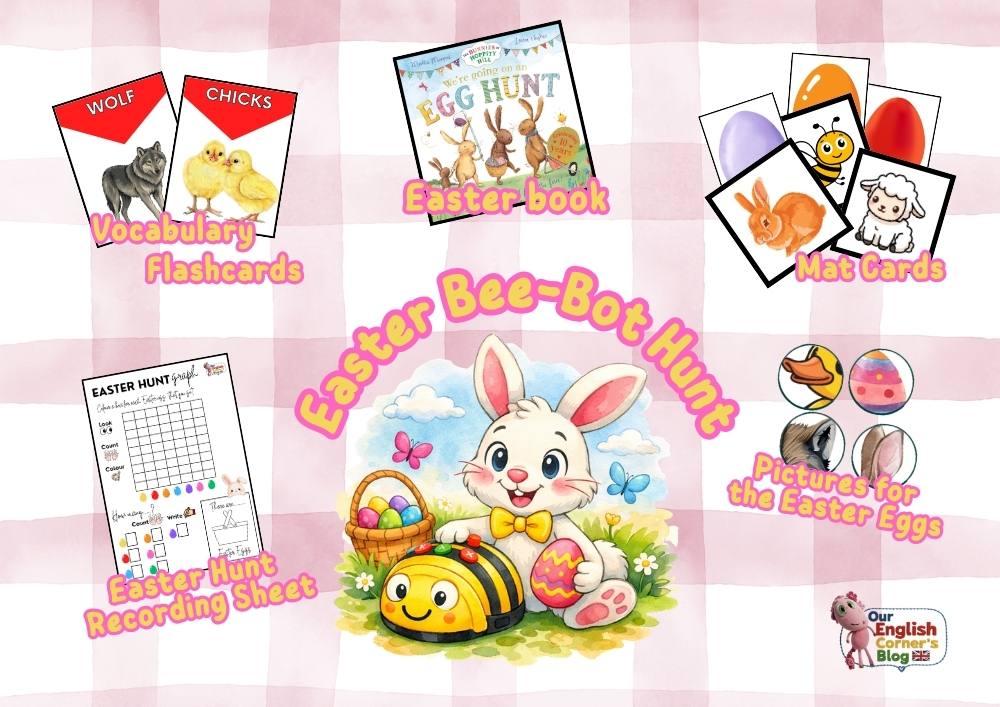
This material was created to support this Easter classroom activity and to make it easy to use in other classrooms too. The pack includes vocabulary flashcards, mat cards, pictures for the Easter eggs and a recording sheet.







 Our English Corner's Blog
Deixar un comentario