
Today in our English lessons we played Tic-Tac-Toe, a simple game that becomes a powerful learning tool when we connect it with language practice. The students enjoyed it and, at the same time, used English in a natural and meaningful way.
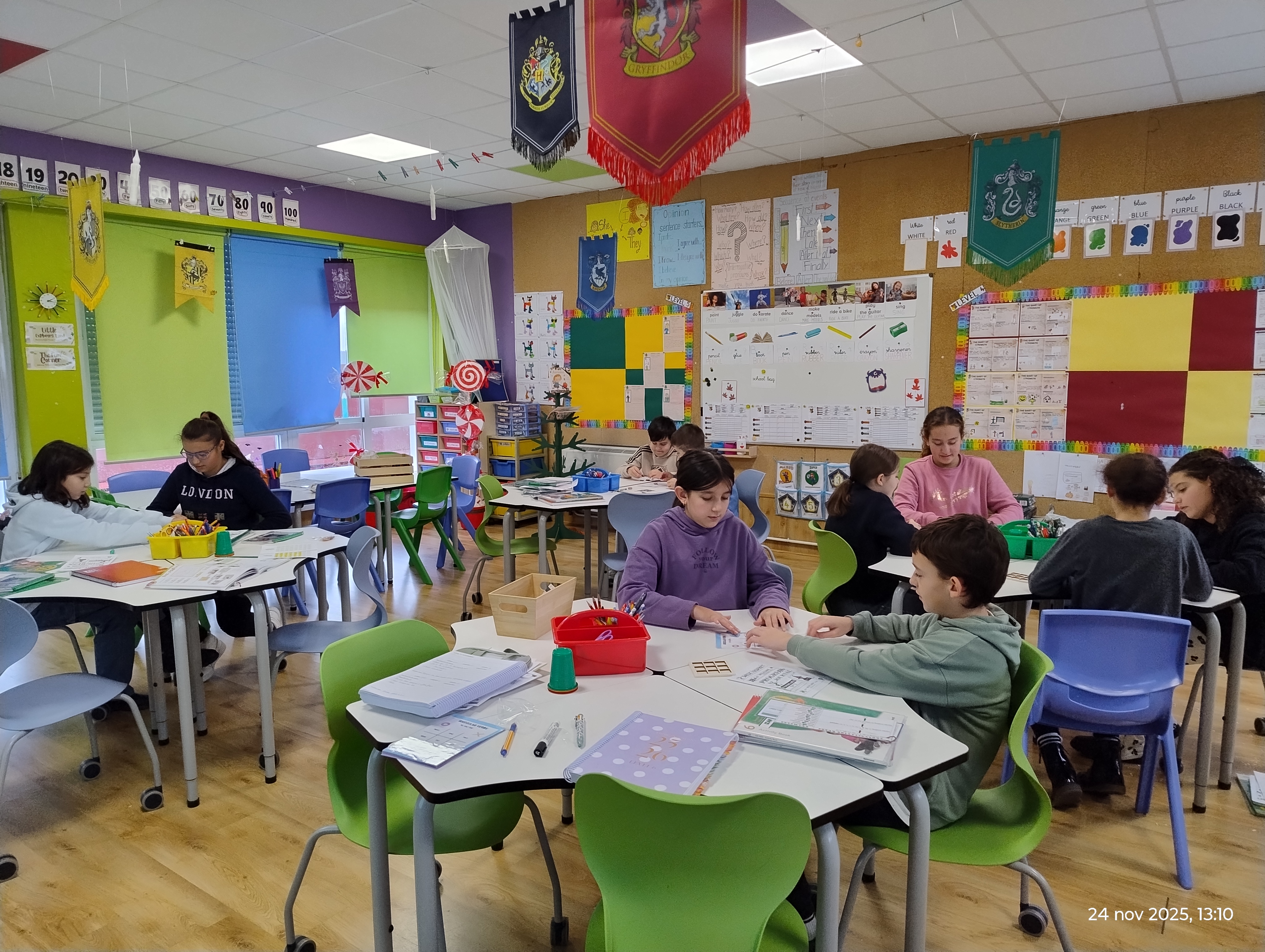
6th Grade – Irregular Verbs in the Past
Our 6th graders used the game to practise irregular verbs in the past tense.
To place their X or O on the board, they first had to say a correct past form (for example: go → went, see → saw, make → made).

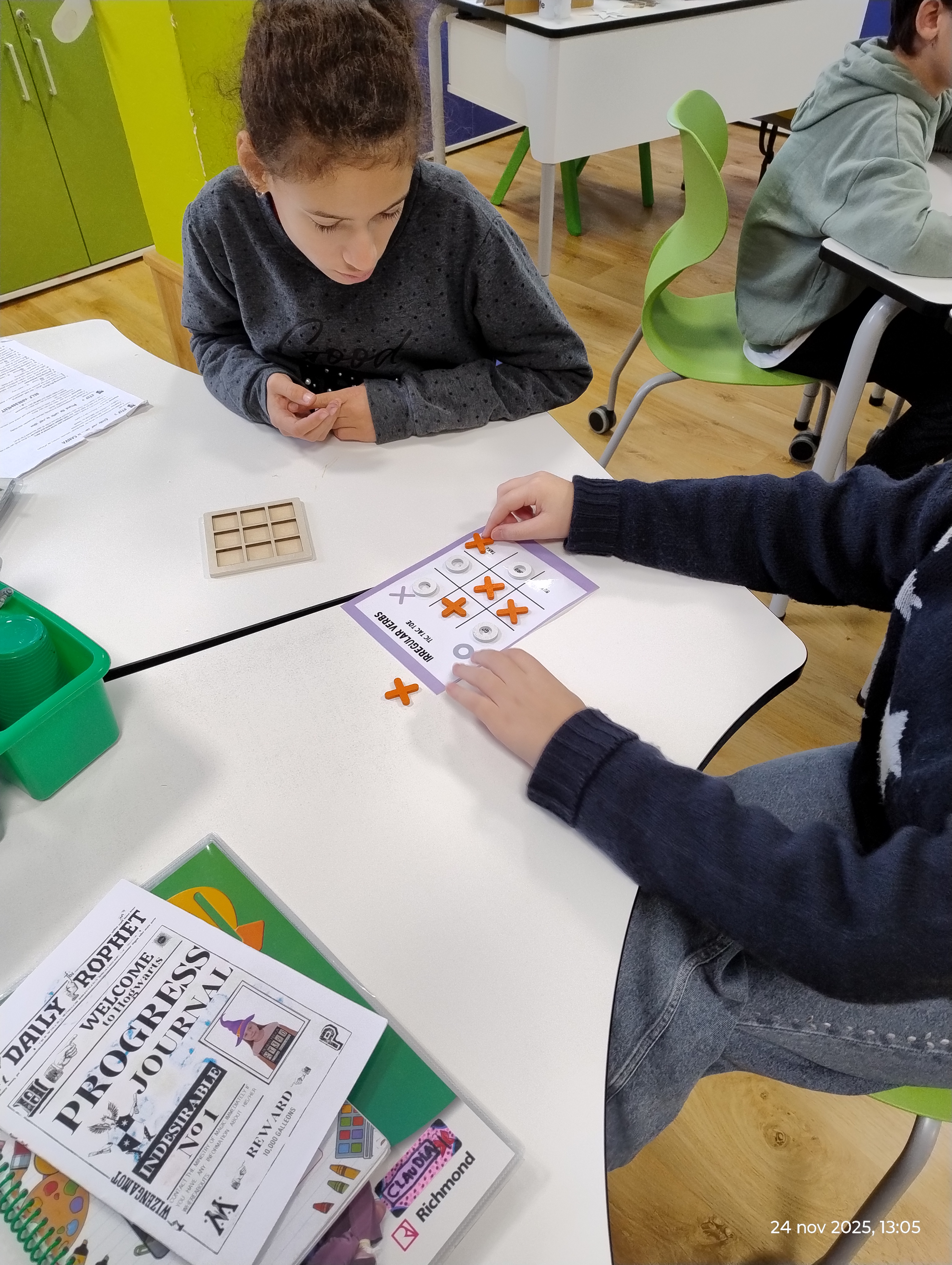
This technique is effective because research in language learning shows that repeated retrieval—recalling and using information several times—helps students store new forms more efficiently and build fluency.
1st Grade – School Objects & “I’ve got…”
Our 1st graders practised vocabulary such as pencil, rubber, pen, book… and used the structure “I’ve got…”.
To place their piece on the board, they were asked to identify or read the word and produce a short sentence: I’ve got a pencil!

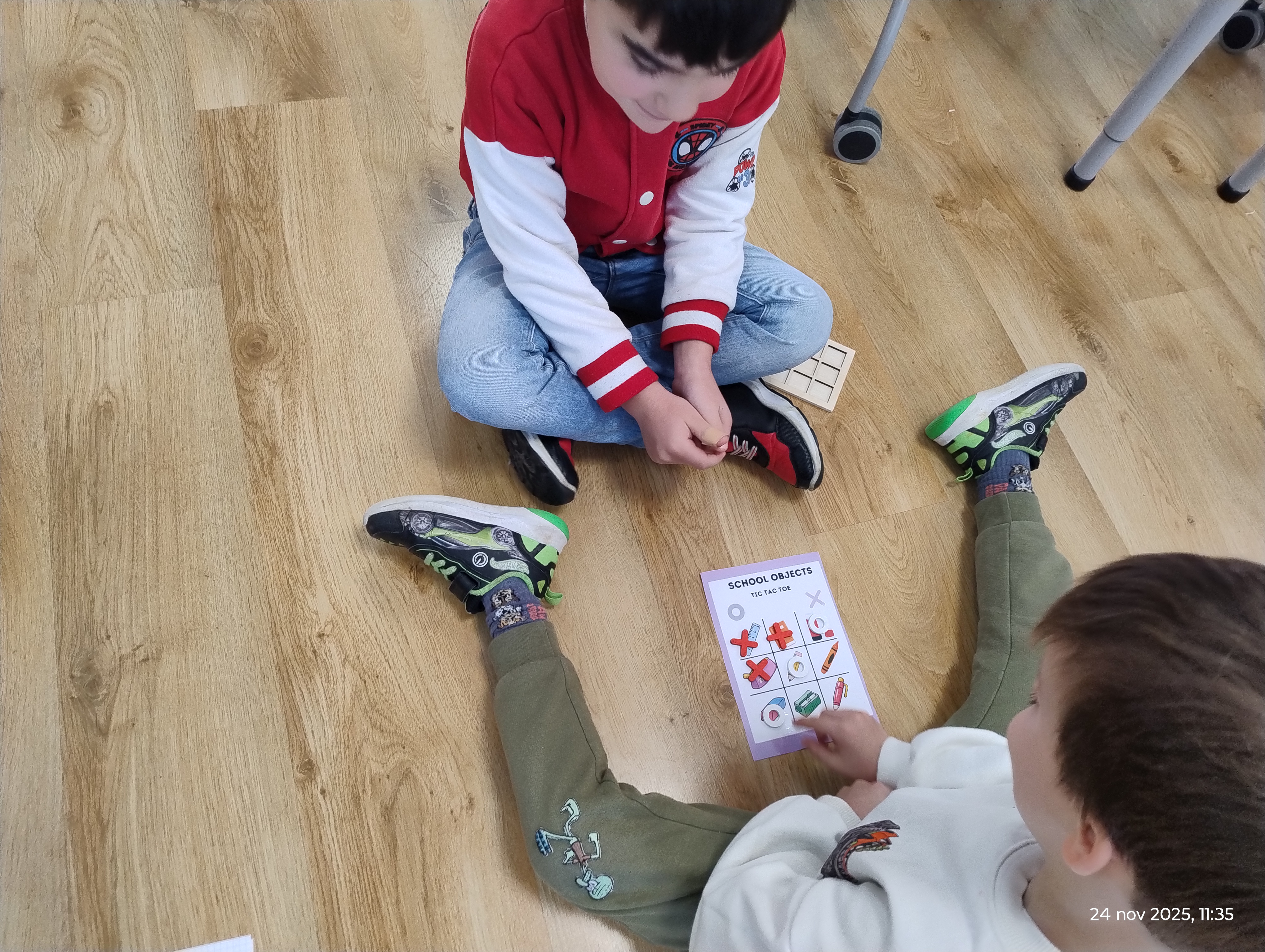
This approach works well because activities combining speaking, reading and movement increase attention and support learning, as explained by communicative approaches and TPR (Total Physical Response).
Why Games Help Us Learn English
- They promote communication without fear.
- They increase motivation and participation.
- They support collaboration between classmates.
- They help reinforce memory through meaningful repetition.
- They are inclusive and accessible for all learners.
Tic-Tac-Toe turned into a fun and meaningful way to practise English today. The students were engaged, active and using the language naturally — a clear sign that learning was truly happening.
📥 Free Material Download
You can download the materials we used in class:

Hoxe, nas clases de inglés, xogamos ao Tres en raia, un xogo sinxelo que se converte nun recurso fantástico para aprender cando o vinculamos á práctica lingüística. O alumnado pasouno xenial e empregou o inglés de maneira natural e significativa.
6º de Primaria – Verbos Irregulares no Pasado
O alumnado de 6º utilizou o xogo para practicar os verbos irregulares no pasado.
Para colocar a súa ficha, primeiro tiñan que dicir correctamente o pasado dun verbo (go → went, see → saw, make → made…).
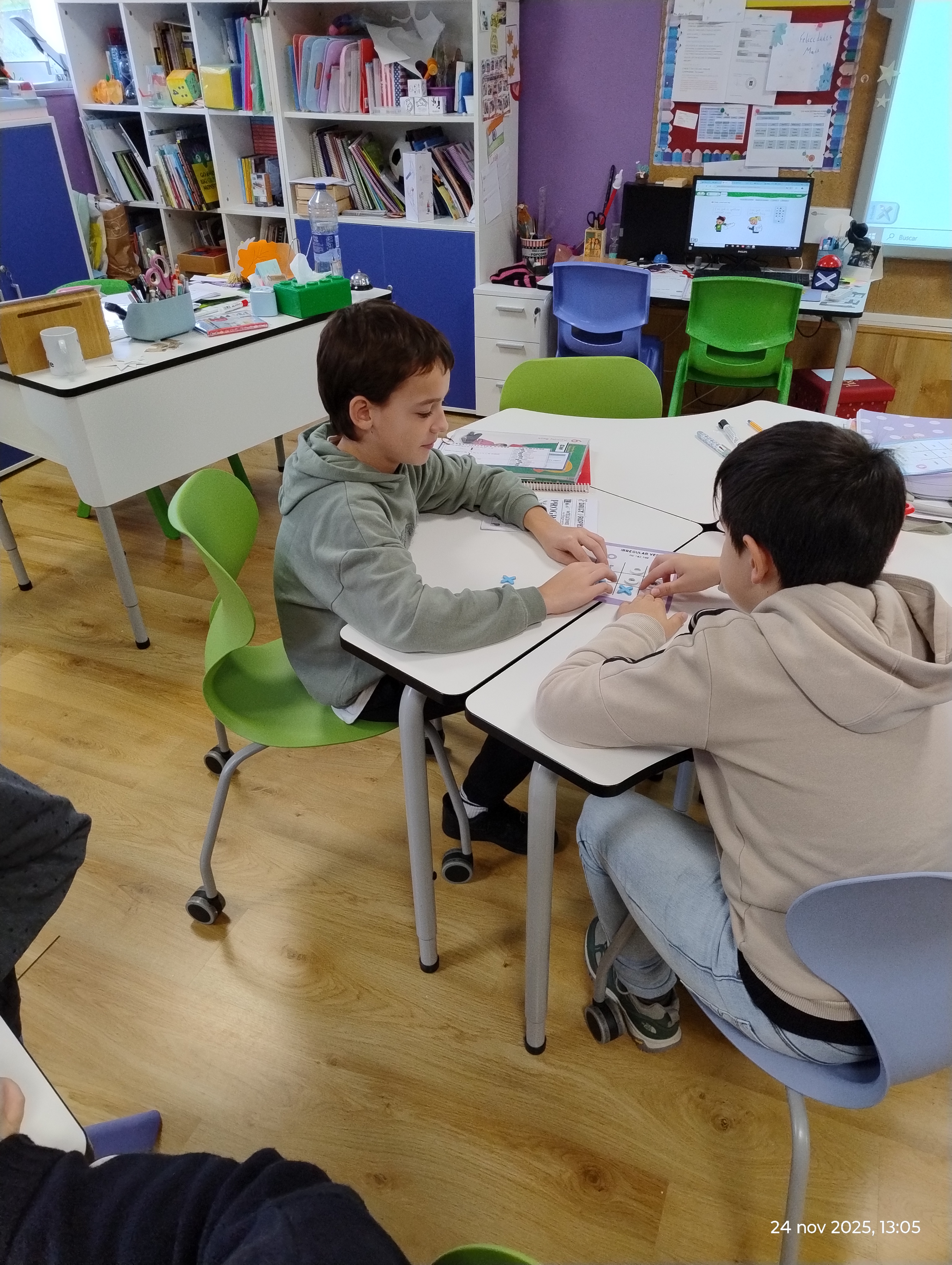
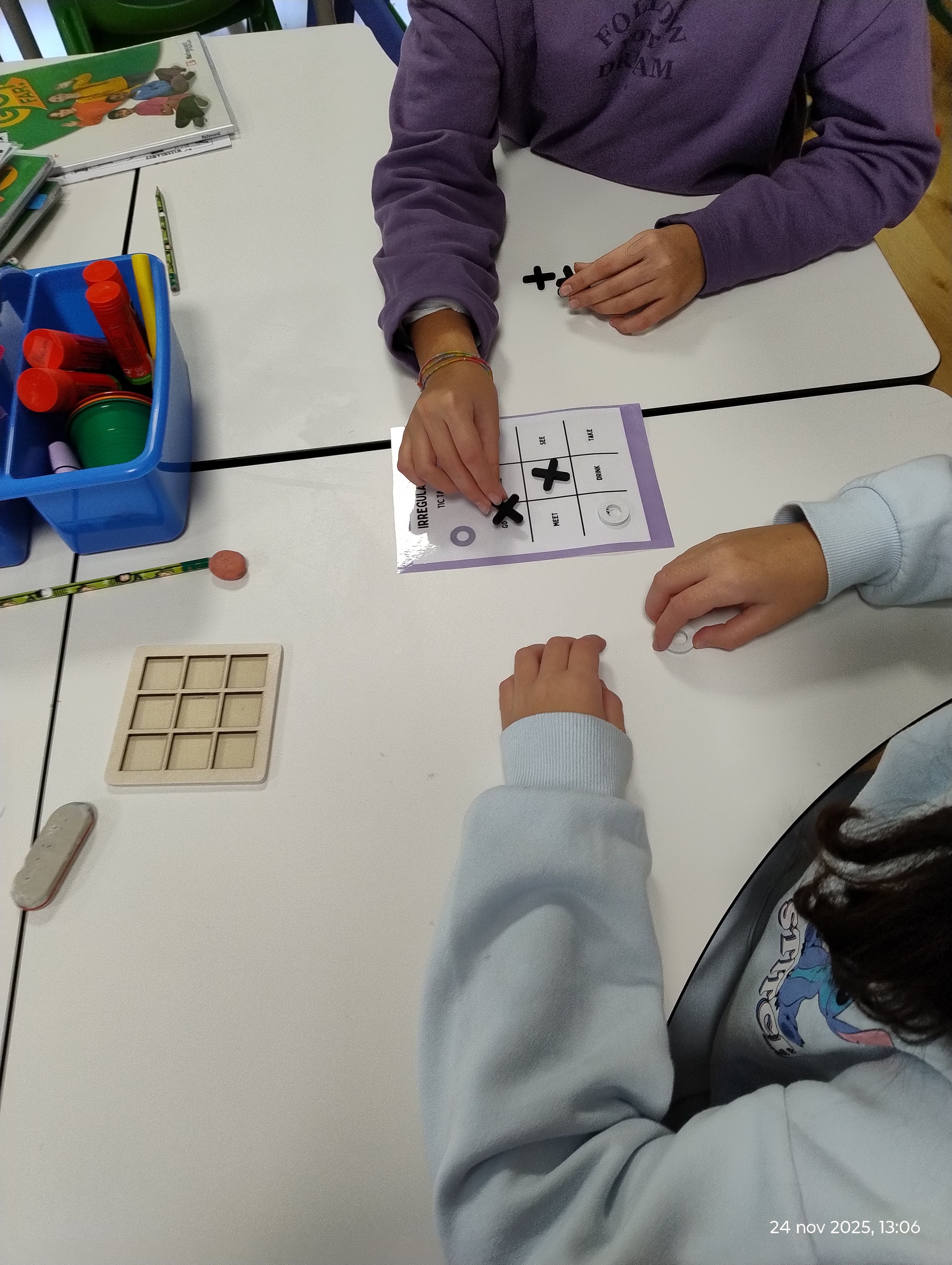
Esta técnica é eficaz porque as investigacións en aprendizaxe de linguas indican que a recuperación repetida —lembrar e usar información varias veces— axuda a consolidar estruturas e mellorar a fluidez.
1º de Primaria – Obxectos do Cole e “I’ve got…”
Os nenos e nenas de 1º practicaron vocabulario como pencil, rubber, pen, book… e a estrutura “I’ve got…”.
Para colocar a súa ficha, tiñan que ler ou identificar a palabra e dicir unha frase curta: I’ve got a pencil!.
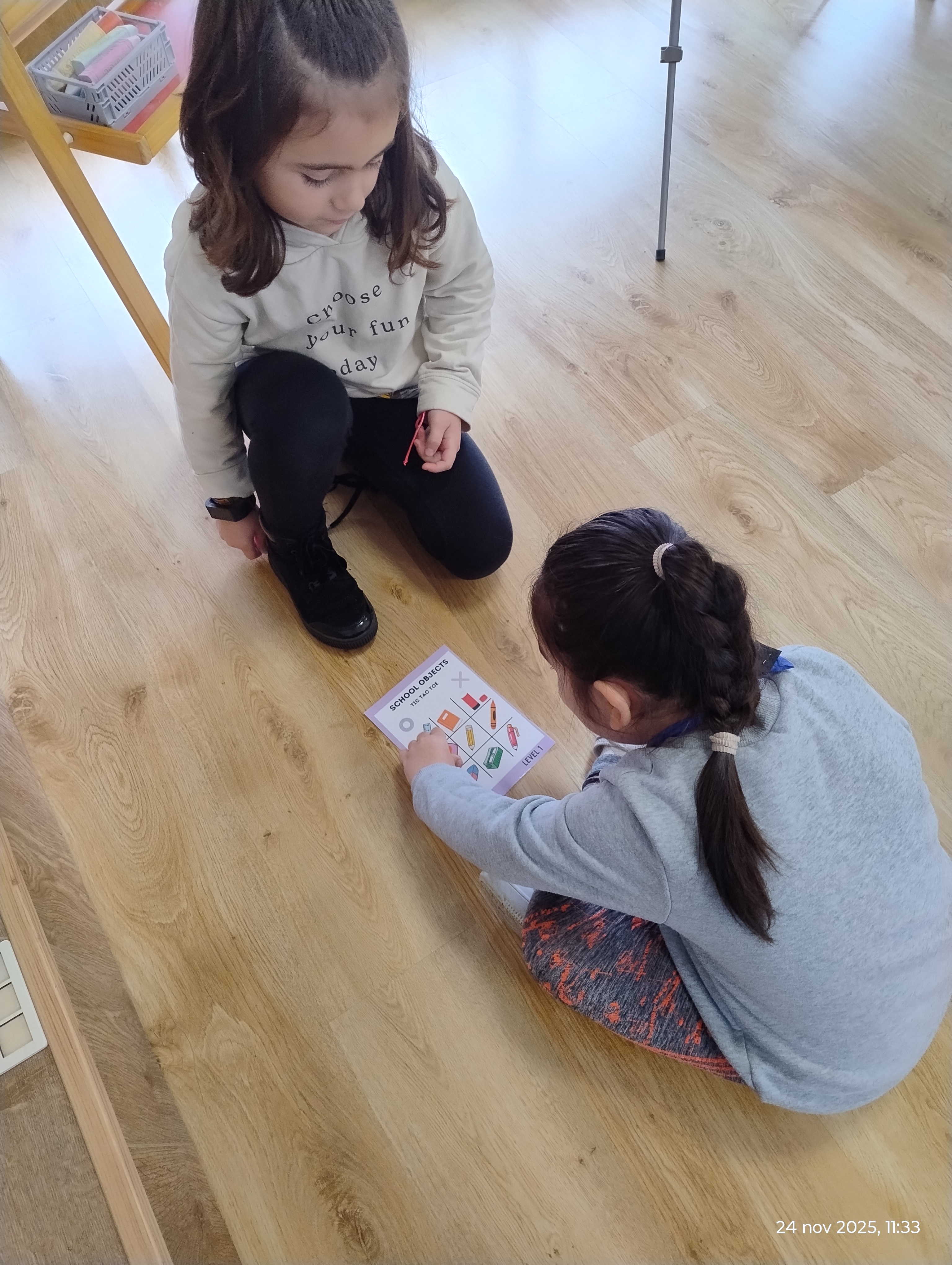
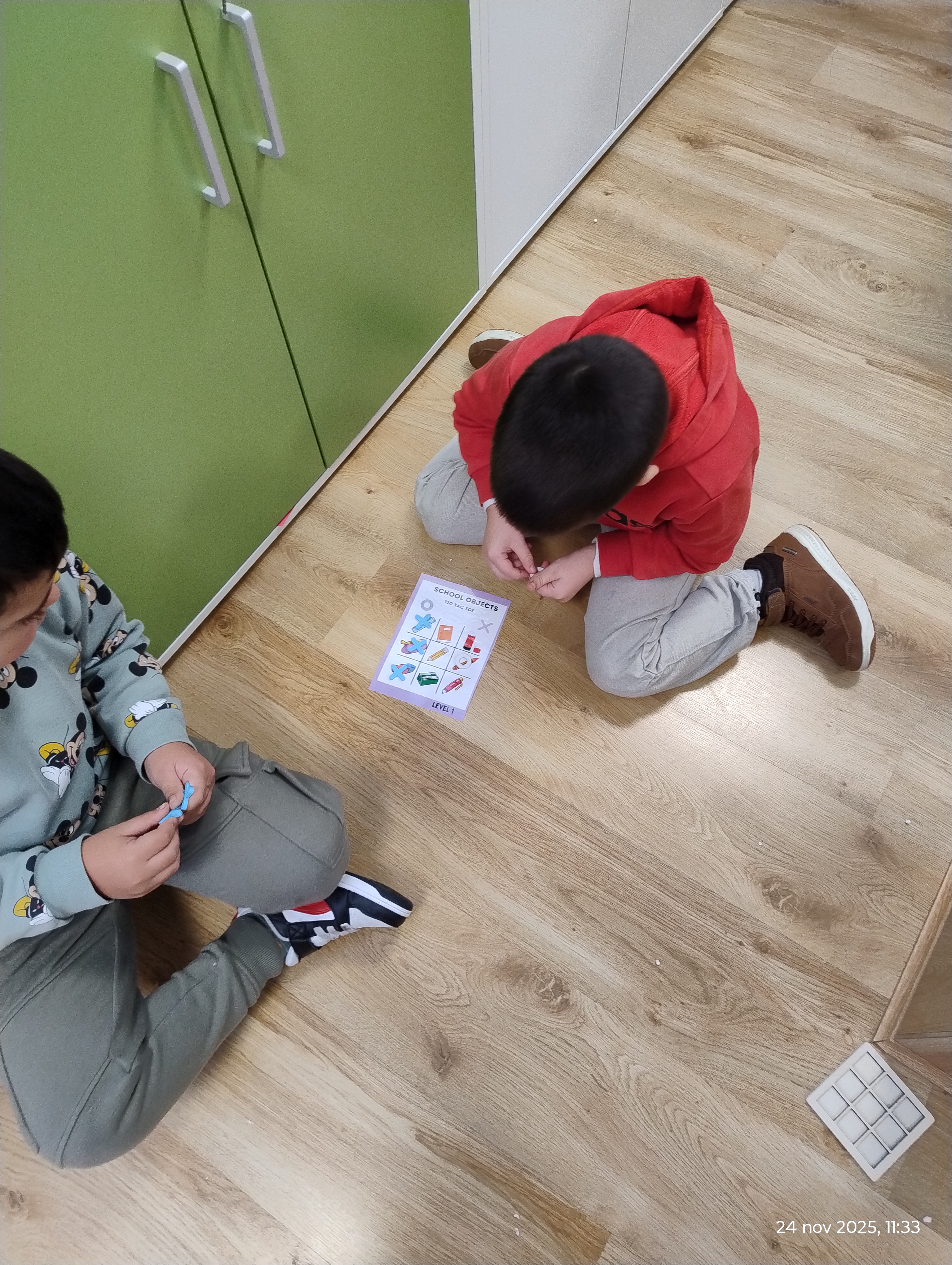
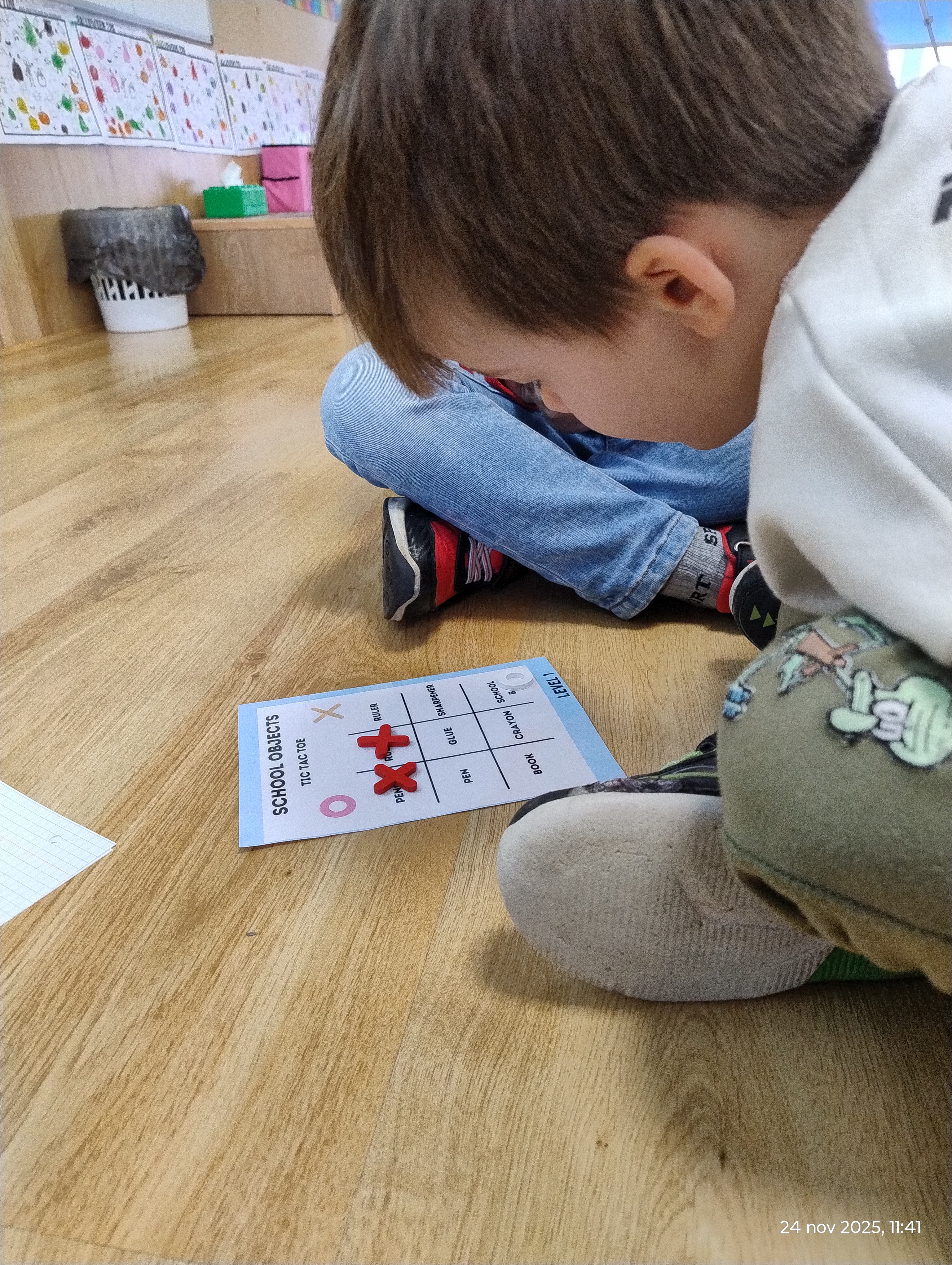
Este enfoque funciona moi ben porque as actividades que combinan oralidade, lectura e movemento melloran a atención e consolidan a aprendizaxe, tal e como proponen os enfoques comunicativos e TPR.
Beneficios de Empregar Xogos na Aula de Inglés
- Favorecen a comunicación sen medo a equivocarse.
- Aumentan a motivación e a participación.
- Impulsan o traballo colaborativo.
- Axudan a reforzar a memoria mediante repetición significativa.
- Son inclusivos e accesibles para todo o alumnado.
O Tres en raia converteuse nunha maneira divertida e significativa de practicar inglés. O alumnado estivo motivado, participativo e usando a lingua de forma natural — o mellor indicador de que a aprendizaxe foi real.








 Our English Corner's Blog
Deixar un comentario