Reading Comprehension through Games
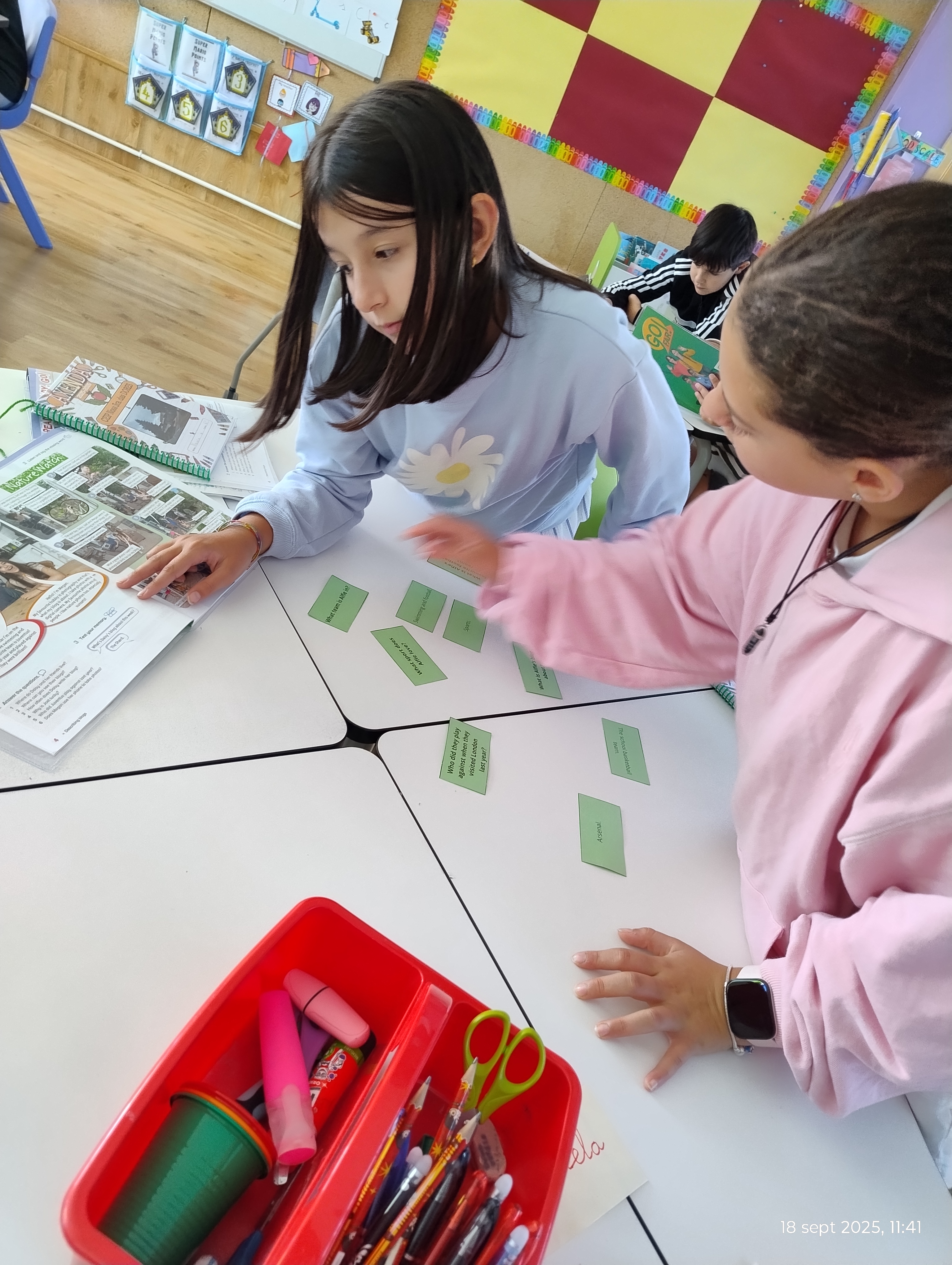
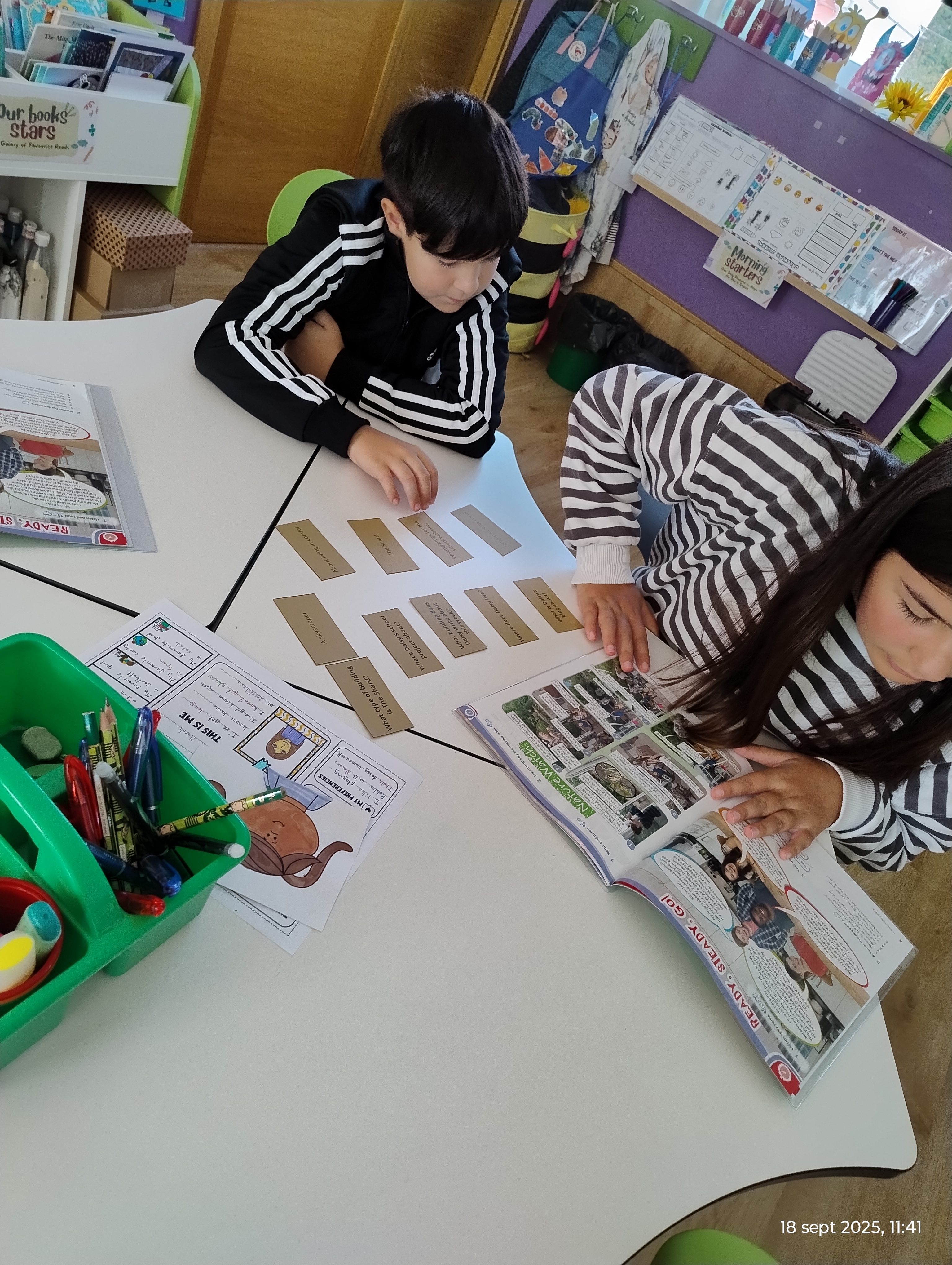
In our English lessons, we are working on reading comprehension in a collaborative and fun way. This week, the students played a memory game with questions and answers based on short texts about children’s lives, hobbies and families.
Nas clases de inglés estamos a traballar a comprensión lectora dun xeito colaborativo e ameno. Esta semana o alumnado xogou a un memory de preguntas e respostas a partir de pequenos textos sobre a vida, as afeccións e a familia de nenos e nenas.
How did we do the activity?
The class was divided into four groups. We prepared four sets of cards with questions and answers about the four children from the text.
- Each group received one set of cards.
- After reading the text together and practising the new vocabulary, the students worked in groups to match questions with their correct answers.
- Then, groups rotated the sets so that everyone worked with all the characters.
- As a final challenge, only the questions were distributed. In turns, groups asked each other the questions.
- A correct answer = 1 point.
- If a group didn’t know the answer, the turn passed to the next group.
- The group with the most points was the winner.
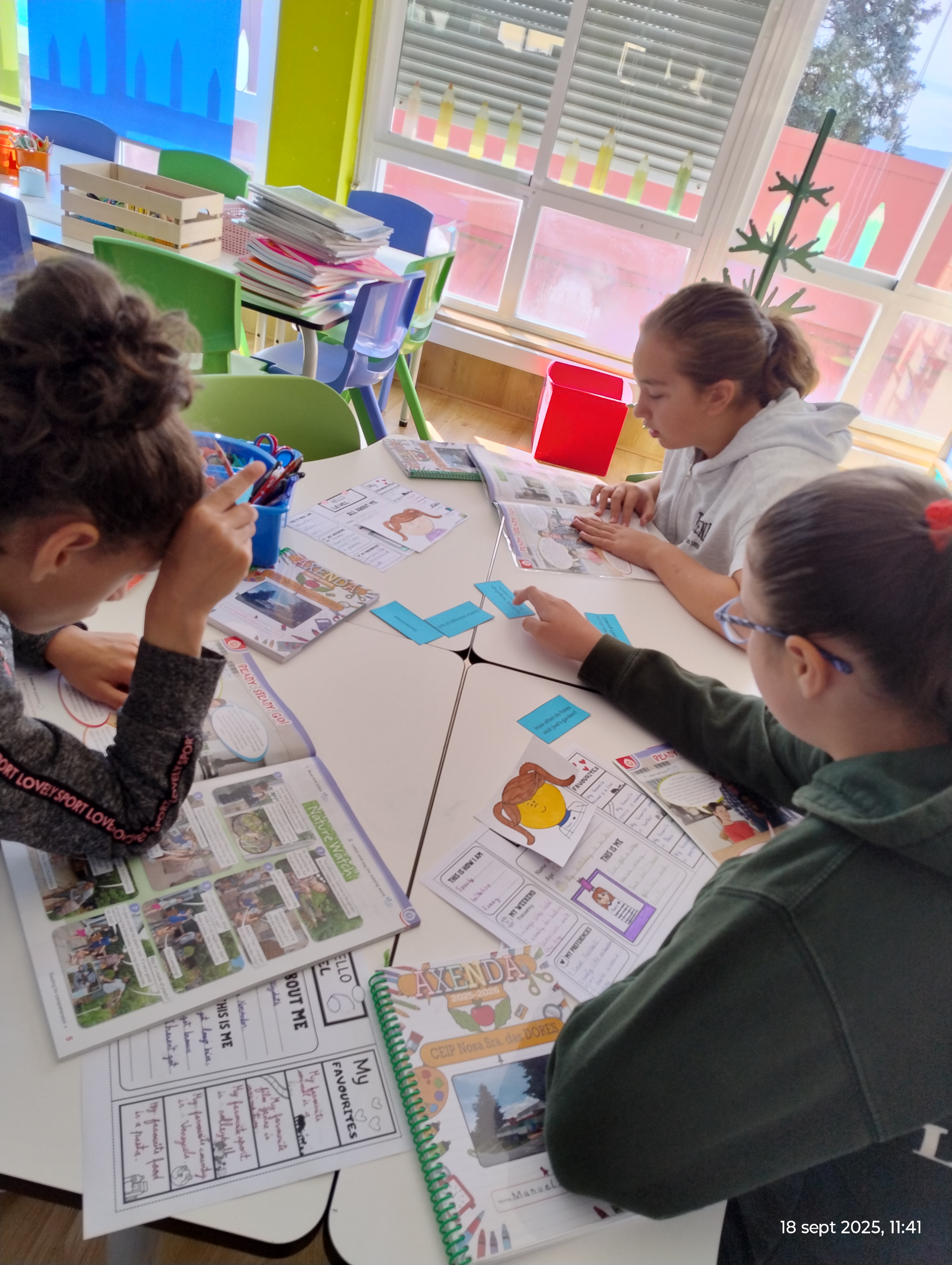
A clase organizouse en catro grupos. Preparamos catro xogos de tarxetas con preguntas e respostas sobre os catro nenos do texto.
- A cada grupo entregóuselle un xogo de tarxetas.
- Despois de ler o texto en común e traballar o vocabulario, o alumnado tiña que emparellar as preguntas coas respostas correctas.
- A continuación, os grupos foron rotando os xogos para traballar con todos os personaxes.
- Como colofón, só se repartiron as preguntas. Por quendas, os grupos facíanse preguntas entre si.
- Resposta correcta = 1 punto.
- Se un grupo non sabía a resposta, o turno pasaba ao seguinte.
- Gañaba o grupo con máis puntos.

This activity is part of an active methodology where students are the main actors of their learning. Research in foreign language teaching (Ellis, 2005; Lightbown & Spada, 2013) shows that young learners acquire language more effectively when tasks are meaningful, interactive and enjoyable.
Esta actividade forma parte dunha metodoloxía activa, na que o alumnado é o verdadeiro protagonista da aprendizaxe. Segundo a investigación en didáctica das linguas estranxeiras (Ellis, 2005; Lightbown & Spada, 2013), o alumnado de primaria aprende mellor cando as tarefas son significativas, interactivas e divertidas.
Advantages of this activity:
- Improves reading comprehension skills.
- Encourages teamwork and cooperation.
- Helps to remember vocabulary and grammar in context.
- Motivates students through play.
By learning English in this way, children don’t just memorize; they use the language to communicate and solve problems together, which is one of the key goals in Primary Education.
Vantaxes desta actividade:
- Mellora a comprensión lectora.
- Fomenta o traballo en equipo e a cooperación.
- Axuda a consolidar vocabulario e estruturas gramaticais en contexto.
- Motiva ao alumnado a través do xogo.
Así, o inglés non se aprende só para memorizar, senón para comunicarse e resolver problemas en grupo, que é un dos obxectivos fundamentais da educación primaria.
#EnglishClass #ReadingComprehension #ActiveLearning #TeamWork #PrimaryEducation #LearnThroughPlay #CollaborativeLearning







 Our English Corner's Blog
Deixar un comentario