This week, our English class took a step back in time and discovered a traditional game that’s perfect for learning how to tell time in English! Hidden away in our classroom, we found a wonderful activity that combines matching skills, teamwork, and fun to help students practice reading both analog and digital clocks.
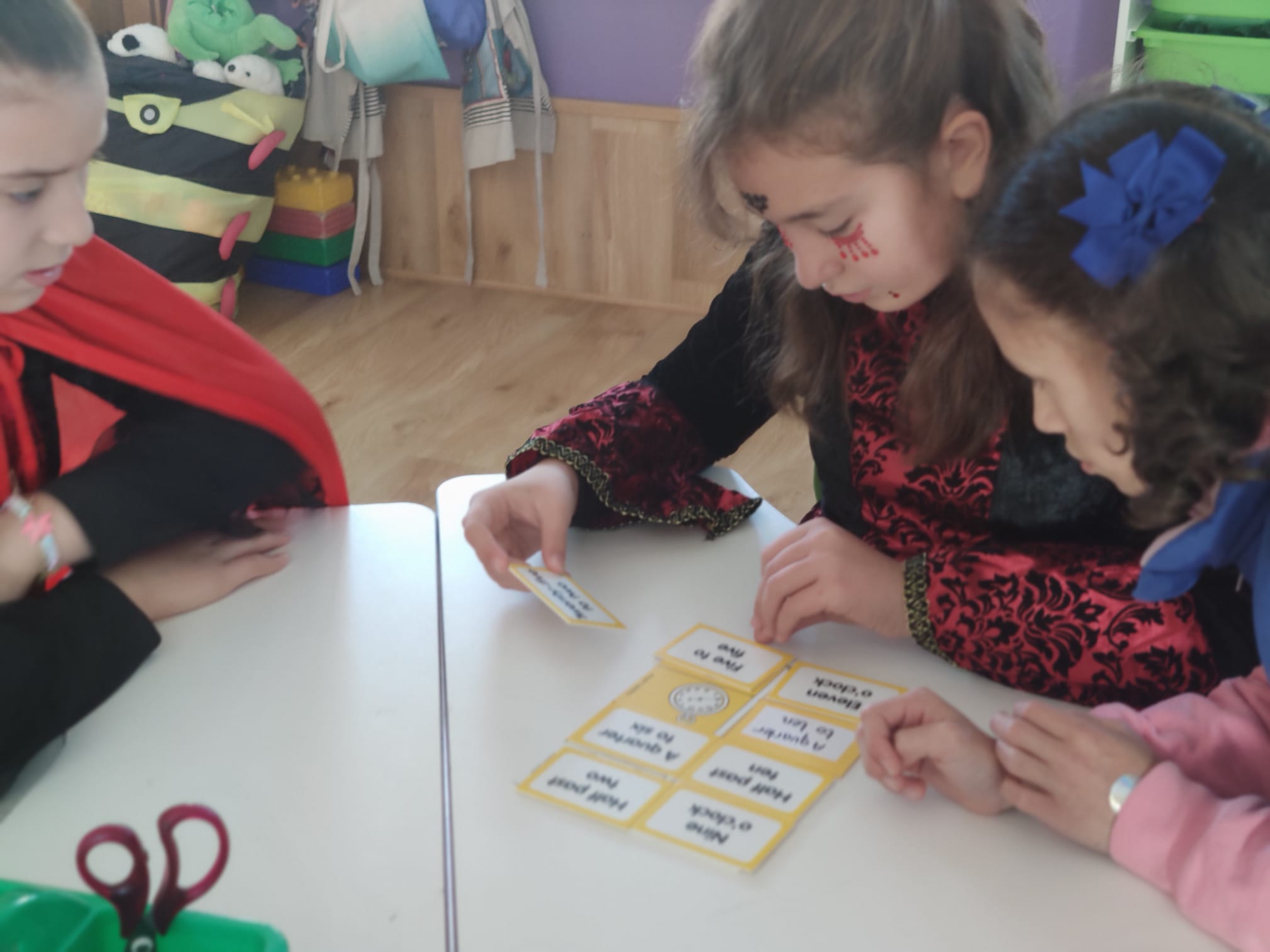
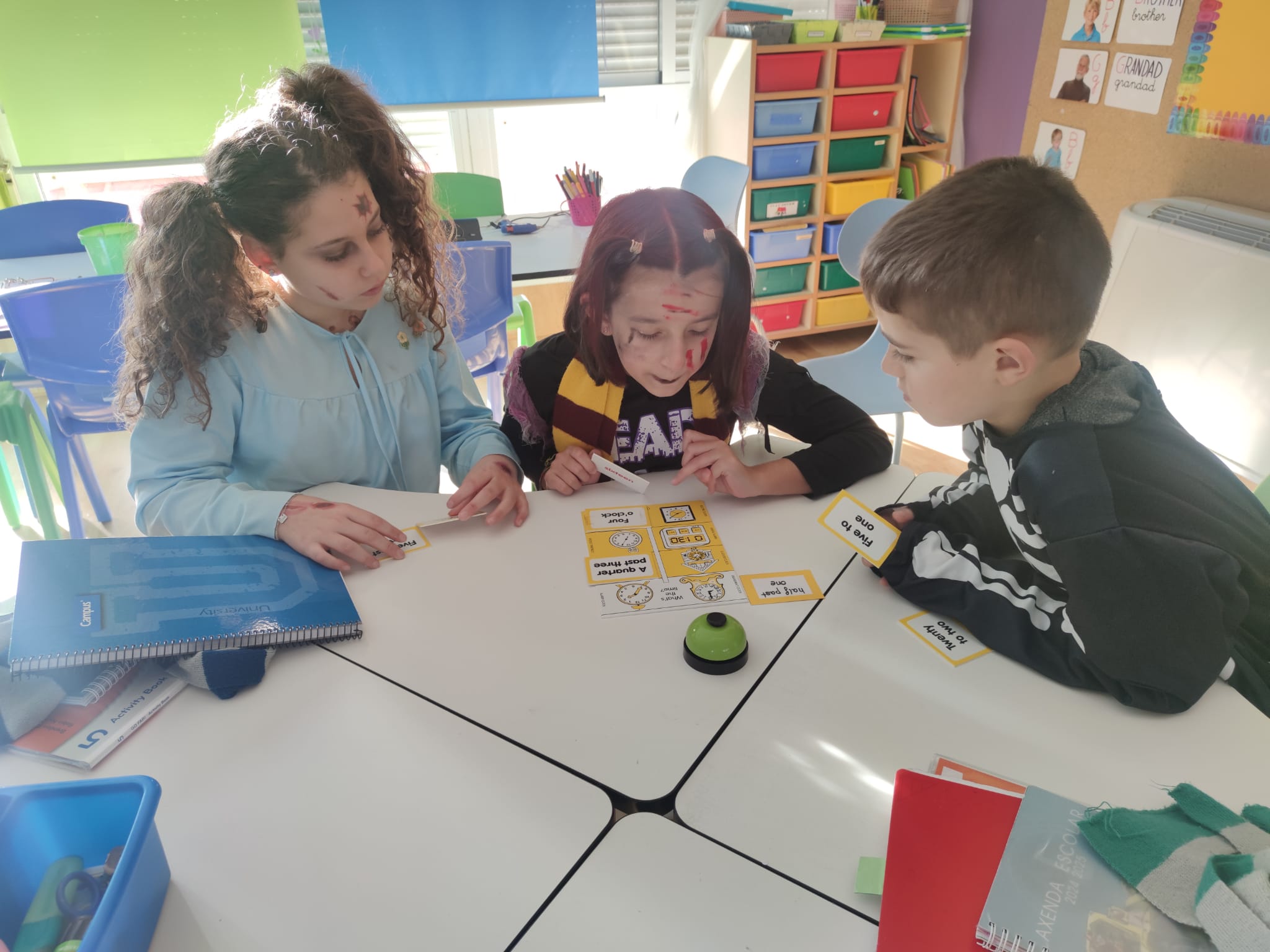
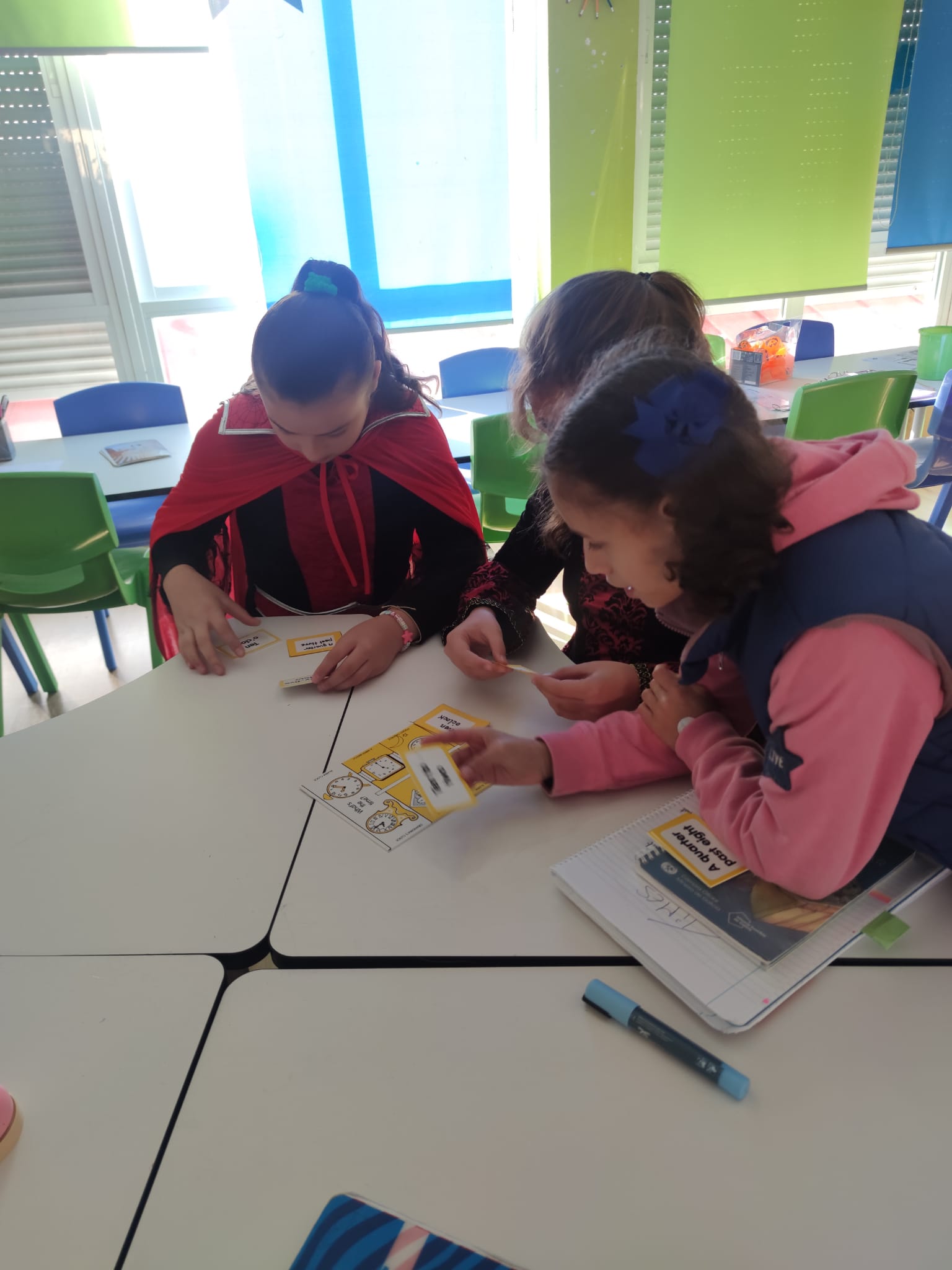
The game was simple yet exciting: each group received a set of cards with clock images (both analog and digital) along with separate cards that displayed times in written form. The challenge was to match the cards and the clocks in the shortest time. Students worked in teams and rotated through different stations, pairing up the clocks with their corresponding written times. The team that correctly matched the most cards in the least amount of time emerged as the winner!
Traditional, cooperative games like this offer so many benefits for learning English in a fun and meaningful way. Not only do they support time-telling skills and vocabulary building, but they also promote teamwork, concentration, and friendly competition—all in a playful context. By working together and moving from station to station, students practiced valuable language and social skills while staying active and engaged.
Esta semana, na nosa clase de inglés, atopamos un xogo tradicional antigo perfecto para aprender a dicir as horas en inglés! Escondido na aula, descubrimos unha actividade que combina habilidades de asociación, traballo en equipo e diversión, axudando aos alumnos a practicar a lectura de reloxos analóxicos e dixitais.
O xogo era sinxelo pero emocionante: cada grupo recibiu un conxunto de tarxetas con imaxes de reloxos (analóxicos e dixitais) xunto con outras tarxetas que mostraban as horas escritas. O reto consistía en emparellar correctamente as tarxetascos reloxos no menor tempo posible. Os estudantes formaron equipos e foron rotando polas distintas estacións para emparellar os reloxos coas horas escritas. O equipo que máis parellas completou no menor tempo foi o gañador!
Os xogos tradicionais e cooperativos coma este teñen moitos beneficios para a aprendizaxe lúdica do inglés. Non só axudan a traballar o vocabulario das horas e a mellorar a comprensión, senón que tamén fomentan o traballo en equipo, a concentración e a competición sa, todo nun contexto divertido. Ao traballar en grupo e moverse polas estacións, os alumnos practicaron habilidades de comunicación e sociais valiosas, mantendo sempre o interese e a motivación.
Traditional games bring a timeless quality to learning, reminding us that the simplest activities are often the most effective for boosting language skills in an enjoyable way. Can’t wait to see what other hidden treasures we uncover next!
Os xogos tradicionais traen un toque especial á aprendizaxe, lembrándonos que as actividades máis sinxelas adoitan ser as máis efectivas para mellorar as competencias lingüísticas dun xeito ameno.Estamos desexando descubrir máis xoias escondidas coma esta!








 Our English Corner's Blog
Deixar un comentario